


Stay & Play
At Rhino Ridge Safari Lodge, Conservation Has a Human Story
by Olivia Liveng, photos by Rhino Ridge Safari Lodge
There are places where conservation feels like a word added to a brochure, and there are places where it is inseparable from the landscape itself. Rhino Ridge Safari Lodge belongs to the second category.
Set inside Hluhluwe-iMfolozi Park in KwaZulu-Natal, Rhino Ridge sits in one of Africa’s most significant wildlife areas. The park, established in 1895, is often described as the birthplace of modern rhino conservation. It was here that southern white rhinos, once pushed close to extinction, found one of their last strongholds. Later, through Operation Rhino, animals from this landscape helped repopulate reserves across Africa and beyond.
That history gives any rhino sighting here a different weight. A white rhino grazing in the morning light is not only a safari highlight. It is a reminder of what protection, science, and persistence can achieve. It is also a reminder that conservation success is never final. Rhino poaching remains one of South Africa’s most urgent wildlife challenges, and KwaZulu-Natal has been one of the hardest-hit regions.
Rhino Ridge does not exist outside that reality. Its name, location, and purpose are tied to the ongoing effort to protect a species that has become both a conservation icon and a target. Yet what makes the lodge especially compelling is that its conservation story extends beyond wildlife. It is also about people.
The lodge is situated on land belonging to the local Mpembeni community, which is incorporated into the park through a partnership among the community, the park, and a private company. That structure matters. Too often, safari tourism has asked rural communities to live alongside protected areas without fully sharing in their benefits. Rhino Ridge offers a more hopeful model: one where local ownership, employment, and conservation are part of the same conversation.
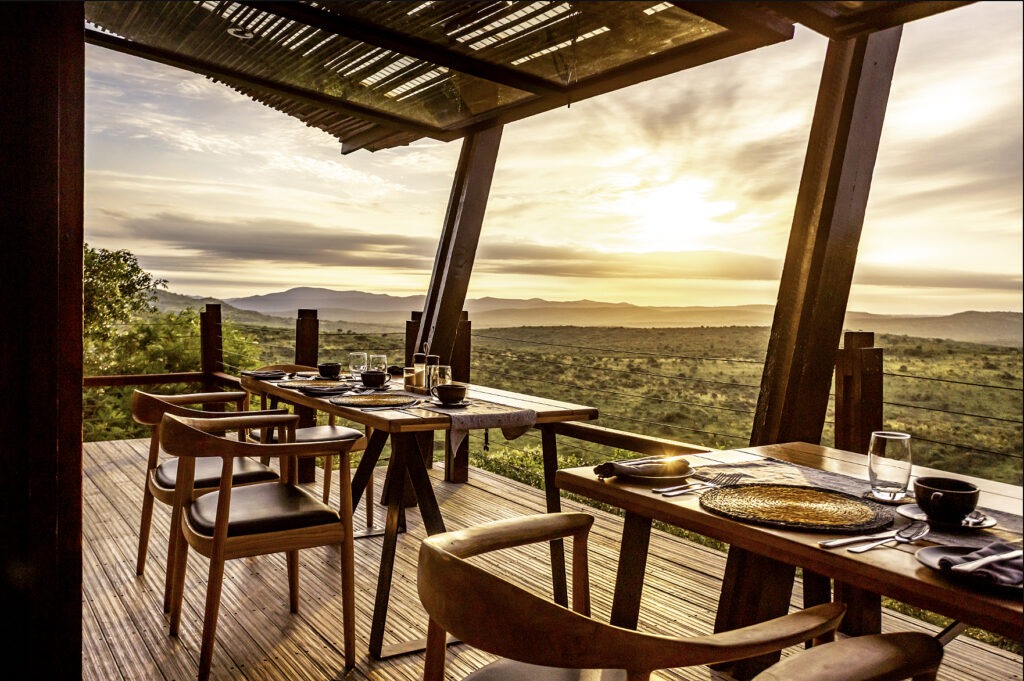
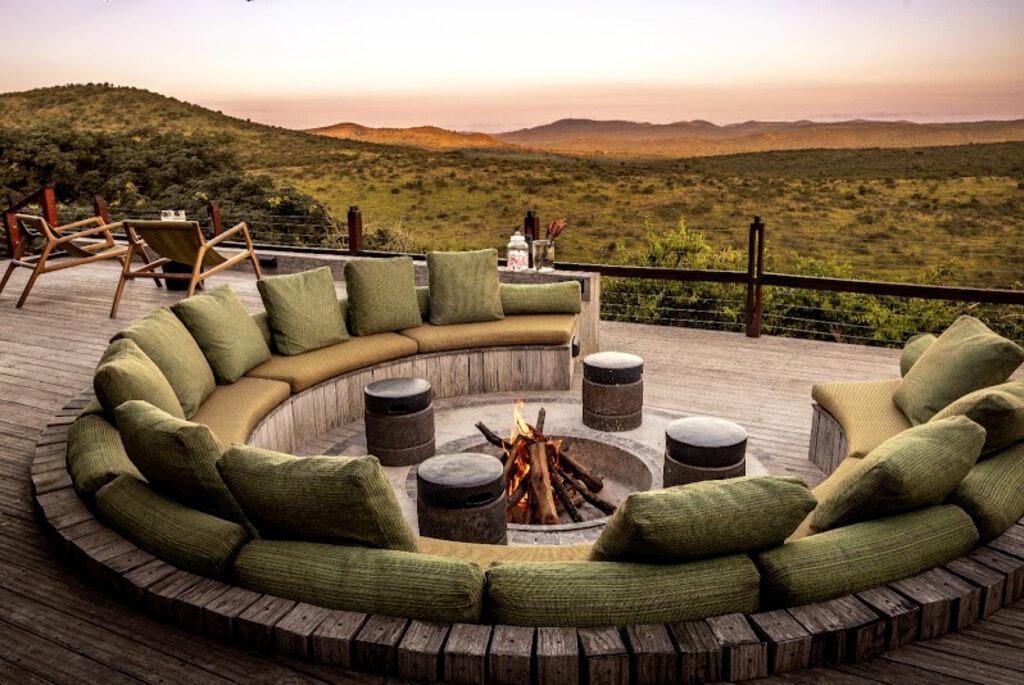
For travelers, this changes the meaning of a stay. The lodge has the pleasures expected of a refined safari property: sweeping views over the reserve, stylish rooms and villas, private decks, a pool, spa, restaurant, and the deep quiet that settles over the bush between game drives. Accommodation ranges from safari rooms to bush villas and honeymoon villas with plunge pools, giving the experience a polished but intimate scale.
Still, the impact reaches beyond the deck. Guests can take part in community visits that introduce local projects, including education, nutrition, craft, and development initiatives supported through the Isibindi Foundation. It is a reminder that conservation cannot be sustained by fences and anti-poaching units alone. It also depends on whether nearby communities see a future in protecting wildlife, whether jobs are created, and whether the benefits of tourism feel tangible.
The safari experience itself remains deeply beautiful. Hluhluwe-iMfolozi is Big Five country, with rhino, elephant, buffalo, lion, leopard, birdlife, and plains game. Game drives from Rhino Ridge move through hills, valleys, thickets, and grassland, with mornings that begin in the kind of gold light that makes the bush feel briefly untouched.
But the lodge’s real power is in giving context to that beauty. A rhino sighting here is not just another photograph. A conversation with a guide can lead to a story about Operation Rhino, anti-poaching work, habitat pressure, community partnerships, and the uncomfortable truth that Africa’s wildlife future depends on decisions made far beyond the safari vehicle.
Luxury, in this setting, is not only the architecture, the spa, the food, or the private deck. It is the privilege of being close to a conservation landscape that still matters profoundly, and understanding that a safari stay can either remain passive or become part of a larger system of protection.


