


Cruise
Dodging the Crowds: Exploring Off-Season Croatia and Italy on the Star Legend
Article and photography by Jennifer Bain
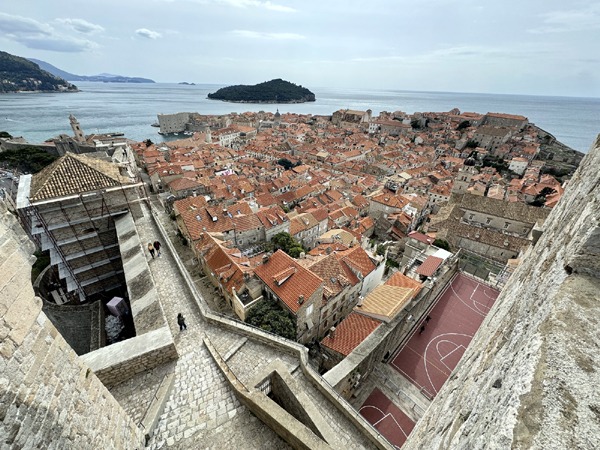
On the windy but warm March morning that I walked the UNESCO-listed Walls of Dubrovnik, there were roughly 3,406 people in the Croatian city’s compact historic core.
That was nothing, tour guide Tihomir Matić said, showing our small group the live data on the Dubrovnik Visitors website from our decidedly uncrowded vantage point above the city’s iconic red rooftops. Six counters installed at Old Town’s entrances update visitor data every 15 minutes on an interactive map.
Once 8,000 people are milling about, the core area enters a red zone that triggers measures to combat overcrowding and potential damage to this UNESCO World Heritage Site. The upper limit is 11,275.
“If there’s one thing that Dubrovnik wants, it’s sustainability,” confided Matić. “We don’t want more people in the main season when they’re like sardines packed in a jar. We do want more people in the parts of the year when it’s usually dormant because we’ve kind of reached the capacity we want in the high season.”
This fiercely patriotic city of 28,000 welcomed more than 4.28 million overnight visitors last year and is trying to extend its tourist season beyond the June to October crush. It restricts the number of cruise ships and passengers and ensures ships dock for at least eight hours.
That was no problem for my “Winter Italy and the Dalmatian Coast” itinerary with Windstar since the Star Legend carried just 257 passengers and stayed overnight. We got a day and a half to explore the city beloved by Game of Thrones fans plus a free shuttle between the port and Old Town.
The famous medieval stone walls didn’t disappoint.
Constructed between the 13th and 17th centuries, there are two kilometres (1.2 miles) of them and they’re up to 25 metres (82 feet) high, up to six metres (20 feet) thick and home to four forts.
“There are 1,050 steps,” Matić kept reminding us as we caught our breath on the flat stretches in between all the steep ups and downs. We learned that 900 people live within the walls, and we saw some of their backyards, clotheslines, orange trees and pets. We fell in love with the Adriatic Sea views and all the cats.
We spent just over half of our four-hour tour walking the walls and learning Dubrovnik’s history, including the fact that it was pummeled with 2,000 mortar shells in 1991 and 1992 as war raged in the former Yugoslavia.
I was curious to delve into the 40 Euro fee to walk the walls (counter-clockwise and only once). Matić explained how the non-profit Society of Friends of Dubrovnik Antiquities saved the crumbling walls, and how it shares proceeds from direct ticket sales and Dubrovnik Pass sales with the city and then plows this money into heritage conservation.
“They are the ones making sure everything is as incredible as it is,” he said. “All of these efforts are to make sure people love to live here and people love to visit here.”
After completing the wall walk, we descended into Old Town, strolled the main street (Stradun) and visited Game of Thrones filming locations. The Jesuit Stairs leading to the Church of St. Ignatius are now better known as the “Walk of Shame Steps” where Cersei Lannister walks naked through King’s Landing as penance for her sins.
I shared the beautiful Baroque steps with a few others that afternoon and returned the next morning to have them all to myself.
To sail in the off-season or not to sail in the off-season? That’s something I pondered while taking this eight-night Mediterranean cruise from Rome to Venice as winter turned to spring. Not everything was open and it wasn’t warm enough to swim or kayak, but that’s the tradeoff to avoid the crowds.
It was my second sailing with Denver-based Windstar Cruises, which is owned by the Xanterra Travel Collection and ultimately American billionaire Philip Anschutz. The brand operates a six-ship fleet of small sailing and all-suite luxury ships and is the official cruise line of the James Beard Foundation.
To celebrate my daughter’s 18th birthday, we flew to Rome for two extra nights. March break flights weren’t cheap. Neither were hotels but we got a good rate at the Best Western Plus Hotel Universo near Termini Station. People laughed when we said the city felt crowded.
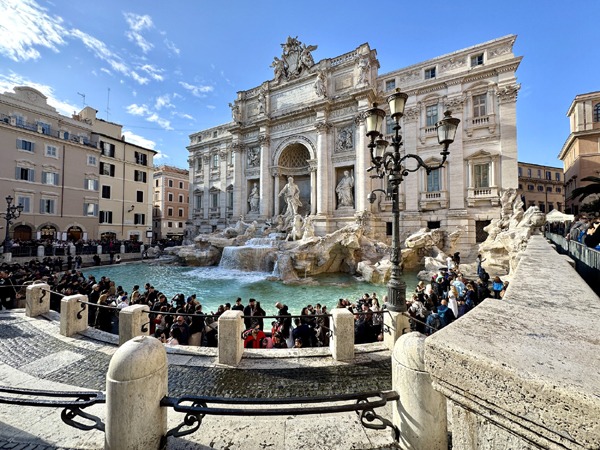
The Trevi Fountain was slammed so we paid a new two Euro fee to get close to the Baroque monument. Discombobulated by the crowds, we forgot to toss three coins into the water to ensure a return to Rome, love and marriage. That money goes to charity.
The next day we turned to the Tour Guy for semi-private tours, first of the Vatican, Sistine Chapel and St. Peter’s Basilica, and then of the Colosseum. What a joy it was to bypass the daunting lines and be shown these iconic sites on tours that capped out at 10 people.
“I know it’s a lot to take in, but it’s possible,” said guide Eleonora Fanelli. “We take in what we want to take in.” I took in the fact that Vatican City is a 109-acre sovereign state within Rome that’s governed as an absolute monarchy headed by the Pope. The world’s smallest fully independent nation is home to roughly 800 residents.
Before catching a 90-minute ride to the Civitavecchia Port of Rome, we went thrifting at Porta Portese. This mammoth Sunday flea market is about the same length as Dubrovnik’s walls.
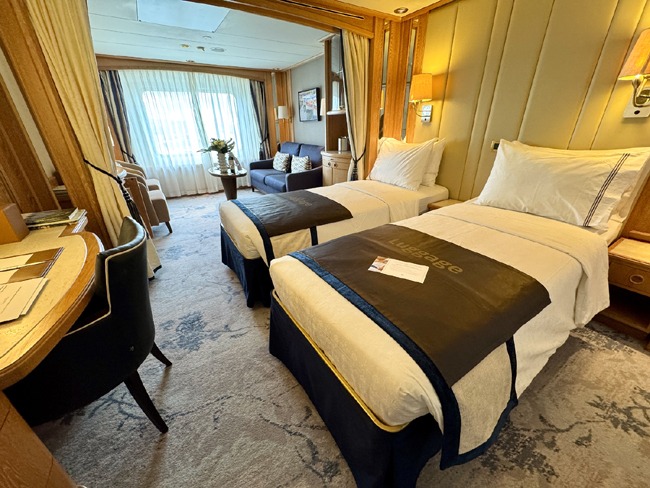
Life aboard the Star Legend, which can carry up to 312 passengers, was as serene as it comes.
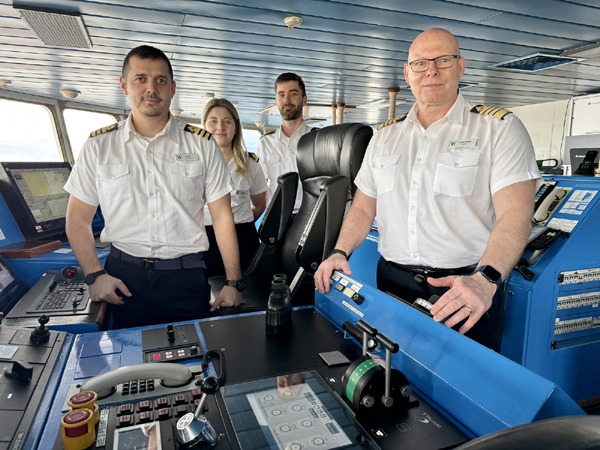
There was an open bridge and signature sail aways to raise the Windstar flag while listening to “Conquest of Paradise” by Greek composer Vangelis. You might remember that instrumental soundtrack piece from Ridley Scott’s 1992 epic historical drama 1492: Conquest of Paradise.
There was healthy eating, and we were grateful that meals were included unless you splurged on tomahawk steaks or a few upgraded dishes. Veranda offered breakfast and lunch buffets before becoming the white tablecloth Candles at night. There was also the Star Grill for lunch, Amphora and Basil & Bamboo for dinner, and the Yacht Club café.
Best of all, there was complimentary 24/7 room service that even delivered Amphora’s ever-changing dinner menu. My favourite meal happened on our sea day when we got to stroll though Amphora’s working kitchen filling our plates for a “galley market” lunch.
Food aside, Italy and Croatia were the real stars of our cruise.
With apologies to Naples, we used that day for Pompeii, the city that was destroyed when Mount Vesuvius erupted and is now a UNESCO World Heritage Site. What a relief it was to explore that sobering archaeological site without having to cope with summer mobs and scorching heat.
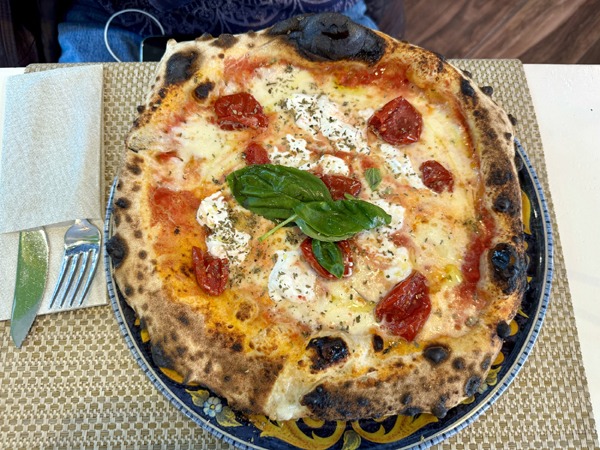
In laidback Messina, the gateway to Sicily, we watched the world’s largest and most complex astronomical clock’s quirky noon-time show with a roaring lion and crowing rooster, and then devoured the Margherita pizza that was invented in Naples.
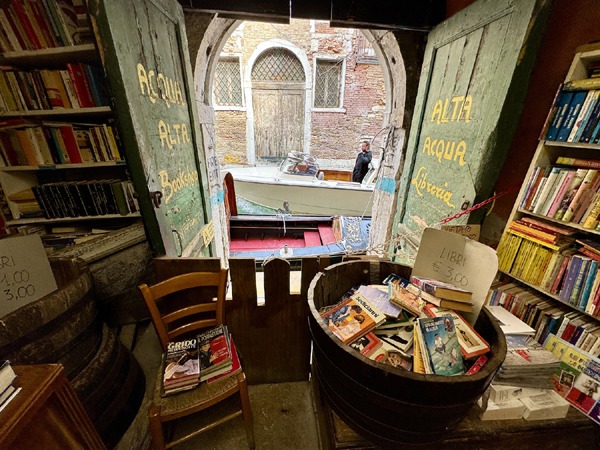
I felt a little guilty for visiting Venice, but at least we avoided Lagoon City’s peak overtourism season and supported Libreria Acqua Alta. Luigi Frizzo’s quirky, flood-proofed bookstore stacks its books in bathtubs, bins, boats and even a gondola.
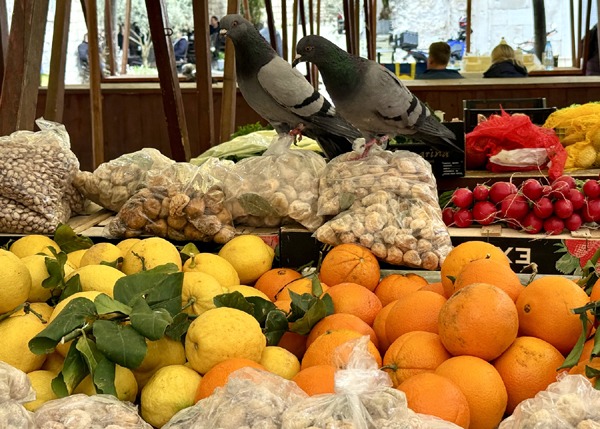
But it was the under-the-radar Croatian city of Zadar that stood out. That’s where we joined the ship’s executive chef to shop for fish, honey, cheese and charcuterie at a weekend market. Locals were out enjoying the first day of spring and as I strolled along a waterfront promenade, I followed deeply hypnotic almost whale-like sounds.
It was the Sea Organ, Croatian architect Nikola Bašić’s experimental instrument. Cleverly concealed within a 70-metre stretch of marble steps right where we docked, it makes random but impossibly beautiful music using underwater pipes and the power of waves and tides.
I sat for a spell and let myself be serenaded by the Adriatic Sea.


