

-

- WT Photo
Germany
Finding Light in Nuremberg, Germany
Article and photography by Judi Cohen (Traveling Judi)
A few days in Nuremberg made for a meaningful and unexpectedly uplifting finale to a Jewish heritage-themed Uniworld Danube river cruise in Hungary, Austria and Germany. Nuremberg surprised me. It’s a city of contrasts, layered with history, culture, and beauty, and filled with moments that invited both reflection and joy.
Fairytale-like Old Town, Modern City and Historical Importance
Steps from the hotel is the Craftsmen’s Courtyard, a charming enclave of artisan workshops and cobblestone lanes. It’s a lovely introduction to Nuremberg’s fairytale-like Old Town, where half-timbered buildings, Gothic churches, and stone bridges sit comfortably alongside modern cafés and shops.
Outside those medieval walls, Nuremberg is a thriving, modern city. Nuremberg draws visitors not only for its beauty and cuisine but for its profound historical importance.
During World War II, Nuremberg was both a symbol of Nazi propaganda and later, a place of justice during the Nuremberg Trials. This complicated legacy makes it a vital destination for those wanting to understand Germany’s past. And judging by the crowds, many people do.
Former Nazi Party Rally Grounds and Documentation Center
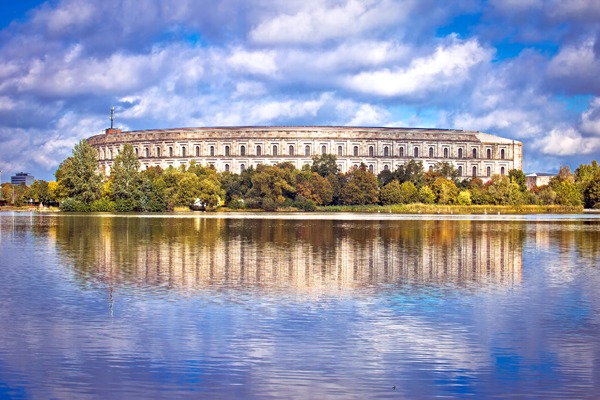
We took a tram to the former Nazi Party Rally Grounds and Documentation Center. Though the main museum is under renovation until 2026, the temporary exhibition inside the vast Congress Hall offers powerful context on how Nazi propaganda shaped a nation. We wandered through the enormous Third Reich parade grounds, and the Zeppelinfeld grandstand, struck by the scale and spectacle of it all. Once a stage for hate-filled speeches, those same spaces are used today for jogging, car racing, concerts, paddle boating, and family picnics.
Where to Stay:
Staying at the Cloud One Hotel, just across from the central train station, was an ideal location for touring. With stylish rooms, a great breakfast buffet, and a 14th-floor Sky Bar, it offered panoramic views of the city’s red rooftops and steeples. That first evening, watching the sunset, I felt a surprising sense of calm.
Daytrip to Dachau Memorial Site
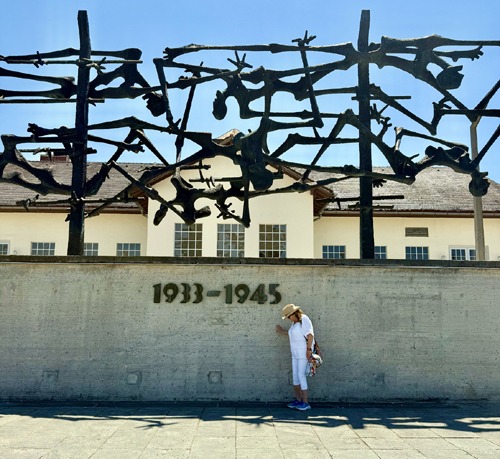
The next day, we took a train to the Dachau Concentration Camp Memorial Site. Originally, we planned to walk the historical path prisoners were marched down, but due to the heat, we took a short bus ride from the train station. Walking through the iron gates leading into the memorial site with the slogan “Arbeit macht frei” (work will set you free), we saw crowds of tourists and school groups. Our guide explained that in Germany, all students are required to visit former camps and learn about the Holocaust.
Most of Dachau’s buildings were demolished after the war, but reconstructions of the barracks and crematorium, help tell the story. A museum is in the original intake building where prisoners had everything taken away and exchanged their given names for a number. While our guide touched on the broader prisoner population, she noticeably downplayed the Jewish experience.
As I walked through the foundations of the former prisoner barracks surrounded by imposing guard towers, I felt my father’s presence. He was a prisoner in Dachau, as were my grandparents and other family members. I recited the Kaddish, the Jewish mourner’s prayer, and placed stones on the monuments to honor my family and the six million Jews who perished during the Holocaust. I also donated money to support the preservation of this sacred site.
Comfort Food in the Old City
When we returned to Nuremberg’s lively Old City, we dined at Fränk’ness, the creation of celebrity chef Alexander Herrmann. We savoured the burrata with pine nuts, fresh breads with creamy spreads, roasted steak, potatoes au gratin, and a crisp Austrian rosé. Food, like travel, can be healing.
Nuremberg had given us space to reflect, to honor the past, and to feel hopeful about the future. I wish we had more time to walk in the Old City and try some bratwurst with cold beer.


