

USA
Finding the Heart of America in Montgomery County, Virginia
by Olivia Liveng
When you live overseas, you start to forget what small-town America sounds like — screen doors closing, gravel under tires, a low radio hum from the diner counter. Montgomery County, Virginia, brought all of that back the moment I arrived.
Set between the Blue Ridge and Allegheny Mountains, the county centers around the neighboring towns of Blacksburg and Christiansburg, where mountain air, farmland, and university energy all mix together. It’s a part of Virginia that feels genuinely lived in — local farms still operating, students cycling past brick buildings, families heading to Friday night games. Nothing about it is put on.
The drive from Roanoke took less than an hour, winding through quiet fields and forest. At the Inn at Virginia Tech, I could see the limestone campus stretching out behind me and the hills just beginning to turn amber in the fall light. The air was clean and still, the kind of air that makes you slow down without trying.
My first stop was Sinkland Farms, a long-standing family property that turns into a patchwork of orange each autumn during its Pumpkin Festival. The fields were full of families taking wagon rides and musicians playing under tents. I walked past rows of sunflowers and stalls selling apple butter, cider, and fresh bread. The owner, Susan Sink, waved from her golf cart and said she’s been running the festival for decades. It shows — the place feels worn in the best way.
Dinner that night was at Buffalo and More, a small restaurant that serves bison raised on the owners’ own farm. The chili came with cornbread and a side of conversation from the following table. The food was rich and honest, and it tasted like it belonged here.
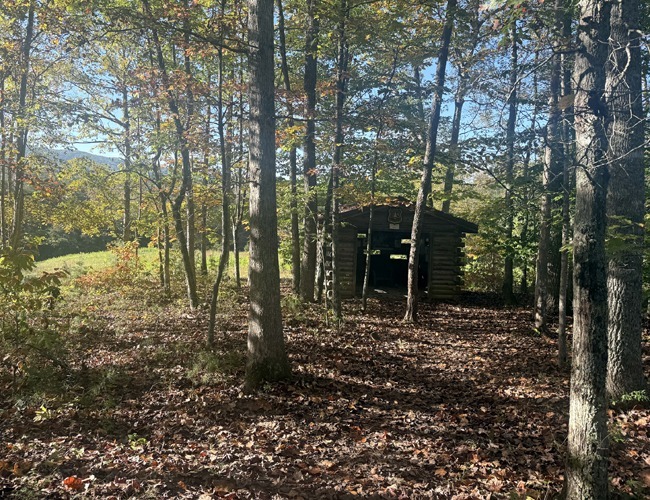
The next morning I drove out to Pandapas Pond, tucked inside the Jefferson National Forest. A trail circles the water through stands of oak and maple. The only sound was the shuffle of leaves and the occasional dog collar jingling down the path. The calm of it lingers with you.
Back in Blacksburg, the Center for the Arts at Virginia Tech was showing a textile-inspired exhibit — modern, bright, and a reminder of how much the university adds to the town’s creative pulse. Downtown, I wandered through Blacksburg Books and Sugar Magnolia, a cheerful mix of stationery, sweets, and gifts. It’s an easy place to spend an afternoon: a scoop of ice cream, a coffee, a stroll.
That evening, I found myself at Beliveau Farm & Winery, reached by a two-lane road that twists through farmland and open sky. The tasting room was small, the wine dry and crisp, and from the porc,h you could see the last light fade over the hills.
Later, back in town, I stopped into J.H. BARDS Spirit Co., a local distillery started by two friends who came home to make whiskey. The space is small — just a bar, a few stools, and rows of bottles with handwritten labels. It felt personal, and the pour was smooth.
The next day, I spent time in Christiansburg, the quieter counterpart to Blacksburg. Brew Da Bean served chicory coffee and beignets to a steady stream of regulars who all seemed to know each other. I stopped at Cambria Station Antiques, a maze of creaky floors and good finds, and left with a vintage postcard of the New River Valley. Lunch was at Lost in Taste, a playful, space-themed restaurant that takes its food more seriously than its décor. The burger and fries were perfect, and the staff made sure you didn’t leave hungry.
Down the road, the Montgomery Museum of Art & History was preparing for the county’s 250th anniversary. One of the curators showed me a 1700s courthouse bell that’s being restored so it can ring again — a small thing that somehow felt like the whole story of this place.
On my last evening, I found myself back in Blacksburg at the Blacksburg Wine Lab, a relaxed spot opened by a couple who used to teach wine and geography. The room was dim, the shelves lined with bottles, and the tables full of easy conversation. I ordered a cheese plate, watched the rain start outside, and felt completely content doing nothing.
Before leaving town the next morning, I walked through the Hahn Horticulture Garden on the Virginia Tech campus. It’s six acres of meadows, ponds, and shaded paths where students read or nap between classes. The smell of damp leaves mixed with coffee drifted from somewhere nearby.
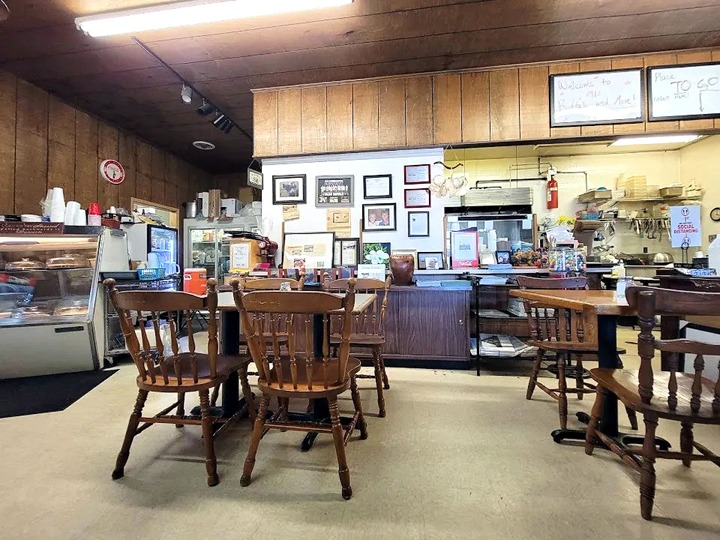
My last stop was Gillies, a local institution that has been around since the 1970s. I sat at the counter with a black bean burger and thought about how rare it is to find a town that still feels this open. Down the street, Rustic Roots Olive Oil offered samples of lemon and basil-infused oils. I tried a few, bought one, and realized that was as close to a souvenir as I needed.
Driving back toward Roanoke, I kept thinking about the sound of the place — not just the obvious noises, but the quieter ones: the clatter of dishes, the call of birds in the pond, a door closing softly behind someone who probably knows everyone in town.
Montgomery County doesn’t announce itself. It doesn’t need to. It’s the kind of place that lets you rediscover the simple, familiar parts of travel — the ones that remind you what home can feel like, even when you’re far away from it.


