


Cruise
Why One Le Boat Holiday Is Never Enough
Article and photography by Judi Cohen (Traveling Judi)
I’ve sailed aboard expedition ships in the Arctic and Antarctic, drifted along the Mekong, Irrawaddy and Brahmaputra on intimate river vessels, and crossed oceans on luxury liners. Yet one of my favourite ways to travel doesn’t come with a captain, a cruise director or even a crew. Instead, it comes with a set of keys.
Three times now, I’ve climbed aboard a Le Boat houseboat, untied the lines and become captain of my own floating holiday. Twice I’ve explored the Rideau Canal, and most recently I traveled the Trent-Severn Waterway. Each trip has left me with the same thought: one Le Boat holiday is not enough.
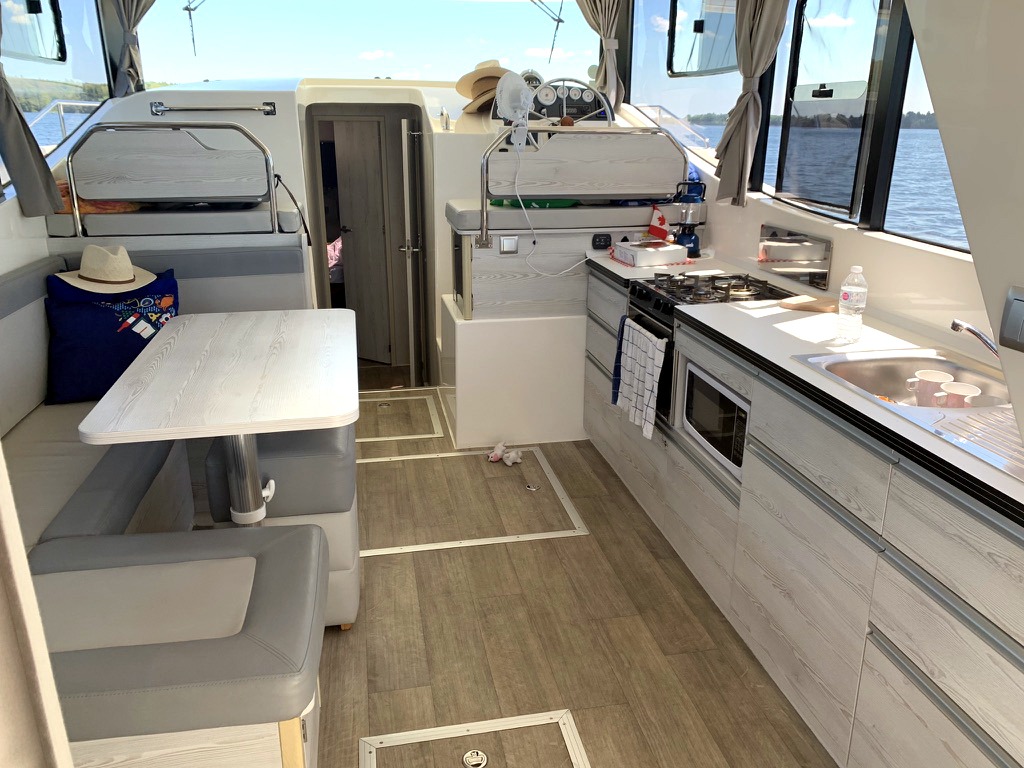
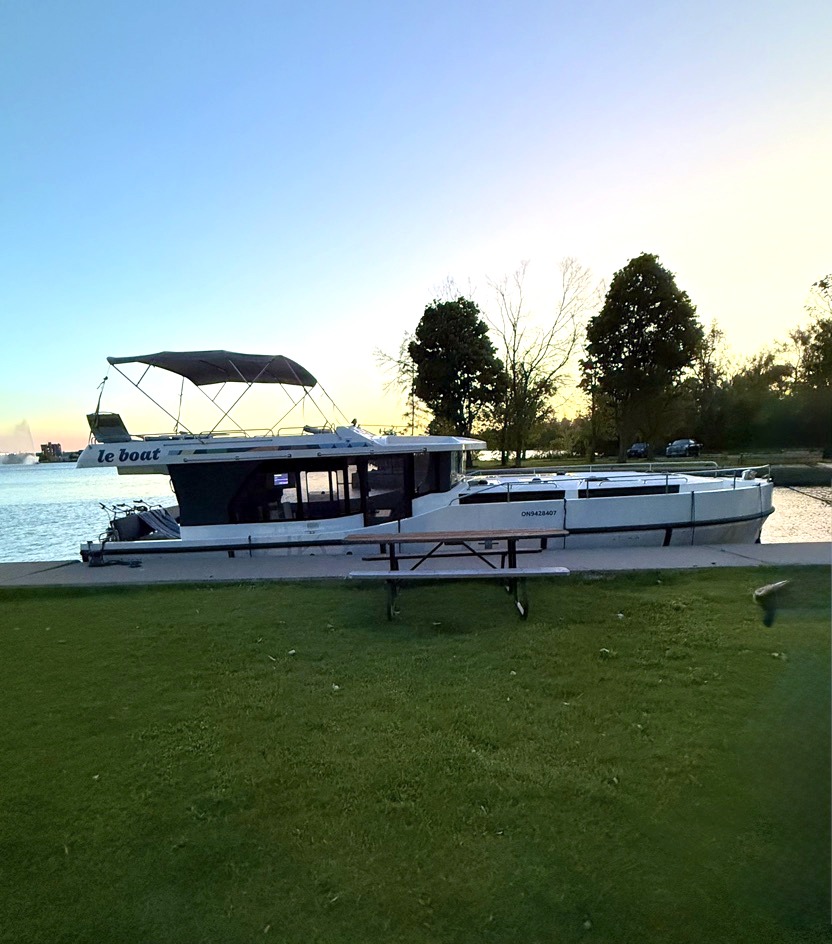
What makes it so appealing is how easy it is to settle in. At Le Boat’s base in Smiths Falls on the Rideau Canal, or in Peterborough on the Trent-Severn, the boats are essentially floating cottages waiting for you to move in. The kitchens come fully equipped with a refrigerator, gas stove, dishes and utensils. There are bathrooms with hot showers, toilets and towels in every cabin, and sleeping quarters with pillows, duvets and linens. Heating and air conditioning are included too.
All we need to bring are our clothes, personal belongings, food and drinks. Before casting off, we fill the coolers and stock the fridge with breakfast supplies, snacks and ingredients for a few meals. There’s no need to provision for the whole trip, since communities along the waterways offer plenty of chances to shop and restock.
Becoming Captain
The idea of commanding a 40-foot-plus houseboat can sound intimidating, especially if, like me, you aren’t an experienced boater. The reality is far less daunting. No boating licence or previous experience is required. Le Boat provides a pre-departure briefing and boat-handling demonstration, covering the controls, safety procedures and navigation before you head out; the company’s Canadian boats also have onboard chart plotters to help.
The first time I took the helm, it was both exhilarating and slightly terrifying. Suddenly I was responsible for watching the channel markers, judging distances and figuring out how to bring a large houseboat alongside a dock without making a spectacle of myself. But the boats are surprisingly manageable, with easy-to-use thrusters, and once underway there is time to think, look around and adjust. Before long, I was relaxing behind the wheel, watching the shoreline glide past and enjoying the unusual feeling of being responsible for where we went next.
A Cottage That Moves
The boat quickly becomes much more than transportation. It’s our kitchen, dining room, living room, bedroom and outdoor terrace all in one. We can make breakfast whenever we wake up, prepare lunch while underway and grill dinner as the sun sets. Sometimes, though, the best meals take us ashore.
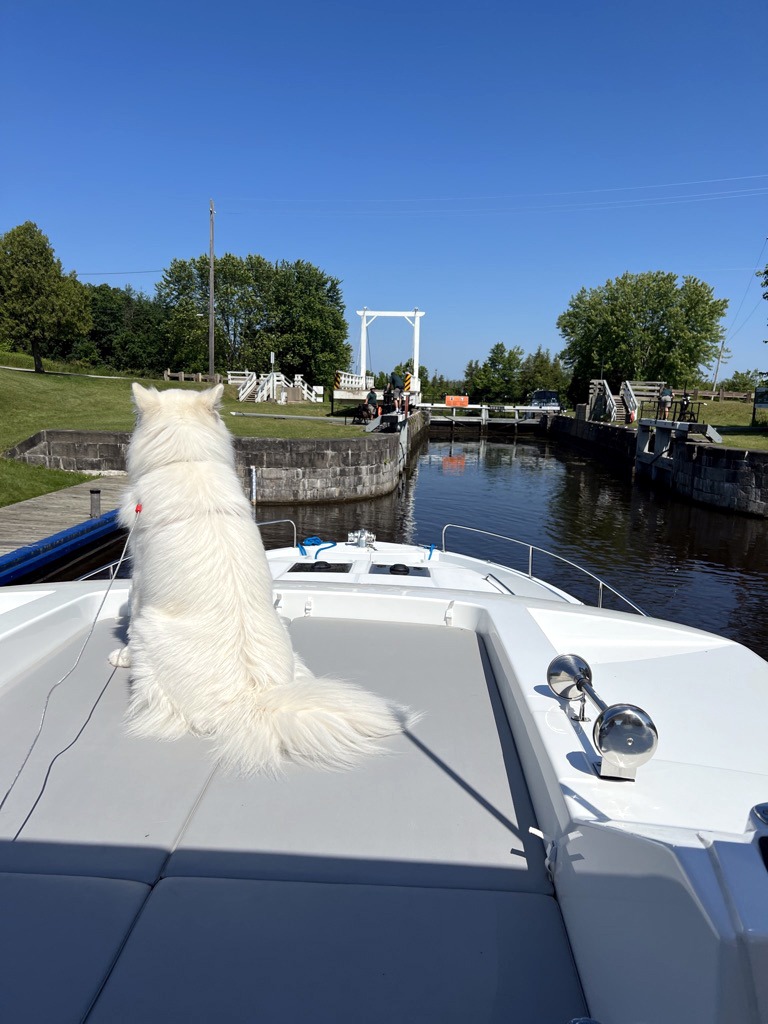
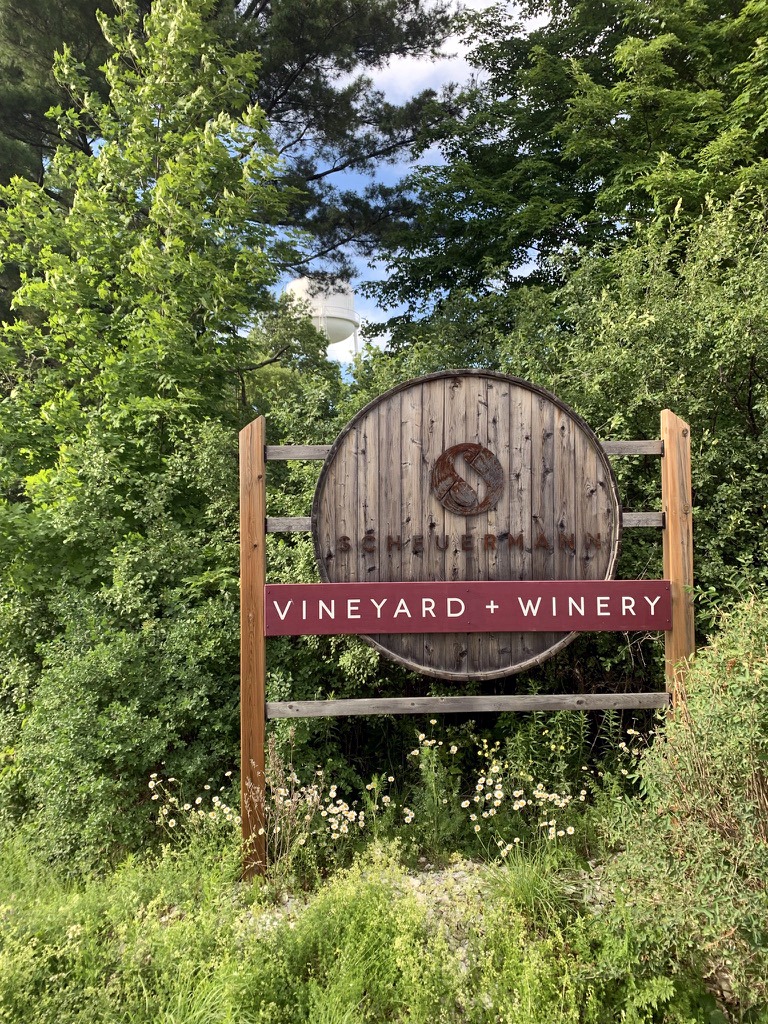
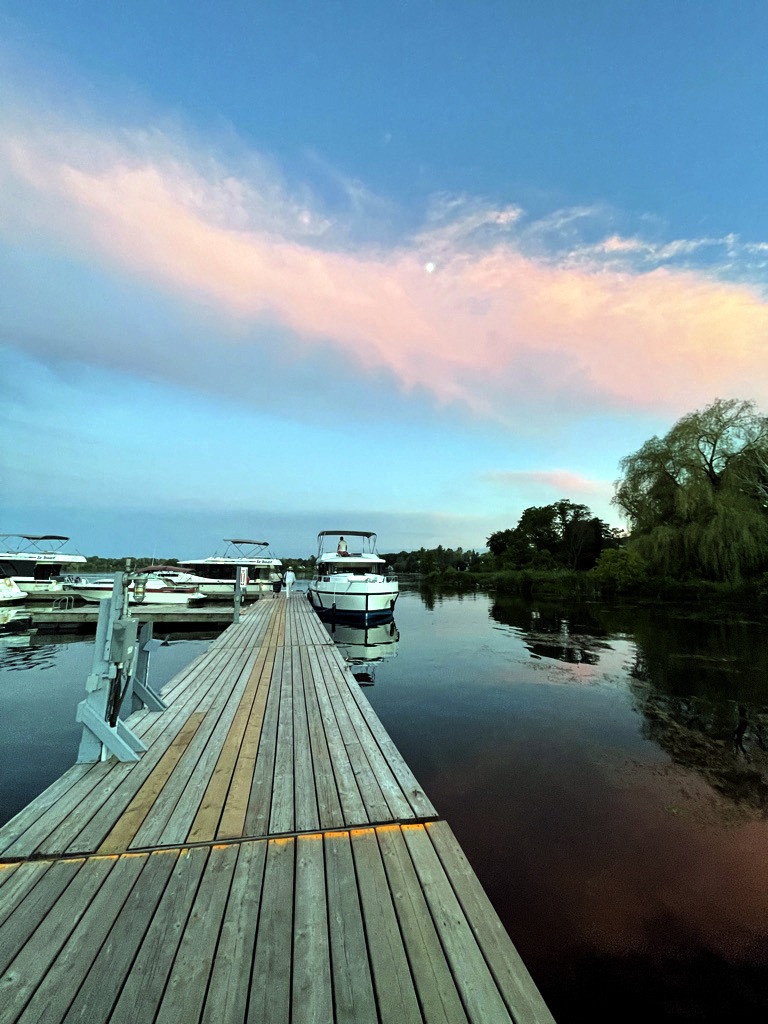
One of my favourite Rideau Canal evenings began as we approached a lock at Westport while the sun was setting, the sky turned a brilliant red. That night we took a taxi to Scheuermann Vineyard and Winery, overlooking Sand Lake. We settled outside for dinner and a steak cooked on the wood grill; the setting felt more like a European vineyard than an Ontario road trip. And we didn’t leave Joni, our dog, behind. She came along too, welcomed with water and treats, and she laid happily beside us as we took in the view. For us, that small gesture made the evening even more memorable.
The Rideau: Locks and Lakes
The Rideau Canal stretches 202 kilometres between Ottawa and Kingston and has 47 locks at 24 lockstations, including the two locks of the Tay Canal. Completed in 1832, it remains one of the oldest continuously operated canals in North America.
For a houseboat traveler, the locks aren’t just engineering features, they are part of the adventure. One of my favourite destinations is Merrickville, about six hours from Le Boat’s Smiths Falls base. Approaching by water is part of its charm: we tie up near the historic lock station and walk into a village of heritage buildings, independent shops, galleries, cafés and restaurants. I love wandering without an agenda, browsing shops, stopping for coffee and simply enjoying the architecture. There’s something satisfying about arriving in a village by boat, we don’t park a car, rush through a list of attractions and leave. We tie up, walk ashore and become part of the waterfront for a while.
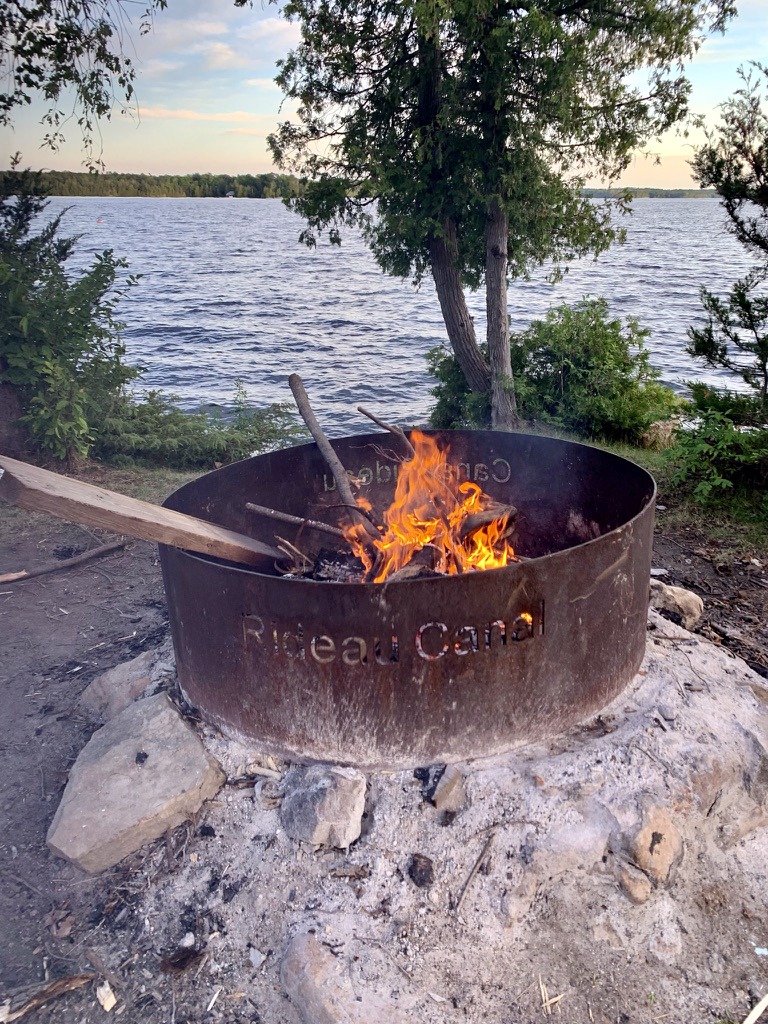
One of my most memorable Rideau moments, though, wasn’t at a lock at all. We docked overnight at Colonel By Island on Big Rideau Lake, named for the canal’s builder, and it felt like we’d discovered our own private retreat. There were firepits where boaters gathered, and nearby stood an old mansion with crumbling tennis courts. The combination of the lake, a 2-kilometre walking trail and the remnants of another era gave the island an almost cinematic quality. Other boaters had chosen to spend the night there too, and before long we were swapping stories. Several had dogs along, so Joni had an instant group of new furry friends. It was one of those travel moments that wasn’t on an itinerary and didn’t require an admission ticket.
The Trent-Severn’s Engineering Marvels
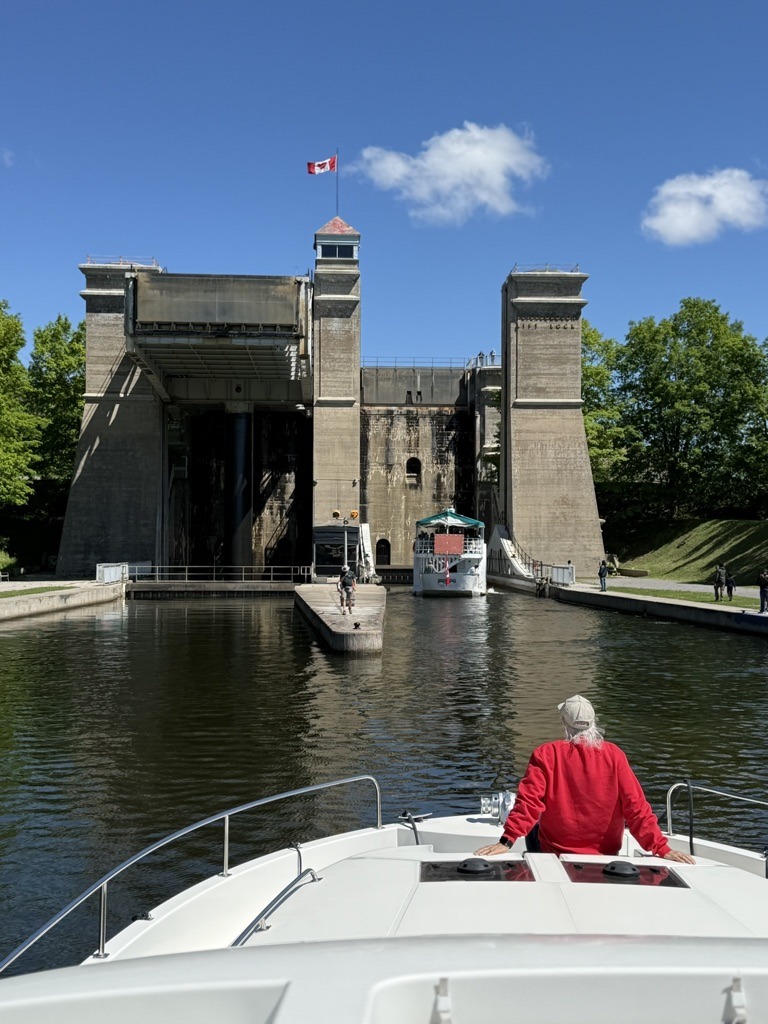
The Trent-Severn Waterway runs 386 kilometres and has 44 locks along its route. Our most memorable experiences came in Peterborough, where two very different locks demonstrated the extraordinary engineering behind the waterway: Lock 20, the Ashburnham Lock, followed immediately by Lock 21, the Peterborough Lift Lock.
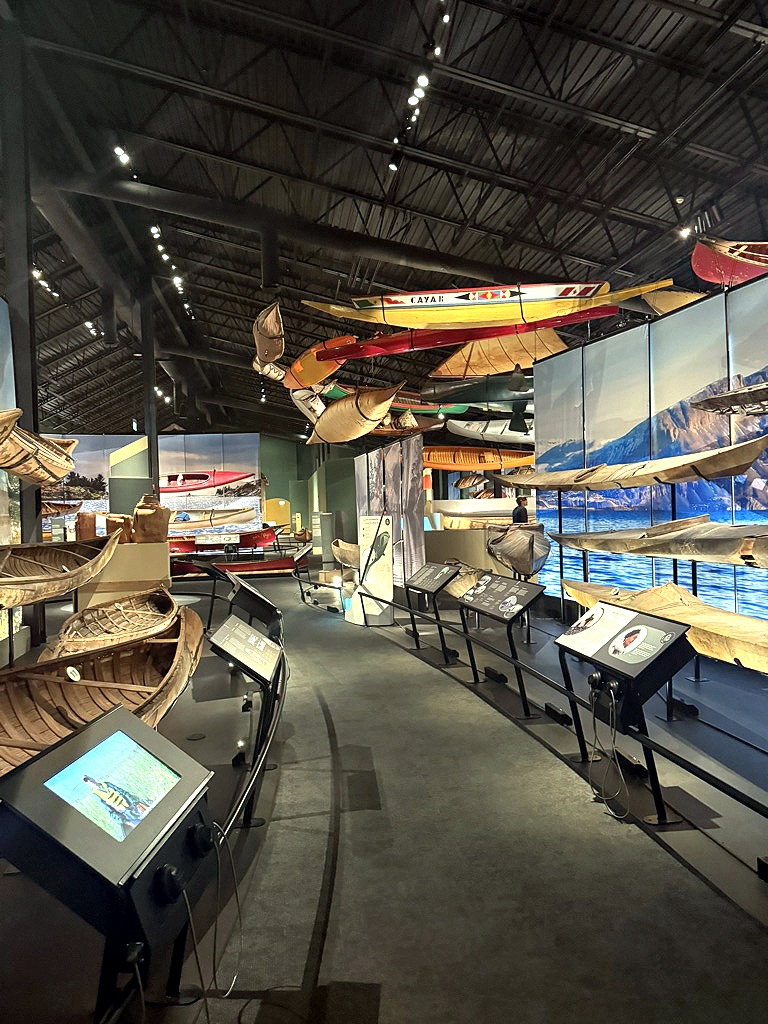
Accessed from Lock 20, the Canadian Canoe Museum on Little Lake provided us with a deeper appreciation for Canada’s canoeing heritage.
But the real showstopper was the Peterborough Lift Lock. I had seen photographs of it, but nothing prepared me for approaching it in our own houseboat. Lock 21 is one of only two hydraulic lift locks on the Trent-Severn. Opened in 1904, it raises and lowers boats about 65 feet, using two enormous water-filled chambers. What made our visit unforgettable was a tour from the lockmaster: instead of watching the mechanism from shore, we were invited into an elevated control room to see the operation up close, then entered one of the giant chambers in our own houseboat. It was surreal sitting on the boat’s deck, as we were raised up by an ingenious piece of Canadian engineering that has been doing essentially the same thing for more than 120 years.
One More Reason to Return
Our Trent-Severn journey also left something unfinished: we didn’t have enough time to make it into the Kawartha Lakes. And I’m perfectly happy about that. Le Boat’s Peterborough base sits roughly midway along the waterway, giving access to the extensive network of lakes, rivers and canals in the Kawarthas, and the company’s suggested routes include heading north through the Lift Lock toward them. Next time, I want to go farther, spend more time on the lakes and explore the towns we didn’t reach. After three Le Boat holidays, I still haven’t seen everything I want to see on either waterway.
I’ve traveled thousands of kilometres to reach some of the world’s most remote places, but there’s something wonderfully satisfying about discovering Ontario from the deck of a houseboat. We can stock the fridge, fill the coolers, bring the dog, cook dinner onboard, stop at a vineyard, wander through small towns, meet other boaters around a firepit or marvel at a lift lock more than a century old. There is no captain, no cruise director and no predetermined schedule, just keys, a boat and a waterway stretching ahead. This may explain why one Le Boat holiday, or even three, is not enough. I’m already thinking about the fourth.


