

-

- Hotel Grischa – Maurice_Paree
-
- Hotel Grischa – Jennifer Merrick
-
- Hotel Grischa – Jennifer Merrick
-
- Hiking Davos-Martin_Bissig
-
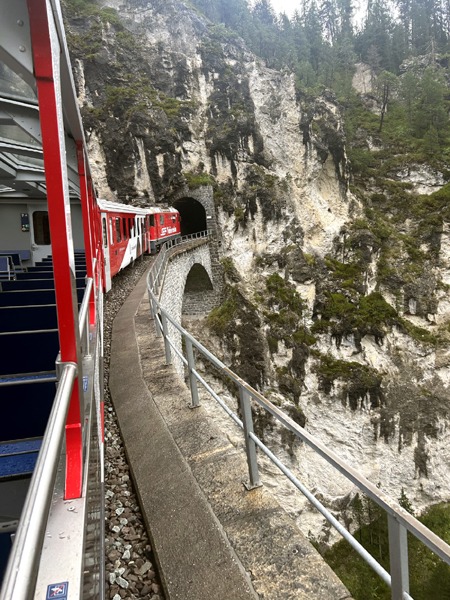
- Landwasser Viaduct – JenniferMerrick
-
- defaultEau-la-la – Marcel Giger
-
- Hotel Grischa – Maurice Paree
-
- Schatzalp funicular – Andrea Badrutt
Switzerland
Davos, Switzerland: A Magical Mountain Getaway
by Jennifer Merrick
“The founder knew there was a special energy here,” said Ferdinand, a spokesperson at the Hotel Schatzalp, looking out at the panoramic views of the alpine meadows and mountain peaks. “And later science proved it.”
He was referring to Willem Jan Holsboer, a Dutch railway pioneer and entrepreneur. At the end of the 19th century, Holsboer spent two years scouring the Alps for a site to build a sanatorium for tuberculosis patients (at the time, alpine air was believed to possess curative properties). He decided on this site, a broad south-facing slope above Davos, a Swiss town high in the Graubünden mountains, convinced it was especially healing.
Years later, French physicist Alfred Bovis developed a device that claimed to measure energetic vibrations in places. Ferdinand told us that some places around the hotel measure 26,000 Bovis units—remarkably high compared to the average of 6,000 to 7,000 (Stonehenge reportedly registers at 13,000).
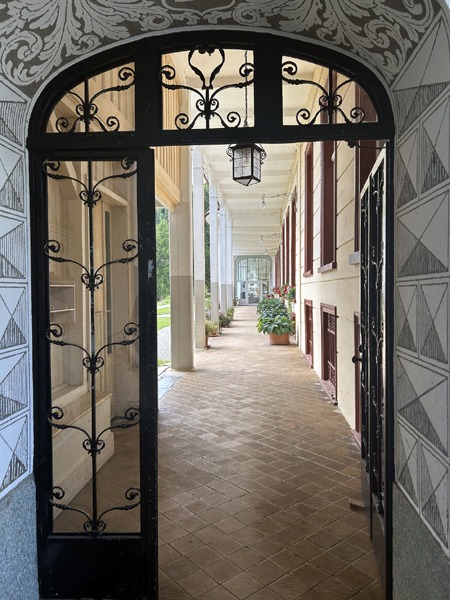
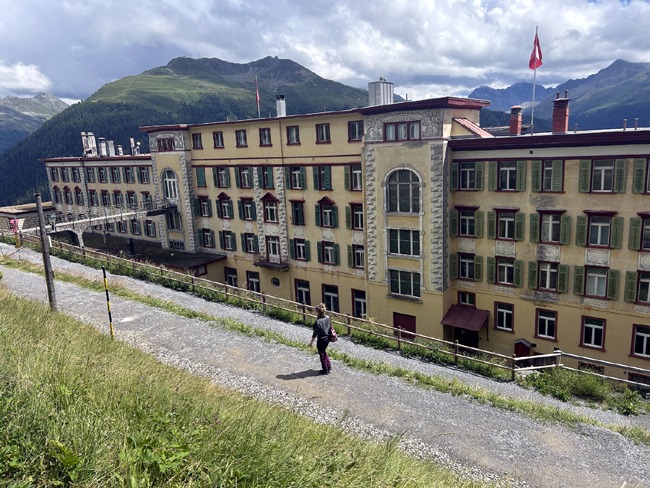
Built in 1900, Schtzalp combined a progressive approach to medicine with luxury, turn-of-the-century grandeur. No expense was spared. The Art Nouveau design features graceful curves, large terraces, expansive windows and lounge areas with intricate tilework and works of art. The latest in electrical lighting and plumbing was installed. “Even the toilet seat was heated,” said Ferdinand, when we viewed the room Kaiser Wilhelm II stayed in.
Wealthy patients were treated with a program that included seven-course meals and hours spent wrapped up on lounge chairs to breathe the mountain air. Some left, claiming to be cured, while others were quietly whisked out a discreet exit in the hotel, their bodies brought down to town by toboggan. In the end, it was antibiotics that cured TB and since the 1950s, the Schatzalp has been operating as a resort. Its elegant rooms and colourful grounds steeped in wellness and literary lore — and perhaps with a transformative energy if the Bovis meter on the property is any indication.
However, not everyone is convinced of the so-called “energy fields”. “I’m a natural scientist,” said Fabian, the head gardener of the property. Still, he admitted that the Schatzalp property was a unique place, citing its sun-drenched plateau and rare ecological makeup. “We have both alkaline and acidic soils here,” he explained. “That’s unusual—and it creates a rare and rich alpine habitat.”
Schatzalp’s gardens are a living testament to this natural richness. The Alpinum is a sprawling botanical garden with themed zones showcasing plants from around the world. The Edelweiss zone dazzles with over two dozen variations of Switzerland’s most romanticised flower, while the most colorful section—The Thomas Mann Garden—pays homage to the hotel’s most famous literary guest. Mann’s seminal book of German literature, The Magic Mountain, was set in a fictionalised sanatorium that was inspired by the Schatzalp.
Whether or not you believe in mystical measurements of energy forces, there’s no doubt that Davos and the magical mountains that surround it have a special allure. At 1,560 metres above sea level, it’s the highest municipality in Switzerland, most known for its winter sports and international economic negotiations.
Here are a few ways Davos captivated us on a recent summer getaway:
Luxuriating in stylish accommodation and fine dining
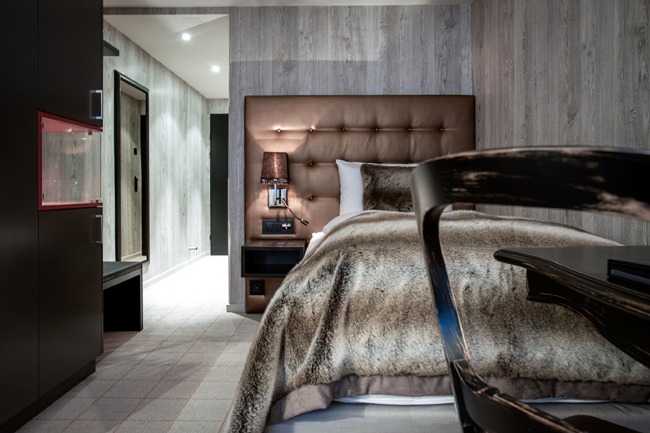
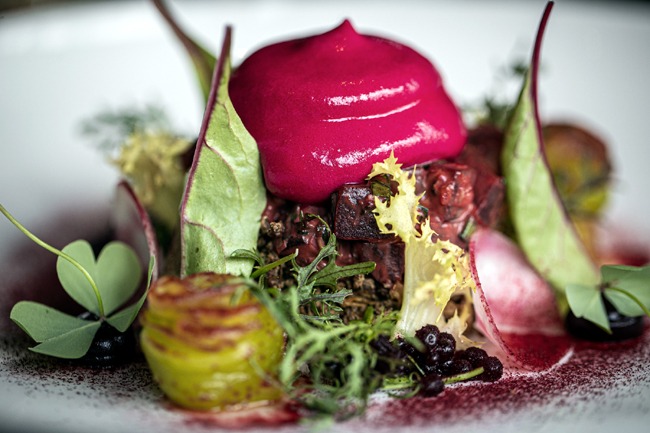
Each January, Davos draws the global elite for the World Economic Forum. With them come a polished crop of hotels, restaurants and cocktail bars. Hotel Grischa stands out—not only for its location directly across from the railway station, but for its seamless blend of modern décor and warmth. Rooms feature warm wood accents, bold textiles and spacious bathrooms, while the hotel’s restaurant serves up chef-centred cuisine in a chic atmosphere. Famous guests include the Canadian hockey hero, Sidney Cosby, and Justin Trudeau once delivered a speech in the hotel’s popular bar.
Riding the rails
Switzerland’s trains are always a joy, but the ride from Davos Platz to Filisur ranks among the best. This section of the UNESCO-listed Rhaetian Railway passes through tunnels, by waterfalls, across gorges, and over the remarkable Landwasser Viaduct—a stone bridge arching 65 metres above the valley floor. One stop before Filisur, we disembarked to view this archeological marvel from a platform.
Special sightseeing trains run on this route. Some have open-air carriages, while others are ‘nostalgia trains’, historic railcars from the 1920s restored to their former glory. Traveling in the luxury retro carriages complete with velour seats and decorative paneling, I could easily imagine I was in the Orient Express era of train travel. Another trip back in time was the village of Filisur itself with its narrow streets, a tiny 15th- century church and beautifully painted and decorated Engadine houses.
Admiring the photos and paintings at the Kirchner Museum
Davos was home to Ernst Ludwig Kirchner, a German artist renowned for his expressionist style of painting and printmaking. The museum dedicated to him displays his dramatic works impressively by placing them side by side with the images that inspired them. Even the building’s glass walls reveal the mountain views and landscape that was Kirchner’s muse for his art. The collection also includes letters, photos and personal effects, providing an intimate look at an artist who both struggled and thrived in these mountains.
Relaxing at the wellness centre
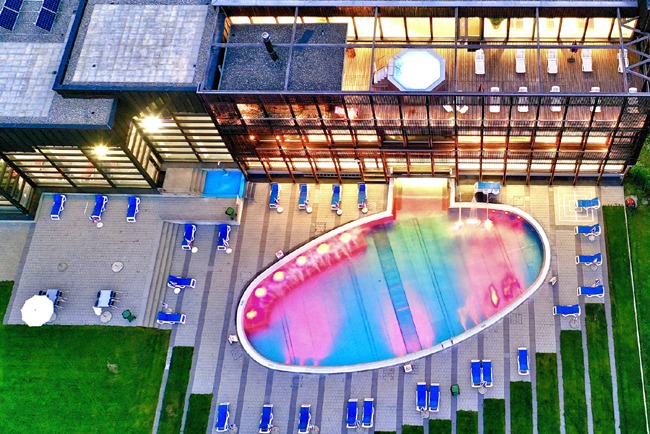
No alpine town is complete without a wellness centre, and Davos’s Eau-là-là offers a modern, family-friendly aquatic center, complete with indoor and outdoor pools, diving platforms and a 260-foot water slide. The adult-only wellness area offers saunas, steam baths and a large relaxation room.
Indulging in authentic Swiss cuisine at Walserhuus in Sertig
Only a short drive or scenic two-hour hike from town lies the rural hamlet of Sertig, situated at the end of a wide valley. Surrounded by high peaks and grazing cows, Walserhuus is a cozy alpine inn serving hearty regional dishes. The fish I ordered was caught in the nearby river and we tried capuns, a local speciality consisting of dumplings filled with dried meat wrapped in chard leaves. “It’s something my mother makes,” said Andreas, our Swiss dining companion. “Every family has their own version.” Paired with a local beer from nearby Monstein, it tasted even better.
Hiking the mountains
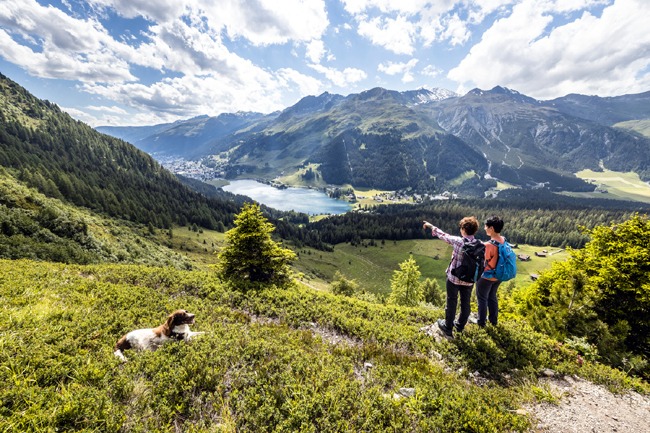
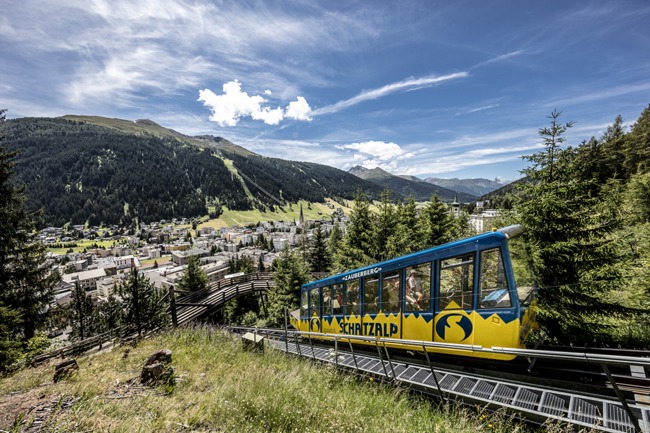
In summer, the same gondolas that ferry skiers in winter transform into gateways for hikers. From the top, trails sprawl into high alpine wilderness, passing through flowered meadows, rocky outcrops, and panoramic overlooks. Our most memorable outing began with a short, steep ride up the historic Schatzalp funicular, which has been operating since Christmas Eve of 1899. After touring the historic sanatorium turned hotel and its gardens, and learning about its special energy, we followed a quiet path back down into town. As I looked out over the valley and breathed the fresh alpine air, I couldn’t help but think that perhaps Holsboer and Bovis were on to something after all.
Visit: www.davos.ch/en/


