

Japan
Hakata Old Town, Fukuoka, Kyushu, Japan
Article & Photography by Steve Gillick
Adventurous tourists seeking the passage to Hell and Paradise, discerning foodies craving to discover the origins of Japanese cuisine, and wired travelers searching for an infusion of power and energy need look no further than Hakata Old Town in the dynamic city of Fukuoka on the north coast of the island of Kyushu.
Fukuoka’s allure includes the ruins of Fukuoka Castle, Dazaifu Tenmangu Shrine, the Grand Sumo Tournament in November, and Hakata Old Town. In 1889, when Fukuoka, the Samurai Castle town, merged with Hakata, formerly Japan’s largest international port in the 12th to 16th centuries, a vote determined that the city would be named Fukuoka, but the port would keep the name, Hakata. Today, Hakata Old Town can be accessed from Gion Station on the Fukuoka City Subway. The area appeals to many interests: craft and lantern painting workshops, Zen meditation, and a diverse culinary scene, but we were captivated by the ‘Spiritual Stroll’ that covers the fascinating temples and shrines in the historic area.
Tochoji Temple, Japan’s oldest Shingon Buddhist temple, was founded by the eminent monk, Kobo-Daishi, in 806 CE and later moved to Hakata in the 17th century. This is the home of the 10.8-meter-high (35.5 feet) Great Buddha of Fukuoka, carved from wood between 1988 and 1992. However, equally impressive is the mystical, pitch-black passageway underneath the Buddha, known as the journey from Hell to Paradise. The trepidatious walk begins with scenes of the underworld, symbolizing ‘suffering’. If visitors can find the wheel of the Buddha in the darkness, as they blindly touch and follow the wall toward the exit, they will experience enlightenment. The journey itself is said to emulate the spiritual experience of rebirth.
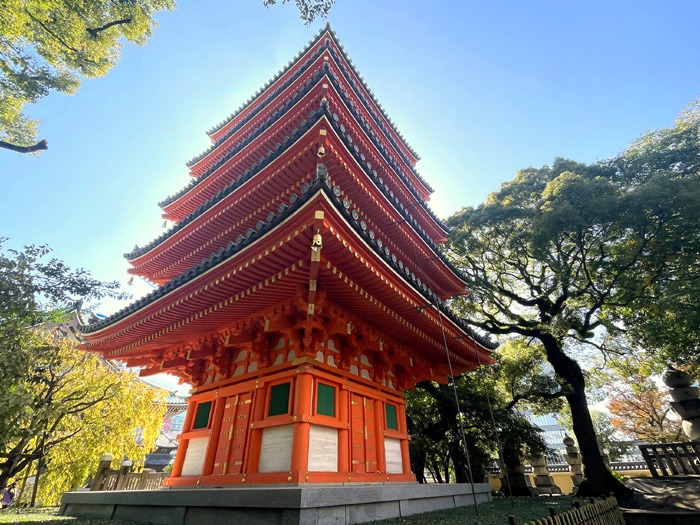
Tochiji is also known for its 26-meter-high (85 feet) orange, five-story Pagoda, completed in 2011 to commemorate the Temple’s 1200th anniversary.
Shofukuji Temple, founded in 1195 by the priest Eisai, was the first Zen temple constructed in Japan. It offers a unique way to interact with the three Golden Buddhas in the nearby Buddha Hall, which represent the past, present, and future. A pillar on the temple grounds is attached to a cable that connects to each statue. By touching the pillar, pilgrims are symbolically touching the Buddhas, reflecting reverence and generating good karma.
Foraging foodies flock to Jotenji Temple, which dates to 1242, to pay homage to the origins of Japanese cuisine. A stone monument notes that when the priest Enni Ben’en returned from China in 1241, he introduced Udon and Soba noodles, manju (steamed buns), and yokan (red bean jelly). And according to another monument, Ben’en established what would become Fukuoka’s landmark festival, Hakata Gion Yamakasa. The priest is said to have been carried around town on a float to ward off the plague through prayer, and apparently it worked!
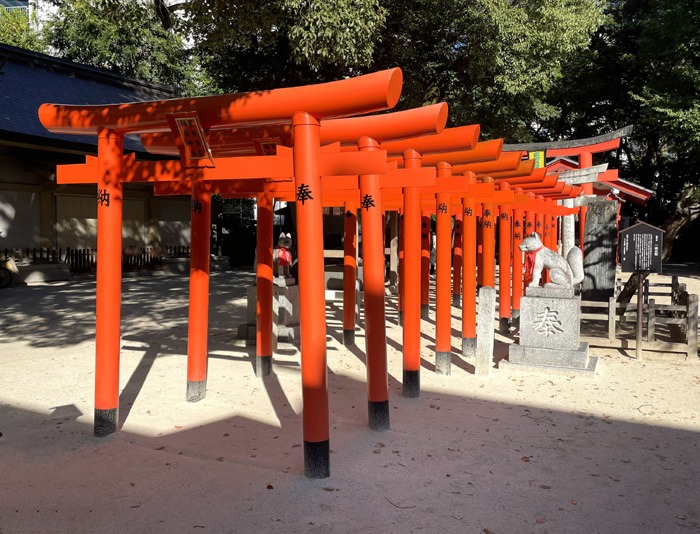
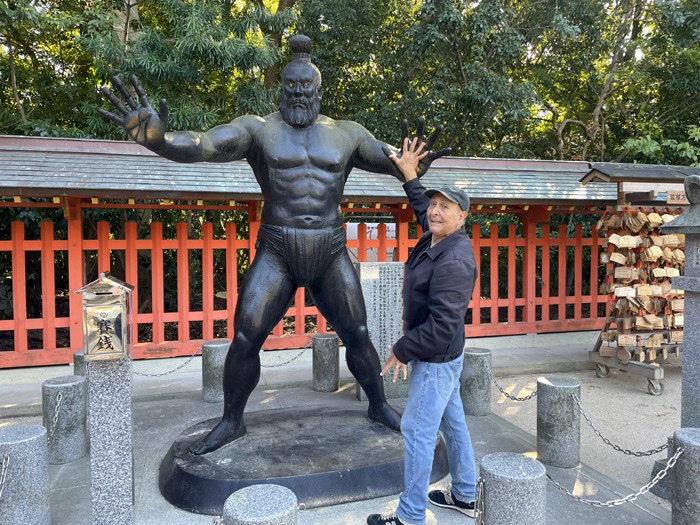
Sumiyoshi Shrine is a short walk from Hakata Old Town. Out of Japan’s 2000 Sumiyoshi shrines, this is one of the oldest, dating to the 3rd century CE. Sumiyoshi is the god of culture, fortune, prophecy, and fisheries. He is also associated with Waka (classical Japanese poetry) and worshipped as the god of Sumo, Japan’s national sport. The shrine grounds are a beautiful oasis of tranquility, marked by the main hall, built in 1623, a series of vermilion torii gates, and a statue of a Sumo wrestler from ancient times. The lines on the statue’s palms resemble the letter “riki”, meaning “power,” and visitors are encouraged to touch the statue and “feel the energy and spirits.”
Hakata Old Town is perfect for travelers looking to connect with Fukuoka’s past in their own mystical, spiritual, and powerful way.


