

Australia
Journey to Australia’s Sacred Heart
Article and photography by Nick Kontis
When I told friends I was flying halfway around the world from San Francisco to photograph a gigantic rock in the Australian desert, they reacted with equal parts confusion and curiosity. “Why?” some asked. Others simply said, “That must be a spiritual place.” They were both right.
Uluru, formerly known as Ayers Rock, is far more than a massive sandstone monolith. For the Anangu people, Australia’s Traditional Owners of the land, it is a living cultural landscape where history, spirituality, and identity have been intertwined for more than 60,000 years.
My fascination with sacred places began as a child standing atop the Acropolis in Athens. Although I was too young to understand its history, I sensed its importance. That feeling stayed with me as I later explored Angkor Wat in Cambodia, Machu Picchu in Peru, and Stonehenge in England. Each destination left me wondering how places could hold such enduring spiritual power.
Uluru had long occupied the top of that list.
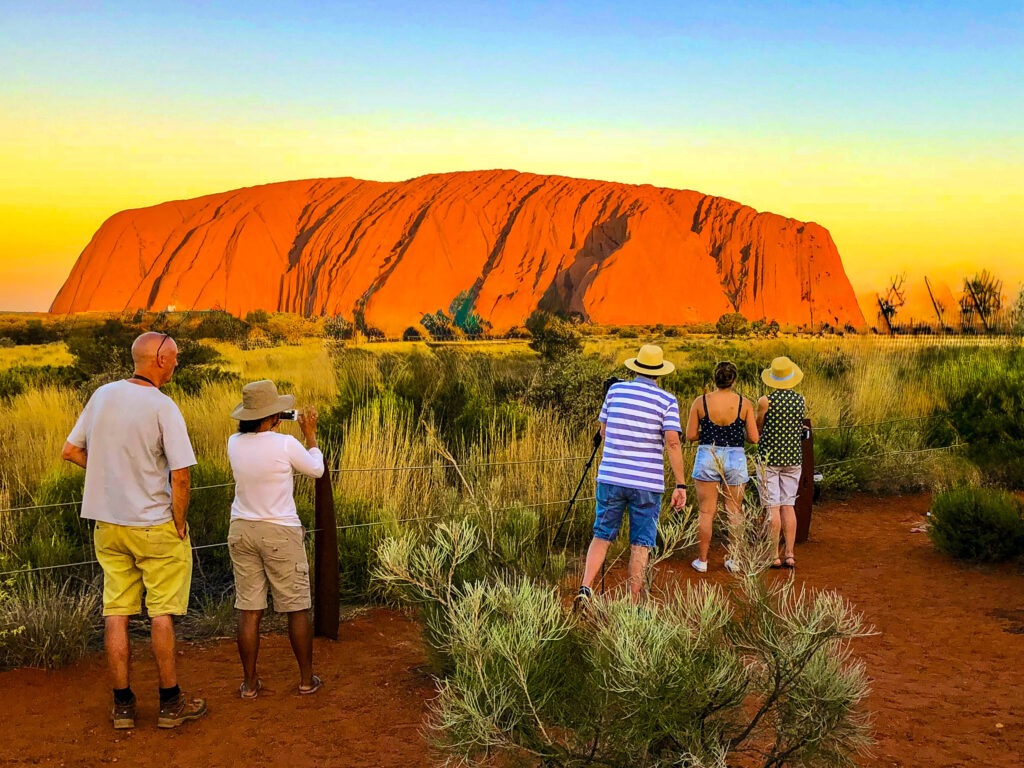
After nearly 24 hours of travel, our plane descended over Australia’s vast Red Center. Looking out the window, Uluru suddenly appeared, rising dramatically from the flat desert below. No photograph prepares you for its scale or solitude. Towering 348 meters (1,141 feet) above the surrounding plain, the ancient arkose sandstone formation has been shaped over hundreds of millions of years.
Nearby, the 36 domes of Kata Tjuta (the Olgas) complete one of Australia’s most remarkable landscapes. Together they form the heart of Uluru–Kata Tjuta National Park.
For the Anangu, however, these formations are not simply geological wonders. According to Tjukurpa, their traditional law and belief system, ancestral beings created the landscape while establishing the stories, customs, and moral codes that continue to guide life today. Caves, waterholes, and rock formations throughout the park remain sacred places connected to ceremonies and teachings passed down through countless generations.
That perspective shapes every visitor’s experience. The park is jointly managed by Parks Australia and the Anangu people, blending Indigenous knowledge with modern conservation. Visitors begin at the Cultural Center, learning about Anangu traditions, respectful behavior, and why climbing Uluru was never appropriate. Although the climb attracted tourists for decades, it was permanently closed in 2019 in recognition of its cultural significance.
Rather than climb, I chose to walk the 5.8-mile trail circling the base. Ancient rock art, caves, waterholes, and towering walls revealed themselves gradually. Walking beside Uluru felt less like conquering a landmark and more like paying respect to a place that continues to hold profound meaning.
Despite its harsh desert setting, the park supports more than 400 plant species along with perenties, tiny mala wallabies, and abundant birdlife. Careful environmental management protects this fragile ecosystem while ensuring tourism remains sustainable.
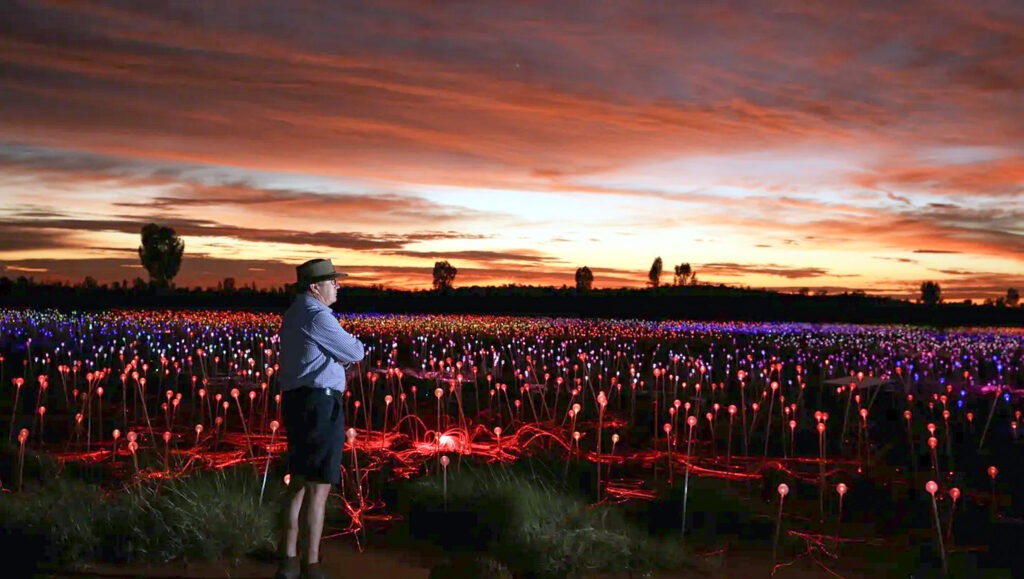
One unforgettable surprise was British artist Bruce Munro’s Field of Light. Before sunrise, 50,000 solar-powered lights shimmered across the desert floor in waves of crimson, violet, amber, and green. As dawn arrived, Uluru slowly emerged behind the installation, glowing brilliant red beneath the first light of day. Rather than competing with nature, the artwork celebrated it.
Travel is about more than checking destinations off a list. The greatest journeys change how we understand the world and our place within it. Standing before Uluru, I realized its power lies not only in its immense size or ancient geology but in the living culture that continues to protect it. Here, land, history, and spirit remain inseparable, making Australia’s Red Centre one of the world’s truly sacred places.


