

Japan
Ogasawara: Bonding with Nature and Community
Article and photography by Steve Gillick
Yoshiko, our affable tour guide, came to Chichijima in the Ogasawara Islands 28 years ago to scuba dive, and never left. Now, after raising a family, she calls herself “a mountain woman”, with both her and her husband Nobuaki leading nature hikes and treks.
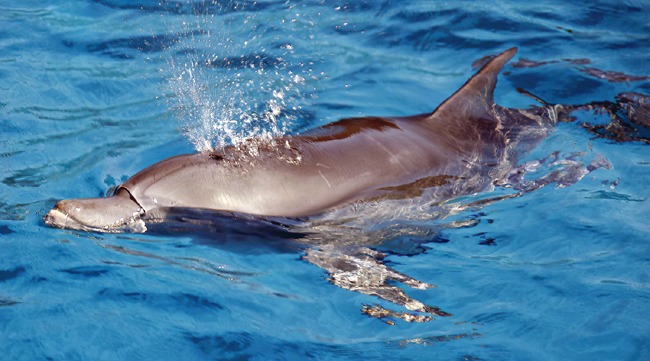
Chichijima has that effect on visitors, blending the allure of ‘getting away from it all’ with a strong sense of community, love and respect for nature, delicious foods, unspoiled beaches, scuba diving, snorkelling, interactions with dolphins, whale watching, and stunning scenery. It captured Yoshiko’s imagination and certainly enticed me to return 12 years after my first visit in 2013.
At that time, we indulged in the water activities for which Chichijima is well known. In addition, we took the two-hour ferry to Hahajima for birding, hiking, spectacular sea views, beaches, and history.
The Ogasawara, a.k.a Bonin Islands, lie 1000 kilometers south of Tokyo, but are still part of Tokyo Prefecture. Access is only via the 24-hour (one-way) ferry, the Ogasawara Maru. Many of the 30 tropical and subtropical islands in the archipelago (28 are uninhabited) denote family connections: Chichijima (Father Island), Hahajima (Mother Island), Young Brother, Older Sister, Niece, Grandson, and more. The most famous is Iwo Jima, the site of the World War II battle in 1945.
Rain, wind, and high waves on the way to Chichijima made for a somewhat tumultuous voyage; however, when we arrived 24 ½ hours later, the clouds dissipated and sunshine blessed the rest of our visit.
We stayed at The Log House, a five-minute walk from the Ferry Dock along the main street. Our room included four-star amenities: a kitchenette, balcony, and laundry facilities. It was great! Lunch was at Gajumaru Shokudo. Gajumara refers to the Banyan Tree, of which there are many on the island, characterized by their seemingly impenetrable tangle of criss-crossing roots. Shokudo means ‘dining place’. For our first island meal, we enjoyed Kanpachi Donburi (Yellowtail on a bed of steamed rice).
One reason that 450 people traveled on the ferry from Tokyo was the long weekend, when the much-anticipated annual Chichijima Matsuri (festival) would take place. After lunch, we walked up the steep stairs of the mountain to pay our respects at the Oogamiyama Jinja shrine and watch the preparations for the upcoming Sumo Wrestling and Karaoke contests.
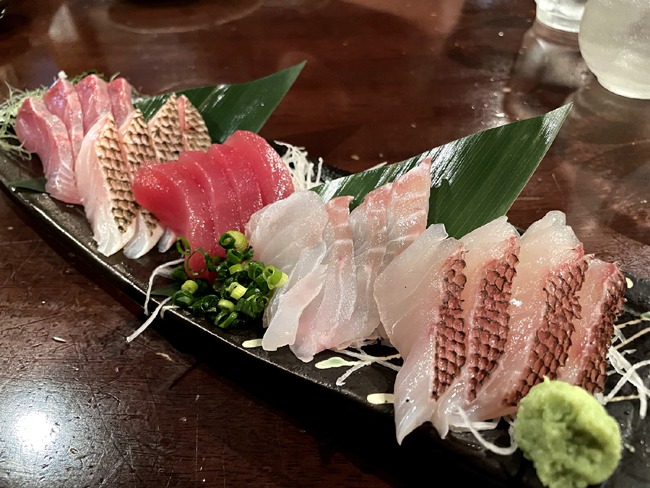
Dinner was at Yohu Izakaya Chara and included sake, assorted sashimi, deep-fried Black Tuna, Barahata tempura (a type of grouper in a light, crispy batter), topped off with Mayo Shimara-yu Pizza: chicken with local spicy oil (because the family with two kids at the table next to us ordered it). Delicious!
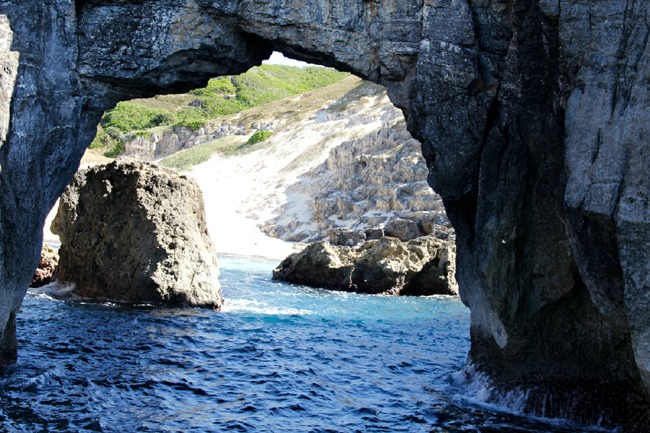
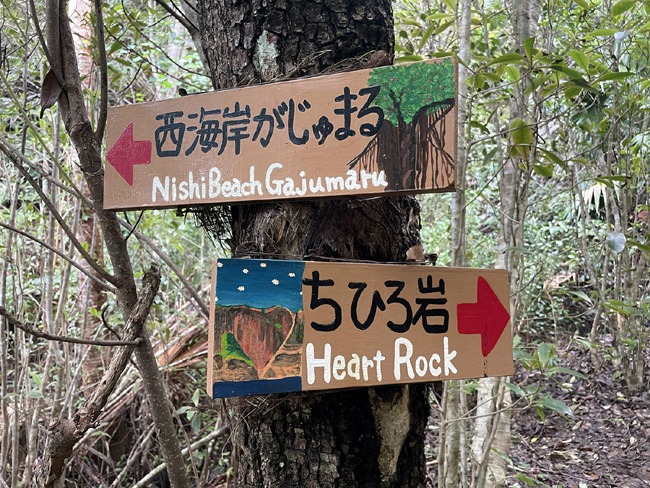
The next morning, we were at the Tamana Bakery for the 6:30 am opening, to stock up on breakfast buns before meeting Yoshiko for the 6-hour Heart Rock trek. Heart Rock is an actual rock, roughly in the shape of a heart, where the pink soil imparts a reddish hue. We had seen the rock from the water on our last trip while we were exploring wind- and wave-hewn land formations, wild dolphins cavorting with snorkelers, secluded sandy beaches, and caves; all of which contributed to Ogasawara’s recognition in 2011 by UNESCO as a World Heritage site.
Our trek started at Kominato Enchi, where we entered a controlled Forest Ecosystem Reserve Area. Shoes needed to be scraped and sprayed, and a lint roller was used to prevent unwanted guests from hitching a ride on our clothes. Our route would take us to Tokoyo Waterfall, Warabi Valley, Heart Rock, Gajumara, and back. We passed signs warning of goats’ destructive activities, discovered a beautiful Green Anole lizard, and saw coffee trees, lemon trees, banana plants, and passion fruit vines. We walked by World War II caves and abandoned wartime machinery, sniffed ginger leaves, and crossed creeks on wobbly rocks before reaching the red soil at the top of Heart Rock and awesome views of the sea, mountains, and islands.
After a short lunch break of onigiri (rice balls), we headed back to the old residential area where pre-war homes used the tangled, massive Gajumaru tree roots for protection. The six-hour hike seemed to end too quickly.
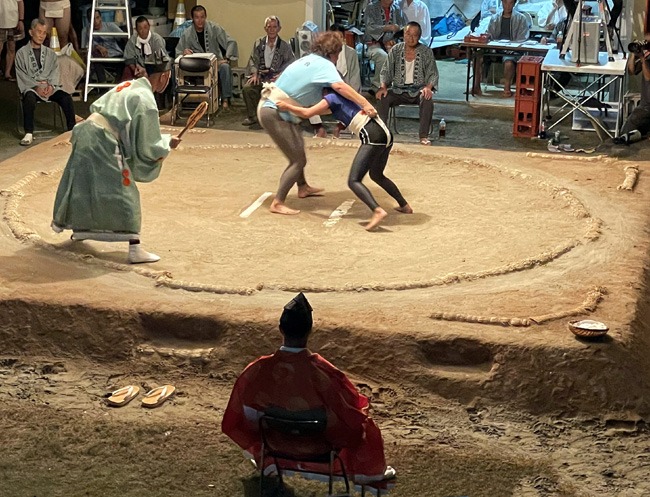
Back in town, as part of the festive weekend, the sumo-wrestling competition was taking place: first for the kids, then for the women, and lastly for the men. The make-shift arena was packed with fans cheering for their favourite contestants.
Dinner was at Marujo, a relaxed Izakaya owned by the personable Chef Hideo Kaneko. We enjoyed assorted sashimi, Shimazushi (Sawara marinated in soy sauce and mustard), Turtle Chashu (a signature dish), vegetable tempura, and stems of puffed rice with salt. Another great meal!
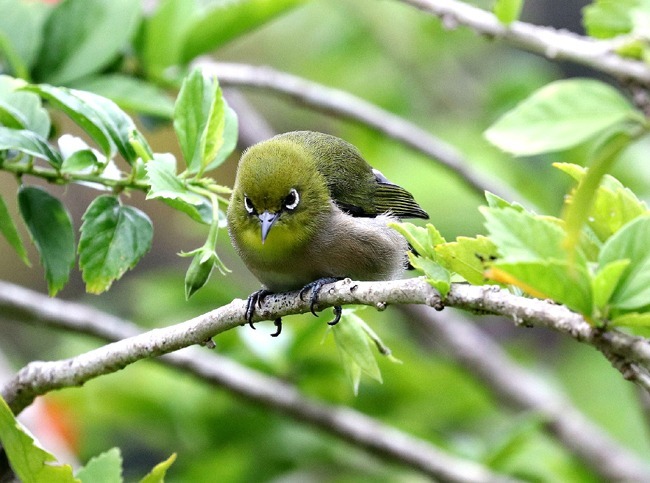
On the following afternoon, as part of the Matsuri festival, the Mikoshi, a portable miniature shrine that houses the spirit of the local shrine’s deity, was to be carried through the town. So after our 6:30 am bakery visit, we headed into the mountains to continue exploring the wild side of the island. After reaching the Tsurihama Observation Platform (with breathtaking views), we hiked the Denshinyama Nature Trail, which led us to the soft, white sands of Miyanohama Beach. It had been a relaxed three-hour wander with stunning views of the sea, wind-and wave-carved rock arches, blue coral waters, and neighboring islands. On the way, we’d encountered Mejiros (Japanese white-eyes), Blue Rock Thrushes, Ogasawara Bulbuls, and Japanese Bush Warblers, as well as timid Blueberry Hermit Crabs.
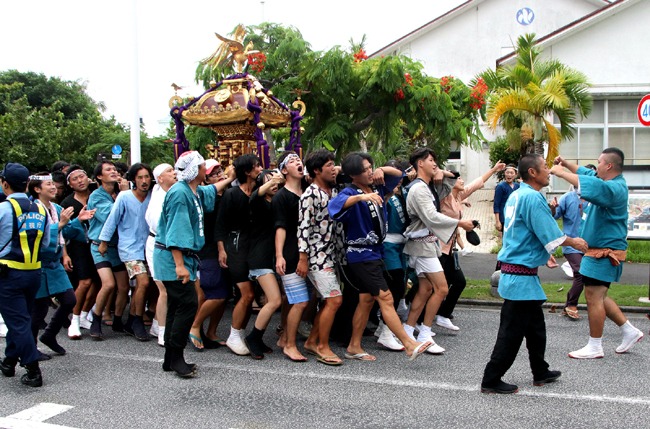
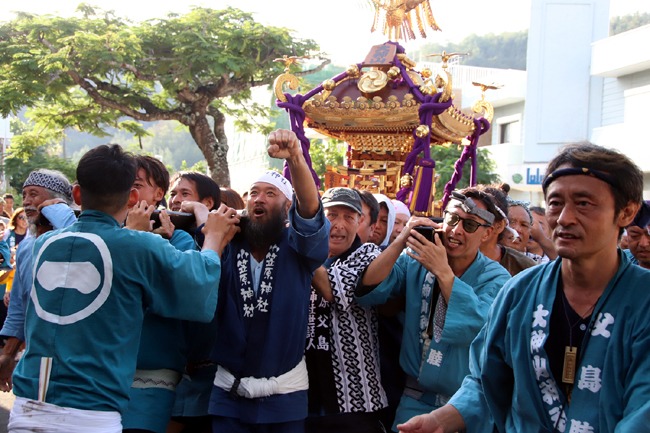
In town, we visited the World Heritage Center and the Ogasawara Visitors Center to learn more about the history, nature, geology, and conservation of the Ogasawara Islands. But then we heard the Matsuri music, which led us to a joyful gathering of people, young and old, carrying the Mikoshi (portable shrine), while laughing, chanting, and pumping their arms as the group leader led them to various businesses throughout town. At each stop, the group would bestow wishes for good health, good luck, and good business.
The son of the owner of our accommodation had asked me the previous day to help carry the Mikoshi, so now, as we approached his souvenir shop, he ran up to me, handed me a “happi coat’, positioned me at the front of the enthusiastic, boisterous group holding the Mikoshi, and then joined me from behind. We chanted, pumped our fists, watched the group leader for his humorous instructions on moving the procession forward or shifting backward, and had a memorable time!
That evening, we embarked on a night tour that featured three giant fruit bats hanging in the branches of trees and then flying inches past our heads. We stepped into the forest to find pea-sized bioluminescent mushrooms (mushrooms that glow in the dark), and at John Beach, we walked amongst colonies of crabs.
On our final day, we spent the morning at the Higashidaira Akagashirakarasubato Sanctuary, a gated area that offers protection to the 40-60 remaining Japanese Wood Pigeons. During our ramble, we ascended Mt. Chuosan for more spectacular sea views, all the time making sure that falling Octopus Tree fruit didn’t bonk us on the head.
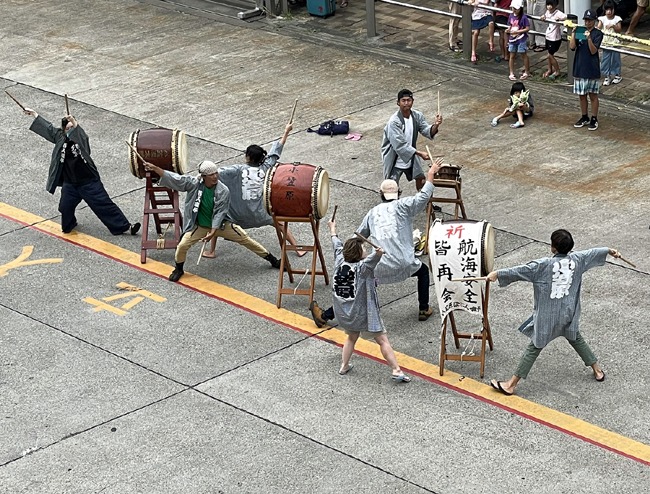
The farewell from Chichijima was so happy and emotional. It seemed like half the town came out to wave goodbye. Yoshiko presented us with flowers to throw into the ocean to bless the trip. Taiko drummers performed. And the hallmark of Chichijima departures…a flotilla of boats followed the ferry, each with a waving, high-energy crew, who then jumped into the water to wish us well. As Brown Boobies chased the waves alongside the ship, we sailed smoothly back to Tokyo.
A third visit is definitely being considered. The Ogasawara trip was such an incredible experience—bonding with nature, interacting with locals, enjoying gorgeous scenery, and engaging in exciting land and water activities, along with excellent food. Who wouldn’t want to return?


