

-

- Photo: Hidden Routes
Wales
Pootling Along the Wales Coast Path
Article and photography by Jennifer Bain
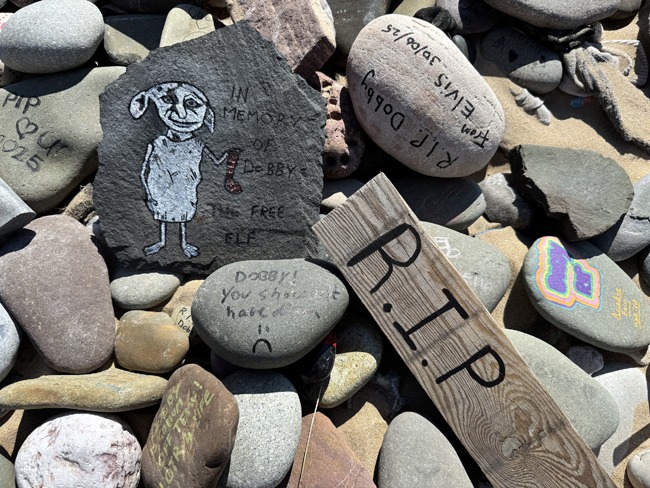
A pile of stones, many painted with messages and sketches of an elf, is a seemingly strange thing to find along in the sand dunes flanking a beach in Wales. There’s even a sock on a stick cross jutting out of the makeshift memorial.
Ah, here lies Dobby, a free elf. Well, here is a mock grave marking the area of Freshwater West beach where the iconic Shell Cottage once stood and where Dobby died and was buried in Harry Potter and the Deathly Hallows: Part 1.
If you need a refresher, enslaved house-elves can only be freed if they receive an article of clothing from their masters, so Harry Potter tricked dark wizard Lucius Malfoy into giving Dobby a sock hidden inside a diary.
It has been 15 years since that film was released and fans still make pilgrimages here for teary moments. To protect the environment and wildlife, though, the National Trust begs people not to add any more socks, trinkets or painted rocks lest they enter the marine environment and food chain.
I plunk myself down in the hot summer sand for a few moments to ponder why this beguiling part of the United Kingdom remains under the radar. Wales only gets about 900,000 international visitors a year to England’s 39 million. It’s a joy to avoid the crowds, but Wales sure deserves more love.
My pootling (that’s a Britishism for travelling in a leisurely way) starts when I land at London Heathrow, take the Heathrow Express to London Paddington station and then hop a Great Western Railway train for a two-hour journey to Cardiff. All that takes just five hours and even gives me a chance to fight jetlag with a nap.
The Cardiff Marriott Hotel is steps from everything. Cardiff Castle provides an instant castle fix. The Castle Quarter shopping arcades are Victorian and Edwardian marvels. There’s lunch at Cardiff Market, dinner at the locally minded Welsh House restaurant and a stroll down Chippy Lane, a takeaway mecca for curry sauce and chips from Dorothy’s or Tony’s.
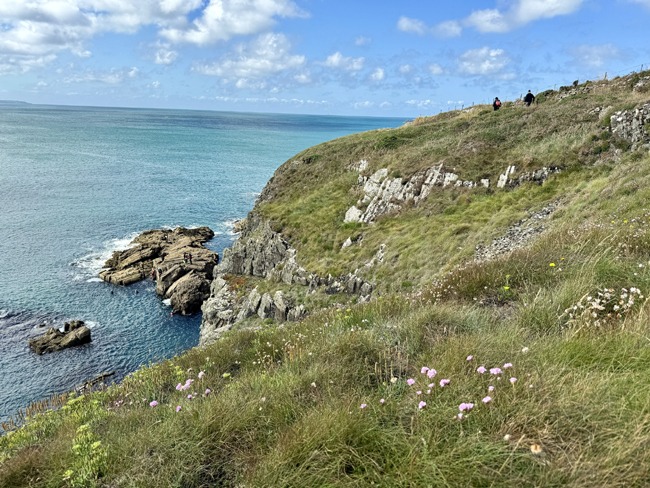
But I’ve come for wilderness adventures, so after one urban day it’s off to the southwest coast of the country to explore Pembrokeshire Coast National Park and the Pembrokeshire Coast Path portion of the Wales Coast Path.
UK’s national parks aren’t like North American ones, by the way. They’re filled with communities, land is largely privately owned and park authorities regulate activities. Without gates or entrance fees you might not even realize you’re in a park.
With Pembrokeshire Coast, you’re never more than 16 kilometres from the sea.
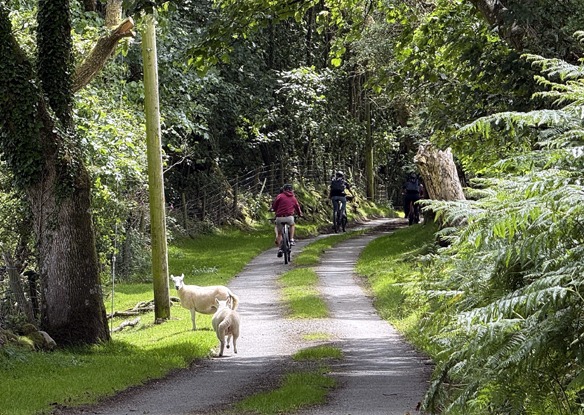
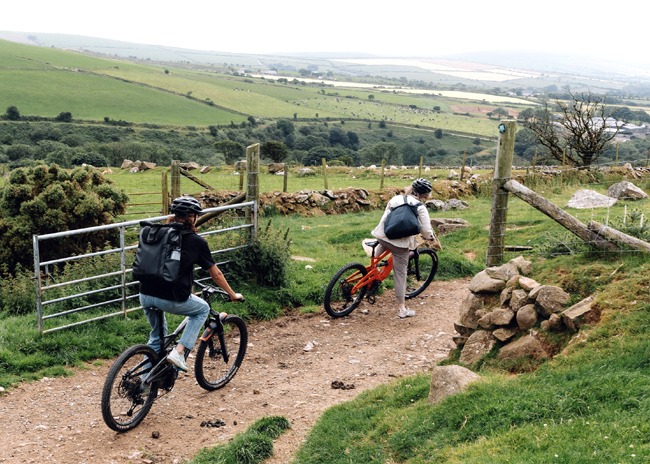
In Newport (the coastal town, not the city with the same name east of Cardiff), I hop on an electric mountain bike for a few blissful hours with Hidden Routes exploring back roads, woodlands, fields and hills.
“The idea is to bring the land of Pembrokeshire to life in a whole new way,” says CEO Jamie Burdett. He probably didn’t predict that cycling among sheep would be the highlight.
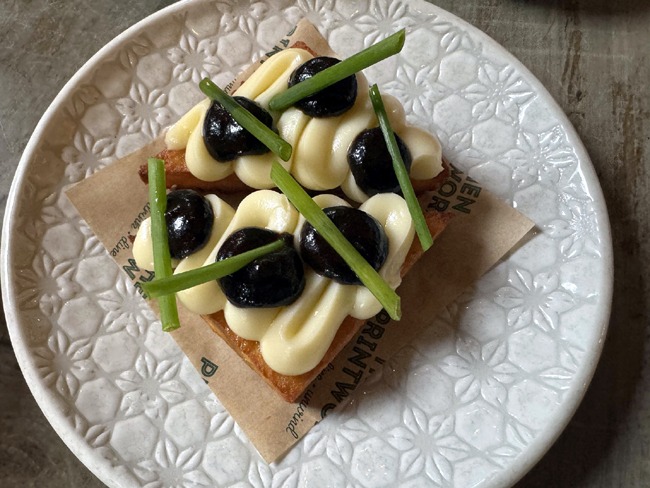
The reward after all this exertion is an astounding dinner at Yr Hen Printworks, a Michelin Bib Gourmand restaurant in Cardigan where we order the entire tapas-style menu and share everything from gorgeous warm soda bread rolls to artfully presented fish cakes with pickled cucumber and rouille sauce.
That night I bed down at fforest farm, a 200-acre farm where you can choose a farmhouse, lofts, domes or “bespoke shacs” (be sure to request en-suite facilities) and drink at what just might be the tiniest pub in Wales.
But I’m happiest based in St Davids — the UK’s smallest city with a population of 1,800 — at the posh Twr y Felin Hotel in a former windmill.
I can walk to St Davids Cathedral and the atmospheric ruins of Bishop’s Palace. The Really Wild Emporium has a memorable six-course tasting menu that starts with a clever seaweed hash brown. The Bishops is a picture perfect pub. It’s a quick drive to the Old Farmhouse Brewery for kelp beer.
Dr Beynon’s Bug Farm is an unexpected treasure. The 100-acre nature reserve doesn’t really farm but it has a research centre and Britain’s first edible insect restaurant. You can order Grub Kitchen’s insect-free meals if you’re squeamish or potentially allergic (insect and shellfish allergies can be related), but don’t miss the Up-Close Meet the Bugs experience.
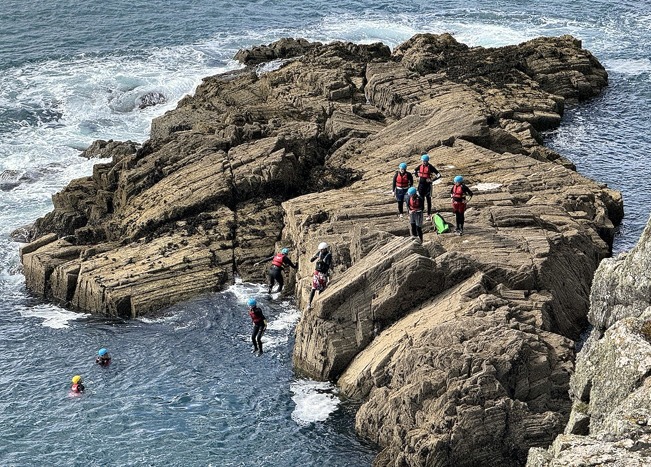
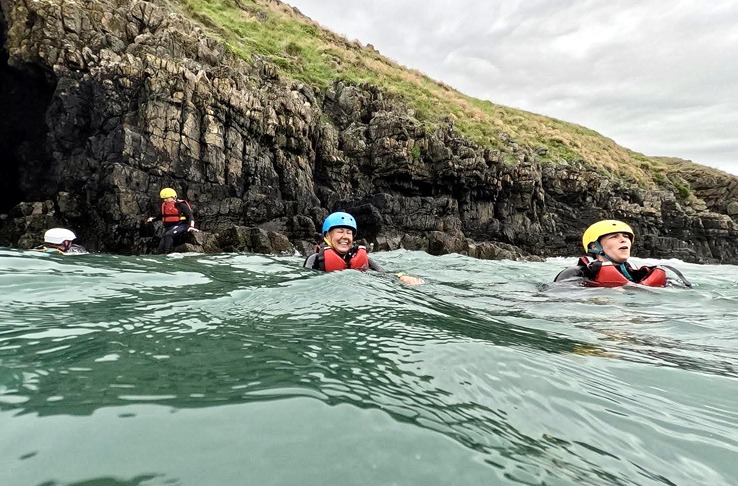
The scariest thing I do in Wales isn’t handle a Madagascar hissing cockroach and a huge stick bug, but go coasteering. Think mountaineering meets coastline. Put on a wetsuit, helmet, buoyancy aid and sneakers. Go to the ocean and then swim, scramble, crawl, explore and jump around the coastal rocks, sea caves and cliffs.
“So we’re looking for climbing, jumping, swimming, cannonballs, bellyflops, scrambling along the rocks,” explains TYF Adventure co-owner Richard Carpenter as he guides six of us. “All the things that you’re told not to do in the swimming pool? That’s what we do and it’s just an adventure from A to B. And how you do that will be up to everyone’s different capabilities, and we encourage everyone to work at their own level.”
It’s a thrill to try it here in Wales, which is widely considered the birthplace of coasteering. Someone else coined the phrase in a sea cliff climbing book in the 1970s, but the fellow who owned TYF before Carpenter first turned the niche sport into a business idea in the 1980s.
The rest of my time in feels sedate after the mental and physical challenge of coasteering, but walking in Wales is a joy.
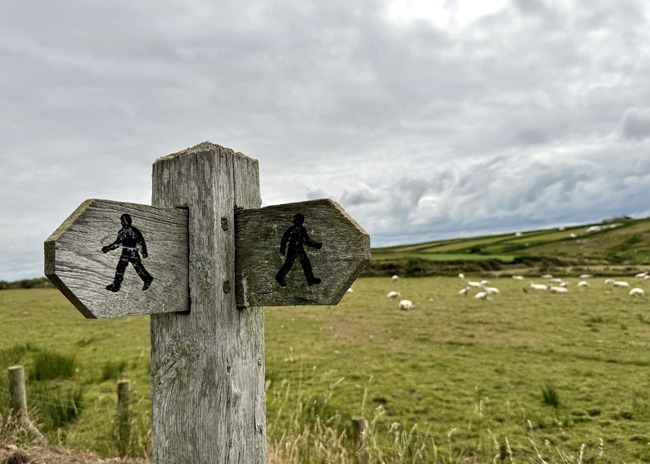
For this, I explore bits and pieces of the 300-kilometre Pembrokeshire Coast Path, a national trail that’s part of the 1,400-kilometre Wales Coast Path.
As Visit Wales puts it, walks (they don’t call them hikes) can be “long or short, linear or circular, steep or flat.” They can revolve around everything from Dobby memorials and beaches to sea stacks and mysterious chapels.
St Govan’s Chapel is a wee thing buukt into the cliffs near a British Army military training area. That’s important because if there’s any firing or training going on, the roads might be closed to check online schedules before going.
The one-room stone chapel is connected to the legend of a saint, pirates and a cleft that miraculously opened in the seaside rocks. It’s fun to try to squeeze into the spot where the saint once hid, and when you realize you don’t fit just caress the smooth marks his rib cage supposedly left on the rocks.
At St David’s Head, the reward for a rocky scramble up a hill called Carn Llidi is panoramic views of fields and ocean. From Whitesands Beach, pootle around the headland first. If you don’t spot seals and dolphins, you will surely see wild ponies.
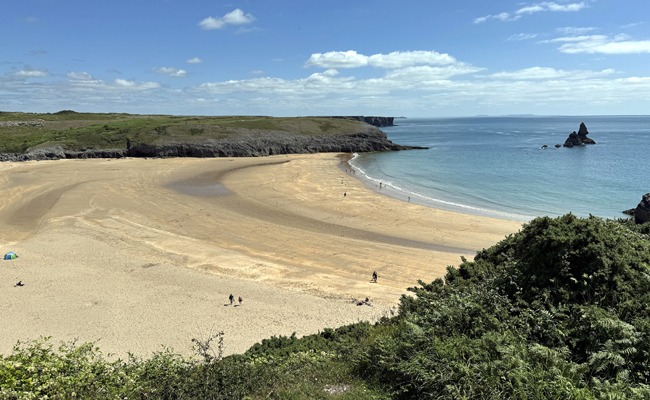
The longest walk I do is Broad Haven South to Stackpole Quay. For two hours, I stroll along the stunning coast, on cliffs and down to uncrowded beaches, through a forest to the Boathouse tea room.
This cute café is run by the National Trust, the same folks who let Dobby’s memorial remain on Freshwater Beach as long as fans respect the environment.
As Europe’s biggest conservation charity puts it here, “every cuppa or tasty treat you buy helps us to continue looking after places for everyone to enjoy.” I order lamb cawl, a wonderful Welsh lamb and root vegetable stew, and do my bit to help.


