

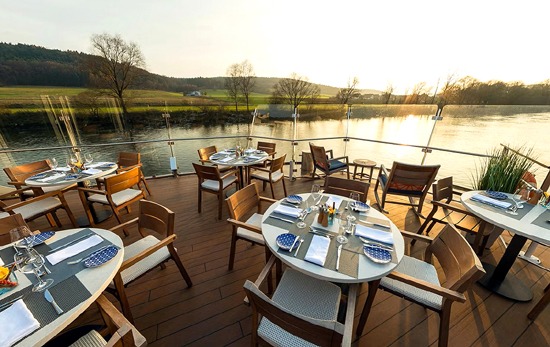
-

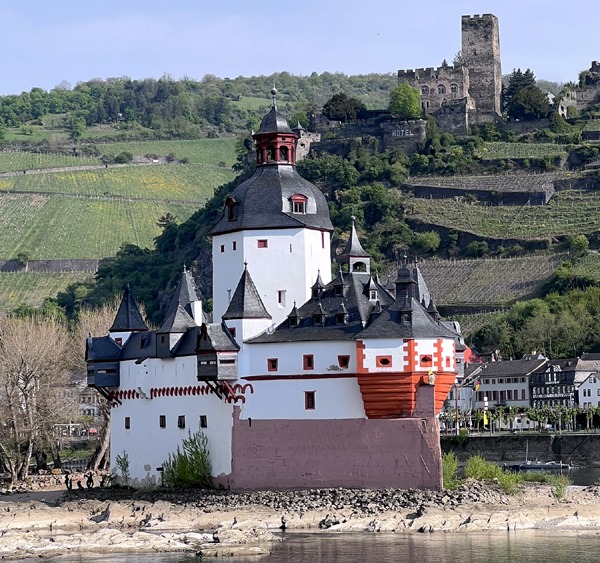
- Photo: Lisa TE Sonne-Pfalzgrafenstein Castle
-
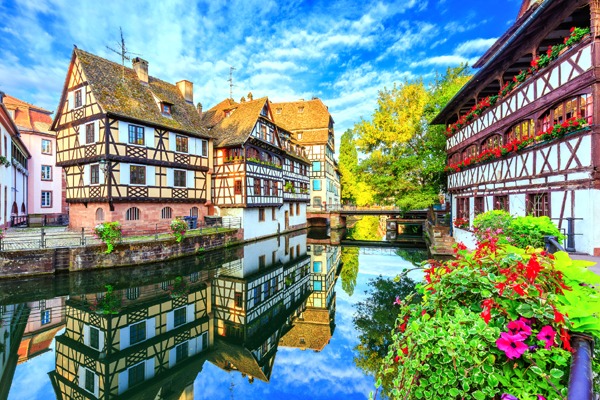
- Strasbourg
-
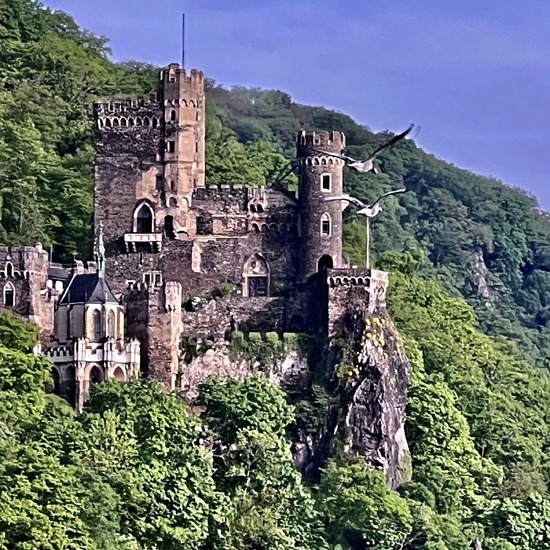
- Photo: Lisa TE Sonne-Rheinstein Castle
-
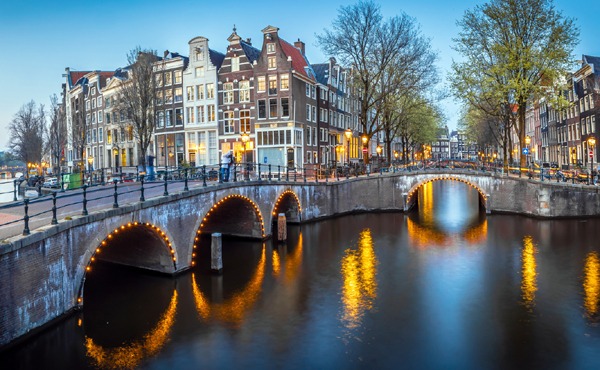
- Amsterdam
Cruise
Sailing the Rhine with Viking River Cruises
by Victor Dorff
The Rhine River runs through six countries as it makes its way from the Alps to the North Sea. Our Viking river cruise took us from Switzerland, through Germany and France, to the Netherlands, providing us with a relaxing ride through the romance, history, and grandeur that is the Rhine.
We began in Basel, Switzerland, arriving a couple of days early to explore that cultural capital. The city is nestled near the borders where Switzerland, France, and Germany meet. It is the home of nearly forty art museums, a diverse music scene, and some well-preserved ancient architecture, such as the 1,100-year-old Basel Cathedral.
When the time came for us to board the Viking Eir, the crew directed us to the dining room, where a light lunch awaited. While we ate, the crew took our luggage directly to our cabins.
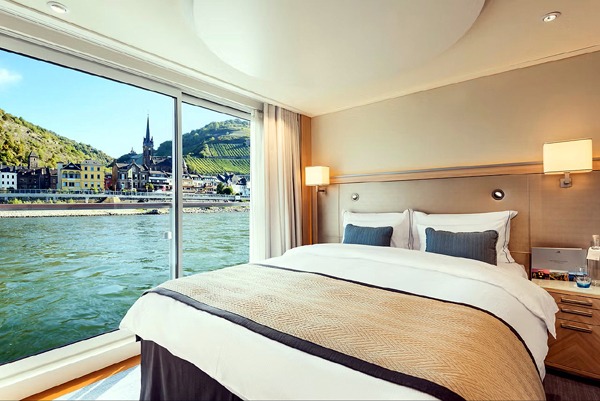
The Viking Eir holds 190 passengers and a crew of 53. It was built in 2015 and stretches out 443 feet. There are 95 rooms on the ship, ranging from 25 standard cabins to two large Explorer Suites. All the rooms are “outside” rooms with a view of the river, and the larger cabins have floor-to-ceiling windows.
Viking takes pride in providing an adult experience, with the emphasis on the ports of call. The passenger list is restricted to adults over 18, and Viking filters out many of the distractions common on other lines. On Viking, for example, there are no casinos, no photography sales, no art auctions, and no “formal nights.” It’s all about the destinations.
The Voyage Begins—Breisbach
The first leg of our journey took us about 60 kilometers north of Basel, to Breisbach, Germany and the famed Black Forest. At every stop along the way, Viking offers a variety of excursions – something for everybody. The difficulty of each tour is included in the descriptions to help passengers find the excursions that are right for them.
In Breisbach, we took an excursion bus into the Black Forest, where we learned a little about the history of the area and were treated to a demonstration of how to make a local favorite – a cherry schnaps cake.
For other guests, there were excursions to the nearby French town of Colmar, known for both the fabled Alsatian wines and for a key WWII battle ground called the Colmar Pocket. Each had its own tour – one for winetasting, the other for the history buffs.
Strasbourg – Petite Paris
The next stop along the Rhine was Strasbourg, a French city with a long history. Today, Strasbourg is a university town, and the city centre has been designated a UNESCO World Heritage site. It is also the home of many international institutions, such as the European Parliament.
Strasbourg is a beautiful city with lovely old architecture, and the coffee shops beckon. Excursions range from a simple tour of the city, to more tastings of Alsatian wines or a tour that includes a climb to the top of the Strasbourg Cathedral and its incredible views of the city.
Speyer – An Ancient Roman Site
A walking tour of Speyer, our next stop, starts with the impressive Speyer Cathedral, completed more than a thousand years ago. It is the largest surviving Romanesque church in Europe and the final resting place of eight emperors.
Nearby, the Unified Protestant Church stands as a testament to the “Protestation at Speyer” in 1529, when a group of citizens and royalty demanded the right to practice Christianity outside the Roman Catholic Church.
Also nearby, an excavated medieval synagogue provides a glimpse into how Judaism was practiced then. Today, it is a monument to the community of Jews in Speyer that was eliminated during the Holocaust.
Alternatively, passengers can opt for a tour of Heidelberg (and a lunch with students of the university there), dinner in Rüdesheim am Rhine, or more wine tasting (and dinner) at the Schloss Johannisberg Estate and its 900-year-old vineyard.
The Castle Jackpot
The high point of the cruise for us was a 65-kilometers-long portion of the river called the Rhine Gorge. With more than 40 castles, it has the greatest concentration of castles in all of Europe, and it is a UNESCO Heritage site.
Viking navigates this part of the river during the day, and a member of the crew narrates as we marvel at the sight of so many castles.
By the 17th century, most of the medieval castles along this stretch of river had been ravaged by time and wars and had fallen into disuse and disrepair. Beginning in the 18th century, however, efforts began to bring the castles back to life.
One of the first to appear as we floated down the river was Rheinstein Castle. Built upon a cliff in the early 14th century, the castle marked a “toll collection” point. Many robber barons built their castles along the Rhine so they could force ships to stop for inspection and to pay for the privilege of continuing their journey.
Nearly every castle along this stretch of the Rhine has an old legend attached, and the ship’s narrator tells the stories as we sail by. For example, the next castle is named Sooneck, and it is the site of the Legend of the Blind Archer. The tale tells of an evil baron of the castle and a good man who was an expert archer from the surrounding area. The baron captured, tortured, and blinded the archer. Later, during a banquet, the baron summoned the archer for the entertainment of his guests. The baron challenged the blind archer to shoot a metal cup by aiming at the sound it makes when it hits the floor. When the archer failed to fire an arrow at the fallen cup, the baron yelled at him to “Shoot!” That’s when the archer let the arrow fly, hitting the baron and killing him.
For hours, we were treated to diverse castles and their stories of love, murder, and piracy, as beautiful landscape drifted by on our way to Koblenz.
Koblenz – Where Two Mighty Rivers Merge
Deutsches Eck (the German Corner) is the place where the Rhine meets the Moselle River. There is a promontory point overlooking the merging rivers, and a large monument to Wilhelm I that shows the Kaiser on horseback, surveying the scene.
One Koblenz excursion crosses the Rhine to visit the Ehrenbreitstein Fortress, a giant citadel built on a cliff in the 19th century. The fortress is an easy cable car (gondola) ride from the docks.
Another excursion includes a tasting of the Moselle wine of the region and a tour of a local winery where the Romans developed grape vines and wine almost 2,000 years ago.
For the most fit passengers, there is a hike to and a tour of the medieval Marksburg Castle. Built in the 13th century, it has the distinction of being the only castle along the Rhine that was never sacked.
Cologne – The Last Stop in Germany
Cologne is the fourth-largest city in Germany, and it is the home of the world’s tallest twin-spired cathedral. Construction on the Cologne Cathedral began in 1248 and was finally completed in 1880. The structure is so solid that it survived the Allied bombing during World War II that otherwise laid waste to the entire city.
One of the excursions in Cologne is a visit to the Cathedral. Others include a walking tour of Cologne, a visit to the Brühl UNESCO palaces, or, for those craving a little more exercise, a bicycle tour of the city.
Goodbye, Germany; Hello, Holland
The small town of Kinderdijk, in South Holland, is home to 19 working windmills that are part of the local system that keeps the sea at bay. All the excursions in Kinderdijk include a visit to working windmills. One is by e-bike, another is by barge, and a third includes a cheese-making demonstration.
The next stop is Amsterdam, the end of the line, but that doesn’t mean the party is over! Famous museums are scattered along the canals of the capital of the Netherlands, including the Anne Frank House, the Van Gogh Museum, and the Rijksmuseum.
We scheduled our Rhine cruise to coincide with the blooming of the tulips in the nearby Keukenhof Gardens (mid-March to mid-May). The gardens can be reached by bus from Amsterdam, and it is well-worth the journey. More than seven million flowers are in full bloom, and the explosion of color is overwhelming.
Regardless of the season, Amsterdam is a wonderful book-end to a memorable Viking tour of Europe’s most important river.


