



India
The Goa I didn’t expect: Portugal’s Legacy on India’s Coast
Article and photography by Judi Cohen (TravelingJudi)
After eight days cruising Kerala’s tranquil backwaters aboard the tiny Kochi Pandaw, and before boarding the Deccan Odyssey in Delhi for a luxury train journey through Rajasthan, my friends at Shikhar Travels in Delhi arranged a five-day stay in Goa. I expected it to be a convenient stopover. Instead, it became one of the highlights of the trip.
I knew Goa was famous for its beaches, nightlife and Portuguese colonial past. What I hadn’t anticipated was how completely different it would feel from anywhere else in India, including Kerala and the other cities I’d visited on five previous trips.
Goa is a place where India and Europe seem to have reached a comfortable compromise. Palm-lined beaches share the landscape with whitewashed churches. Catholic saints watch over village squares. Portuguese-style villas painted in vivid yellows, blues and reds line quiet streets. Restaurants serve spicy curries alongside fresh seafood, pork dishes and pastries that wouldn’t look out of place in Lisbon. Moving between the unhurried rhythm of a small-ship cruise and the refined elegance of a luxury train, Goa proved to be the perfect bridge.
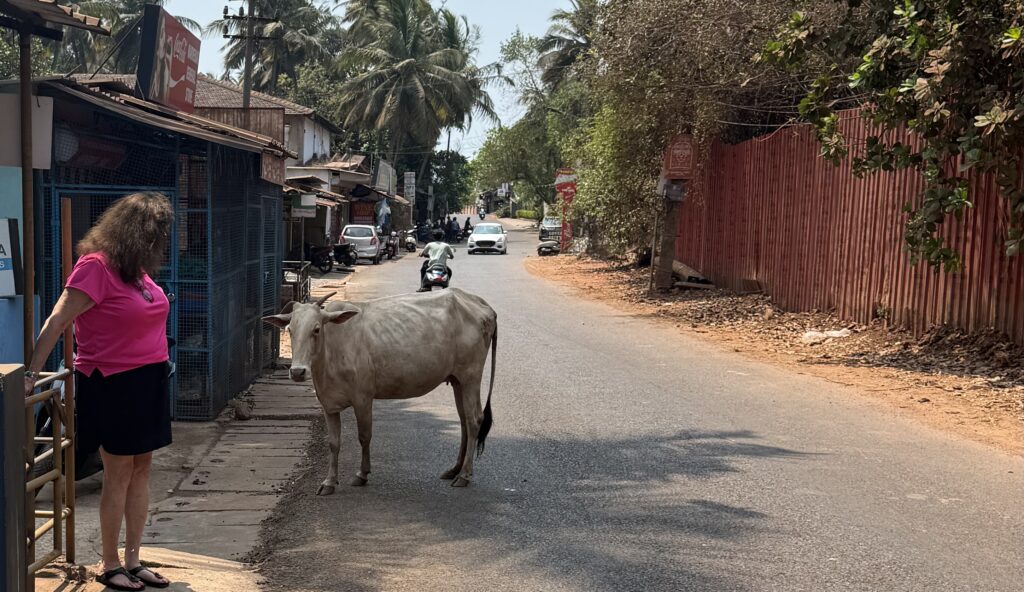
It also reminded me that India never stops surprising you. Despite staying in a luxurious resort, I woke each morning to the sound of cows mooing outside our hotel. In the evenings, my husband and I walked to dinner carrying flashlights along dimly lit streets, stepping around wandering cows and sleepy dogs that seemed perfectly at home sharing the road with us. It was a wonderfully surreal reminder that even in one of India’s most sophisticated beach destinations, everyday life still unfolds at its own unhurried pace.
Portuguese Influence
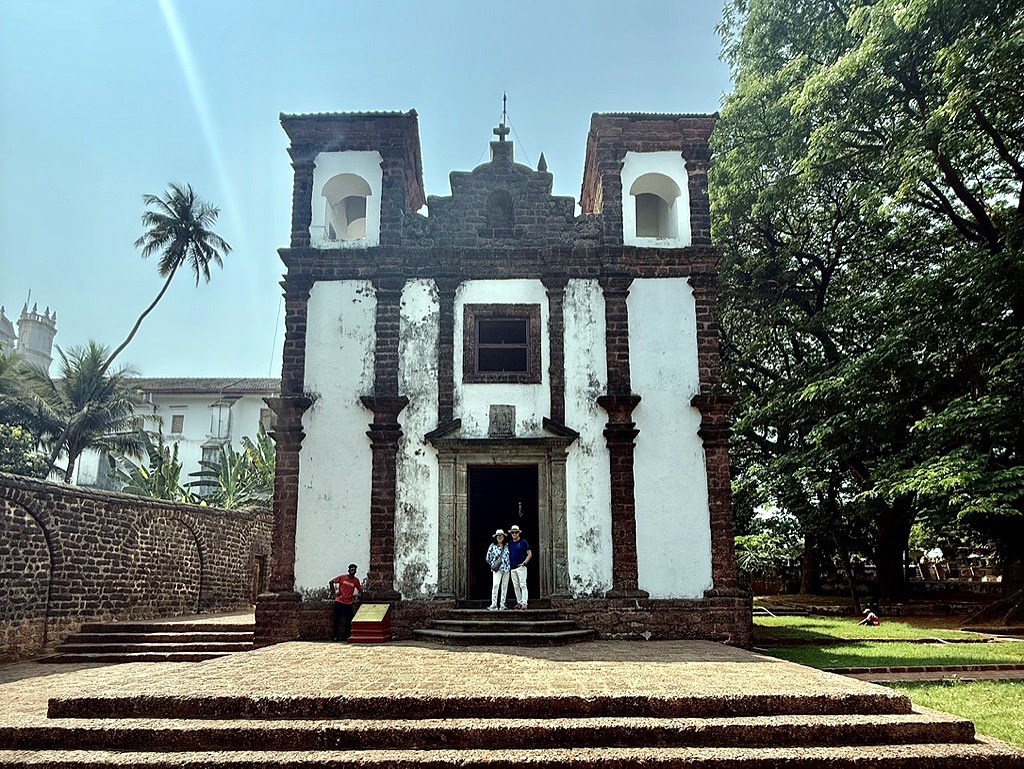
The Portuguese arrived in Goa in 1510 and remained for more than four centuries. Their influence is impossible to miss. Unlike much of India, where Hindu temples dominate the skyline, Goa is dotted with churches and cathedrals.
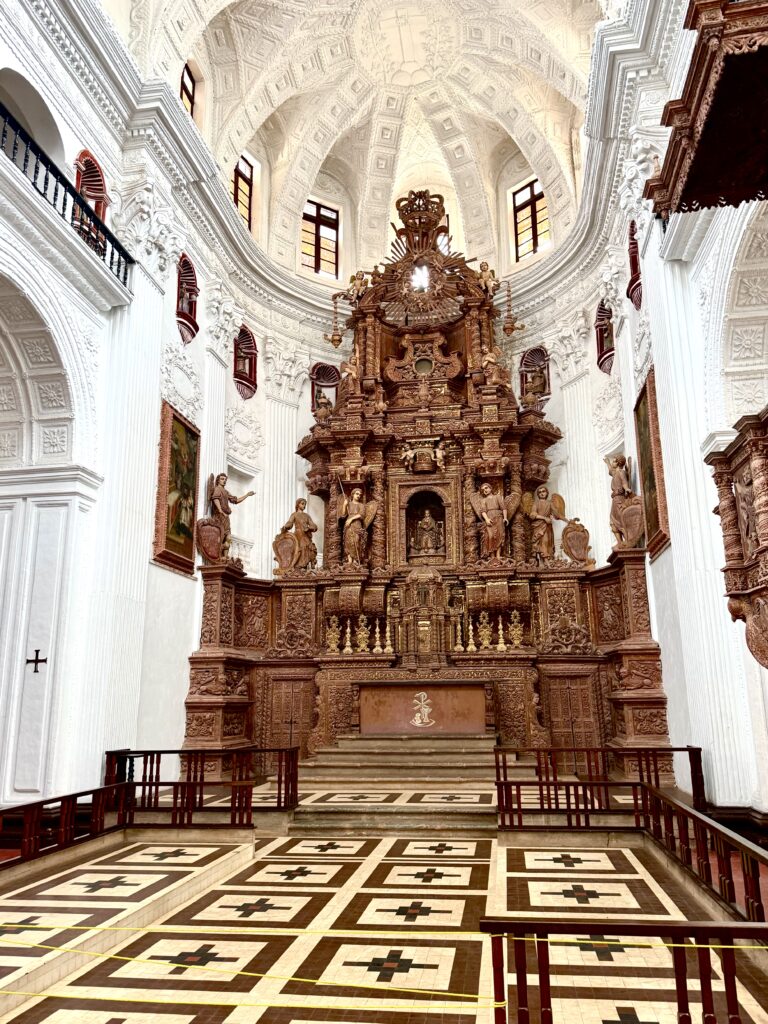
Touring Old Goa, once known as the “Rome of the East,” I was struck by the sheer scale of its religious buildings. The Basilica of Bom Jesus, home to the remains of St. Francis Xavier, is one of the most important Christian pilgrimage sites in Asia. Nearby, the Se Cathedral rises above manicured grounds, its white façade gleaming in the tropical sun while its soaring ceilings and ornate altars speak to Goa’s colonial past. Walking between them often felt more like wandering through southern Europe than India, until a passing rickshaw, the aroma of spices or the bustle of a nearby market brought me firmly back. That fascinating collision of cultures is what makes Goa so compelling.
A Different Table
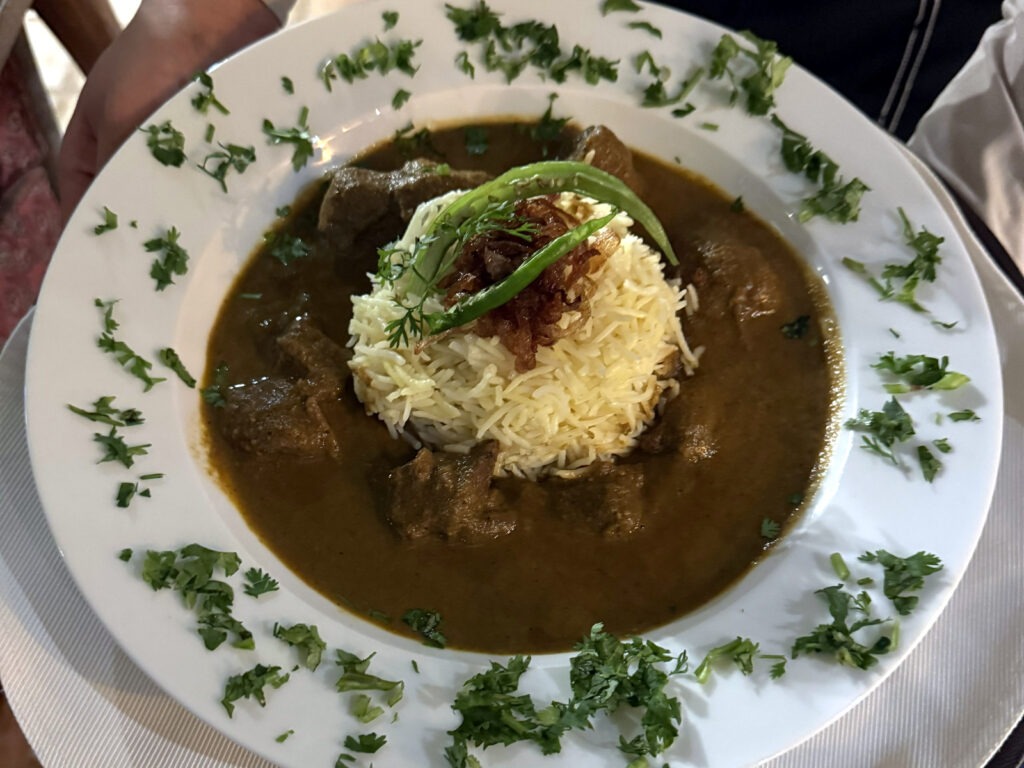
Nowhere is that blend more evident than at the dining table. Many visitors think of Indian cuisine as butter chicken and rich North Indian curries. Goa offers something entirely different. Portuguese influence transformed local cooking centuries ago. Vinegar became a staple ingredient, pork appeared on menus, and European techniques merged with Indian spices to create a cuisine unlike anywhere else in the country.
One evening at a beachfront restaurant, my husband ordered pork vindaloo, a dish whose origins can be traced to the Portuguese carne de vinha d’alhos. Over centuries, Goan cooks adapted it with local palm vinegar, garlic and spices into something unmistakably Goan: tangy, spicy and deeply flavourful. Seafood was everywhere. Waiters carried platters of the day’s catch as we debated the menu. Prawns, crab, lobster, kingfish and pomfret appeared grilled, curried or simmered in creamy coconut sauces. Fish curry rice, Goa’s signature comfort food, quickly became one of my favourite meals.
After Dark
India isn’t generally known for its nightlife, but Goa has long been the exception.
Its reputation dates to the 1960s and ’70s, when backpackers and hippies first discovered its beaches. The crumbling Bell Bottom Hotel, next to our hotel, still had vintage car parts on the outside façade and in the lobby from the 1970’s. Curious, we asked a security guard if we could look inside. He happily escorted us through the abandoned lobby and around the neglected pool. I couldn’t help thinking how similar Art Deco hotels in Miami Beach have been lovingly restored. It was disappointing to learn this one is scheduled for demolition rather than preservation.
Today’s nightlife is far more polished, ranging from sophisticated beach clubs to legendary dance venues and international electronic music festivals.
At our own hotel, surprisingly few guests stayed for dinner. As the sun set, most headed to the beach clubs and late-night lounges instead.
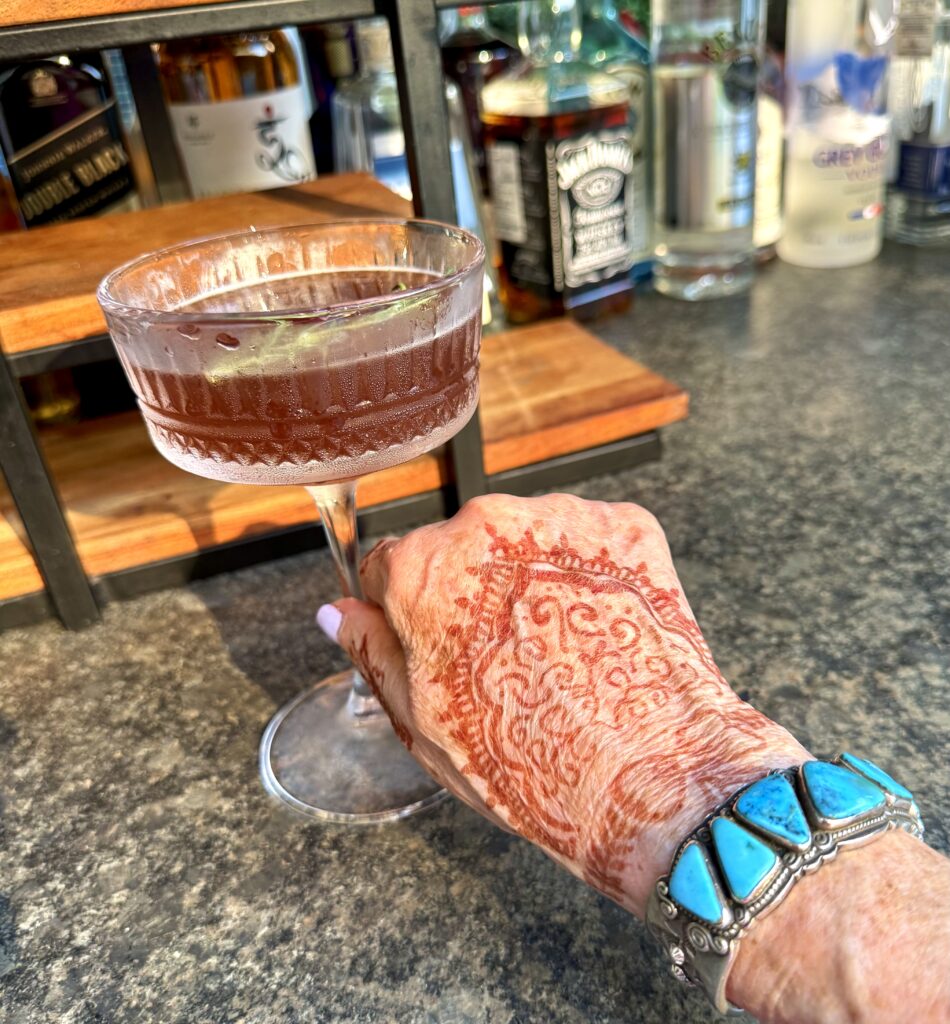
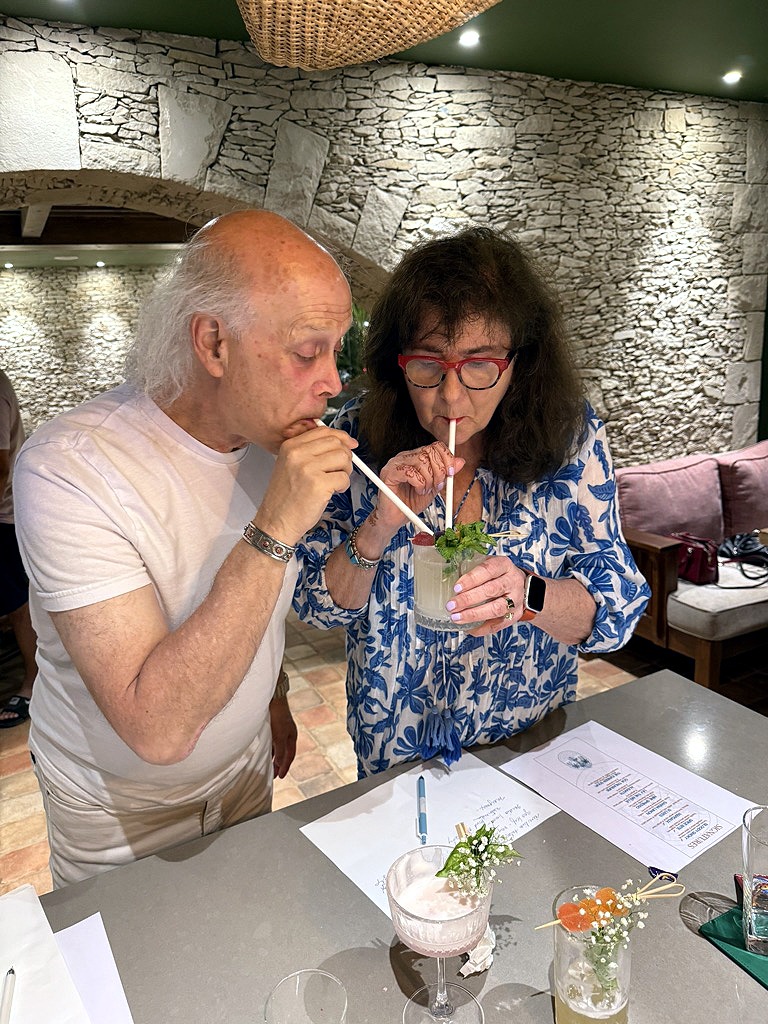
One evening brought an unexpected invitation. The hotel’s mixologist, originally from Barcelona, invited my husband and me to join him and other guests for an experimental cocktail tasting. Over the next couple of hours, we sampled nearly 18 creations, each more inventive than the last, as he refined recipes he hoped would eventually appear on the hotel’s cocktail menu. It felt less like ordering drinks at a bar and more like being invited into an artist’s studio to watch the creative process unfold. If we return one day, we may well find a few of our favourites on the menu.
Part of Goa’s appeal for Indian travelers is practical. The state has some of the country’s lowest alcohol taxes, making beer, wine and spirits noticeably less expensive than elsewhere in India. That has helped shape a culture centred on beach bars, sunset cocktails and evenings that finish long after midnight.
Beyond the Party
Goa is much more than its nightlife. Its beaches are remarkably diverse. Some are lively stretches lined with restaurants, cafés and water sports, while others remain quiet fishing villages where life continues much as it has for generations.
Accommodation is equally varied. International luxury brands sit alongside boutique hotels created from restored Portuguese mansions. Some focus on wellness and Ayurveda; others offer infinity pools and private beach access.
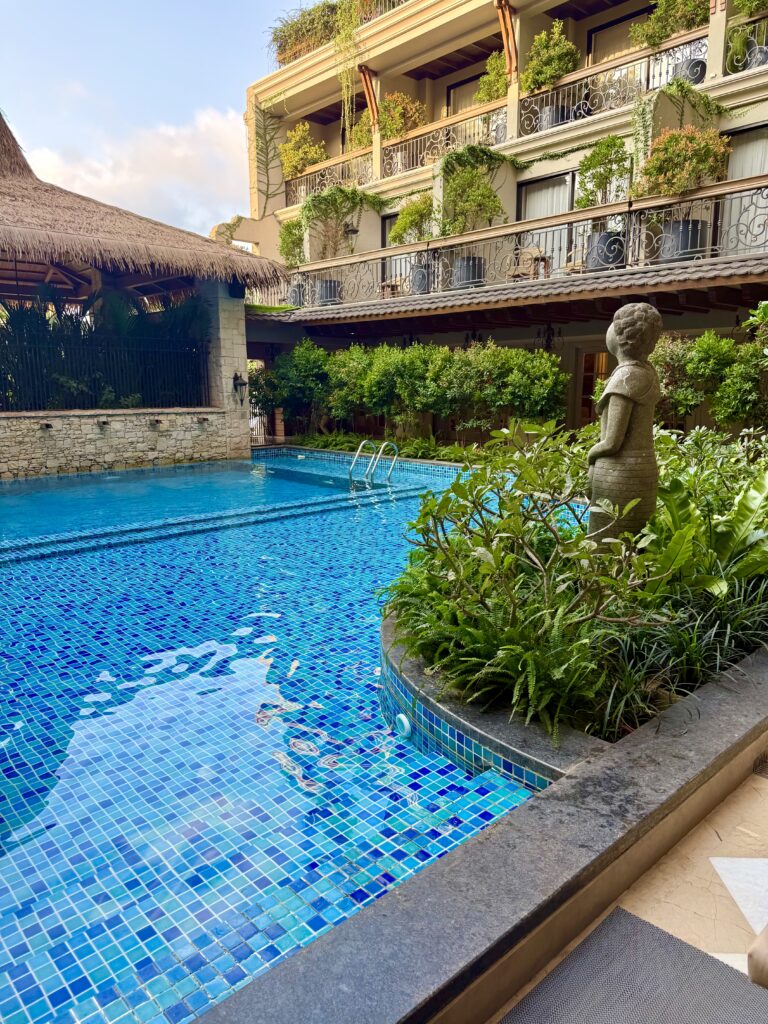
After the intimacy of a small expedition-style ship, I appreciated the space and comfort of The Evren Hotel. The tropical gardens, spa, outstanding food, and a spacious suite, made it the ideal place to relax and recharge before the next stage of my journey.
One surprise was Goa’s thriving casino industry. Because its gaming laws differ from those in much of India, the state has become the country’s premier casino destination, with large floating casinos anchored on the Mandovi River alongside casinos in luxury hotels.
The Bridge Between Two Journeys
As my departure approached, I realized how perfectly Goa fit into the larger journey.
Kerala had immersed me in the quiet backwaters and the slow rhythm of canal life aboard the Kochi Pandaw. Goa introduced me to centuries of cultural fusion, remarkable cuisine and an energy entirely its own. Ahead lay the Deccan Odyssey and the magnificent palaces, forts and historic cities of Rajasthan.
On my final evening, I watched the sun sink into the Arabian Sea before returning to The Evren for one last dinner of fish curry rice.
Goa captured everything I love about travel: cultures blending seamlessly, unexpected history around every corner, exceptional food and the simple pleasure of discovering somewhere that defies expectations.
When I boarded the Deccan Odyssey the following day, I carried all of it with me; the churches and beaches, seafood and sunsets, Portuguese villas, inventive cocktails, wandering cows, and the warm Indian hospitality that had made Goa feel so welcoming.
Goa had been planned as a stop between two extraordinary journeys.
Instead, it became an unforgettable destination.


