

Japan
Tsushima and Iki: The Frontier Islands of Kyushu, Japan
Article and photography by Steve Gillick
Tsushima Island and Iki Island enjoy a reverential place in Japanese history and mythology. Both islands were created by the Shinto gods Izanagi and Izanami. Izanagi eventually became the father of the Sun Goddess Amaterasu (represented to this day by the sun disk on the Japanese flag), the great-great-great grandmother of Jimmu, the first Emperor, from whom all Japanese Emperors are descended. So it’s no wonder that the ‘frontier islands’, located about halfway between Kyushu and the Korean Peninsula, offer a mystical, nature-oriented, adventurous appeal to visitors.
The Venus high-speed jetfoil takes 2 ¼ hours to travel from Hakata Wharf in Fukuoka to Izuhara, Tsushima Island. We set out for the Mt. Eboshi Observatory in our rental car, on narrow two-lane country roads that ascended mountains and traversed forests (which cover 89% of the island).
We arrived just before a raucous bus tour group, so we had about twenty minutes of peaceful serenity all to ourselves, with an incredible panorama of mountain forests, the Tsushima Strait, the Korean Strait (Pusan is only 50 km/ 31 miles away), and the coves, inlets, and small islands around the coastline of Aso Bay.
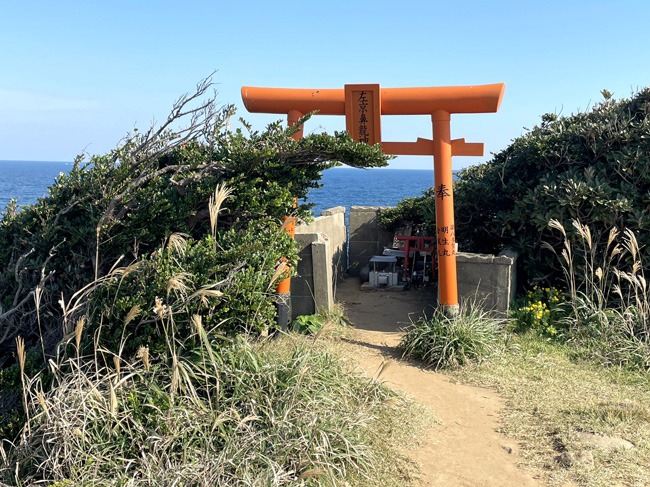
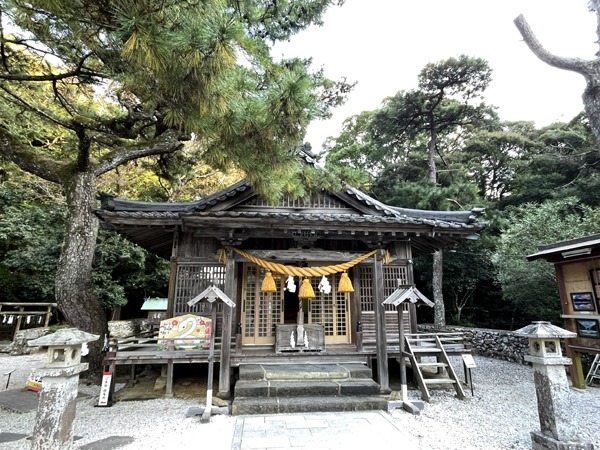
The sacred Watazumi Shrine (a.k.a Watatsumi Shrine), a Shinto sea shrine, is a short drive away. Continuing in the pantheon of Japanese mythology, the Shrine’s five tori gates, two in the sea and three on land, are considered to be a gateway that connects the human world with the underwater realm of the legendary Dragon Palace. Furthermore, the Shrine’s sea, mountain, and forest attributes (the Shinto concept of “Jinja”) provide places for the Kami, the divine energy or life-forces of the natural world, to reside. Some refer to this mystical convergence as a “power spot”.
After a typhoon damaged the Shrine in 2020, fans of the action-adventure game Ghost of Tsushima raised money for repairs. They have also enhanced Tsushima’s reputation as a destination to be revered and explored.
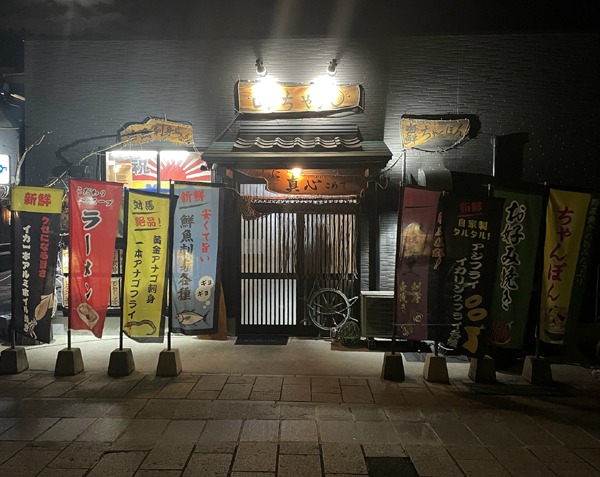
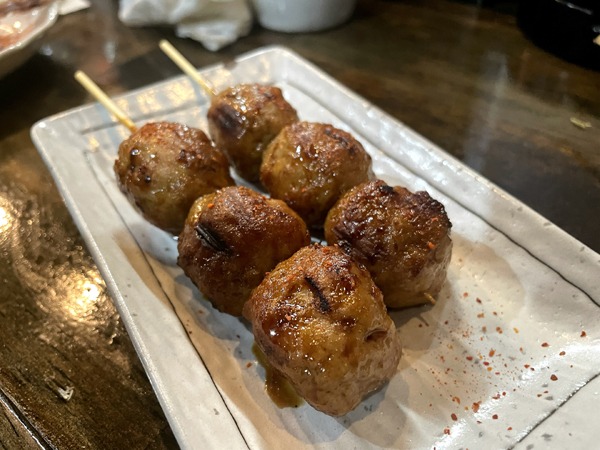
Our accommodation in Izuhara was at the peaceful Tsushima-Seizanshi Buddhist Temple. Our room was large and comfortable, with a balcony overlooking rooftops, red sunset clouds, and the waterfront. It was only a few minutes’ walk to Yama Chan Izakaya for an excellent dinner of sashimi (squid, buri, and bonito), yakitori (skewers of chicken wings, tomato with bacon, and tsukune – minced chicken with green onion and ginger), deep-fried Horse mackerel, and Senhime Daiginjo sake from Ehime prefecture.
The following day, we drove to Komodahama Shrine, which commemorates the battle that pitted 80 mounted Samurai under the command of Sō Sukekuni against the first Mongolian invasion of Japan in 1274. The beautiful small honten (shrine building), backed by forested mountain scenery, sits next to the commanding equestrian statue of Sukekuni.
Impressive mountainscapes followed us as we departed for the pastoral rural landscape of rice fields, farmhouses and a fascinating group of storehouses known as The Stone Roof Huts of Shiine. They were constructed using the ancient art of layering slabs of Shima-yama Stone—produced only on Tsushima—on the roofs for protection against the winter winds, rain, and storms.
Tsushima has many attractions, including beaches, hiking trails, mountain observatories, castle ruins, shrines, the Taishu Sake Brewery, the Museum of History and Folklore, and more… certainly enough to warrant a return visit.
Back at the port, we boarded the jet-foil for the one-hour trip to Ashibe Port on Iki Island. After securing a rental car, we checked into a tatami room at Ryokan Sengokuso, located in a quiet residential neighbourhood of Yunomoto Onsen. Dinner was at Tokuriki, just down the road, where Chef Onizuka Taiko’s exceptionally tasty dishes included yakitori (tsukune, leek and bacon, grilled eggplant), flame-kissed horse mackerel, ocean-fresh sardine sashimi, flavourful yakisoba with chicken, fishcake, bean sprouts, and onion, along with Echigo Zakura, a clear, dry, quaffable sake from Niigata.
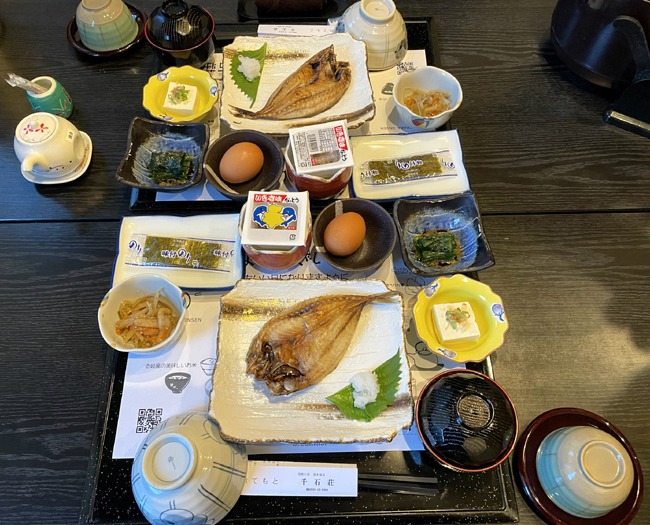
The notation in my travel journal for the next day reads, “Perfect day from morning till night.” Breakfast at the ryokan was a few notches above ‘delicious’: Grilled Mackerel, steamed rice with natto and raw egg, fishcake with burdock and carrot, Iki tofu, and savoury miso soup. The owners, Michiaki and Mayumi Hasegawa, answered my questions about why travellers should visit Iki Island with no hesitation: ‘The seacoast, shrines, history, nature, culture, shochu, and the food.’ And to that list we just had to add the super-friendly, welcoming Iki-islanders.
The exhilarating sites we explored that day in our rental car included:
Monkey Rock. Legend says that this 45-meter-high (148-foot) volcanic rock pillar, rising from the sea, anchored the island to the sea floor so it wouldn’t drift away. The top of the pillar resembles a monkey’s head (it really does!), which is part of its appeal to tourists. You can walk right up to the pillar for superb sea views, buy a souvenir T-shirt or enjoy banana drinks and snacks at the gift shop.
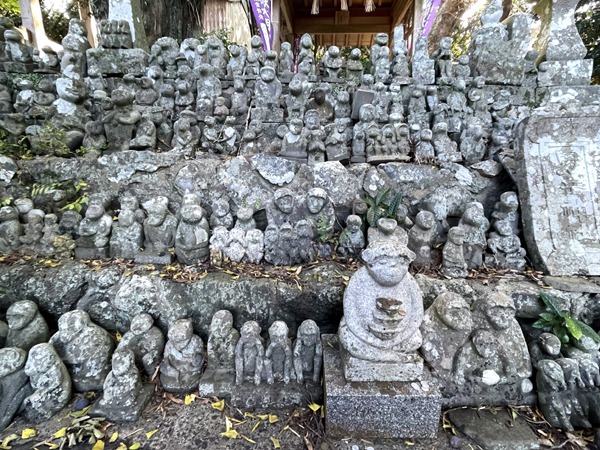
The Stone Monkeys of Ondake Shrine. Ondake Shrine is considered to be a ‘power spot’. It’s located on a mountain where the first god of Iki Island, Sarutahiko-no-Mikoto, descended to earth. As “Saru” is the word for ‘monkey’, local residents have donated over 200 stone monkeys throughout the years to honour the god and seek blessings for health and success in fishing and farming. Aside from statues of the three wise monkeys, there are many weathered, ancient monkey figures, red torii gates, sacred cow statues, and mountain scenery.
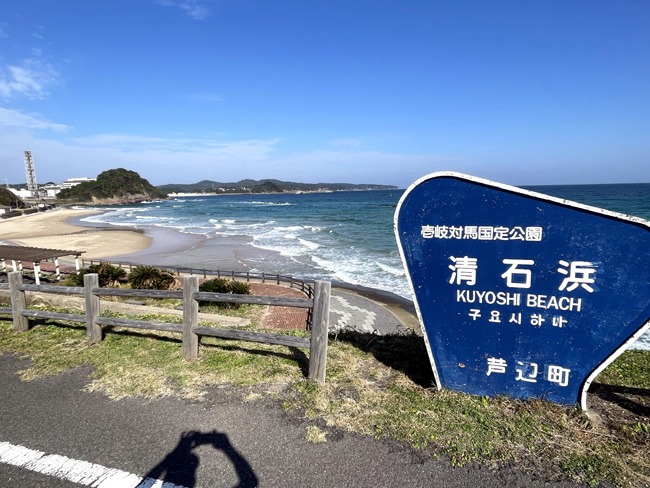
Kuyoshihama Beach. This is one of those “stop the car” places where you’re driving and all of a sudden, you see a beautiful white-sand beach with wild waves crashing on the shoreline.
Sakyobana. Dramatic views of the Kannon Pillar rising from the ocean, volcanic rocks, cliffs, and the red torri gate lookout make the area spectacular.
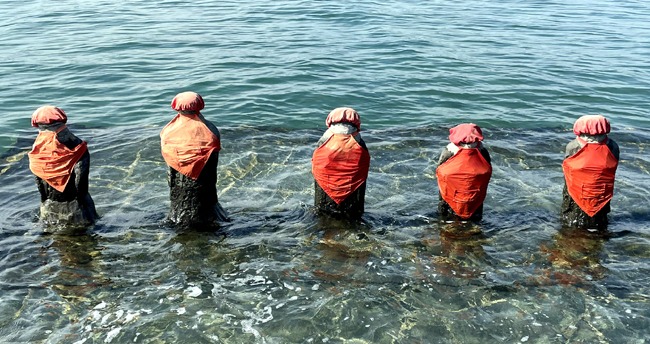
Guardian Jizo Deities of Harohage. A mesmerizing site of six red-capped, red-robed Jizo statues, facing the shore, and half-immersed in water. A sign explains that the Jizo pray for the reposé of the souls of ama women divers who died in the sea; they drive away illness, and pray for the souls of whales captured by hunters.
Kojima Shrine. Sometimes called the Mont Saint-Michel of Japan, a white torii gate marks the entrance to a tiny sacred island in Ushime Bay, accessible only at low tide. It’s a power spot, filled with the spiritual energy of ancient gods.
Ikikoku Museum. This is an excellent museum, designed by Kisho Kurokawa to blend into a hillside and offer panoramic views that include the Haru-no-Tsuji Ruins, a reconstructed village on the site of the ancient capital of the Ikikoku Kingdom. The museum’s dioramas are outstanding, and more than one Iki Islander revealed that the figures’ faces are those of contemporary Islanders.
Oni-no Ashiato (Demon’s Footmark). Visitors can get very close to this amazing 110-meter (360-foot) hole in a cliff. The coastline is spectacular, with volcanic rock flows that have spilled into the sea. Just across the grassy plain is Gorilla Rock, an imaginative illusion created by the weathered rocks on one of the pillars.
Lunch during our “perfect day” was at Hanatsubaki, featuring delicious Oyakodon and Ginger Pork Donburi, prepared by the super-friendly owners Tatsuji and Yukiko Yamashita.
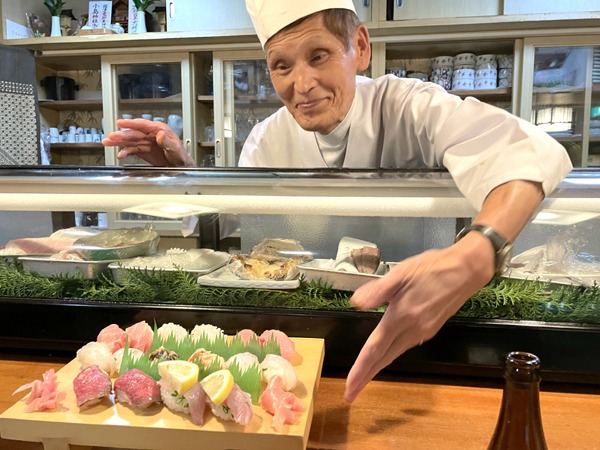
In the evening, after checking into the Iki Marina Hotel by Gonoura Port, we had a wonderful farewell dinner at Nomoto Sushi. Yukio and Hideko Nomoto were the perfect hosts with perfect dishes. The vegetable tempura was heavenly! The ‘premium’ plate included Iki beef with salt, Fugu, Shellfish, horse mackerel with lemon, and snapper, squid, tuna, and Otoro (tuna belly) sushi. So Good!
Kyushu’s frontier islands, Tsushima and Iki, offer visitors a defining Japanese experience: a blend of interactions with locals, breathtaking scenery, scrumptious food, nature, shrines, history, and more. For travelers who want to go slow, avoid crowds, and discover hidden gems, head to the frontier!


