

Stay & Play
Where Conservation Comes First
A Stay at Shamwari Private Game Reserve
by Olivia Liveng
An hour inland from Port Elizabeth, Shamwari Private Game Reserve occupies more than 58,000 acres of rehabilitated wilderness in South Africa’s Eastern Cape. Once agricultural land, the estate has been methodically restored over three decades into a private reserve where conservation dictates pace, access, and experience. The result is not theatrical, nor engineered for constant spectacle, but quietly commanding in its scale and intent.
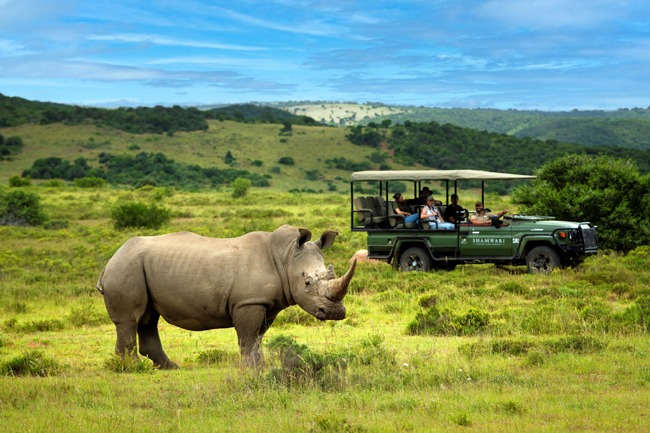
Arrival is understated. The landscape opens gradually—wide plains giving way to dense thicket and riverine corridors—revealing a sense of space that immediately distinguishes Shamwari from more congested safari regions. Game drives unfold across long distances, and that expanse shapes the rhythm of each day. Time in the vehicle is expansive and deliberate, spent tracking, observing, and listening as guides interpret the land with precision: the management of water sources, the rotation of habitats, the careful calibration of animal populations across such a vast reserve.
Wildlife encounters are never orchestrated. Some mornings deliver extended, close-range observations of lions or elephants; others pass quietly, marked by movement at the periphery or distant calls carried on the wind. When animals appear, vehicles pause without urgency, allowing guests to watch behavior unfold naturally rather than compete for angles. Silence is valued. When sightings are sparse, attention shifts seamlessly to the landscape itself, deepening the sense of immersion rather than diminishing it.
Most stays include a visit to Shamwari’s Wildlife Rehabilitation Centre and Big Cat Sanctuaries. These are working conservation facilities, approached with restraint and seriousness. The focus is on process and responsibility: how animals arrive, what rehabilitation entails, and why release is often impossible. Access is controlled, interaction minimal, and photography limited—choices that underscore the reserve’s commitment to ethics over optics.
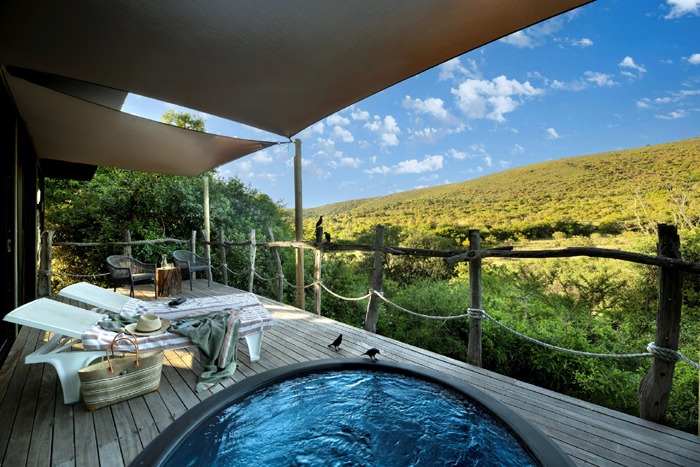
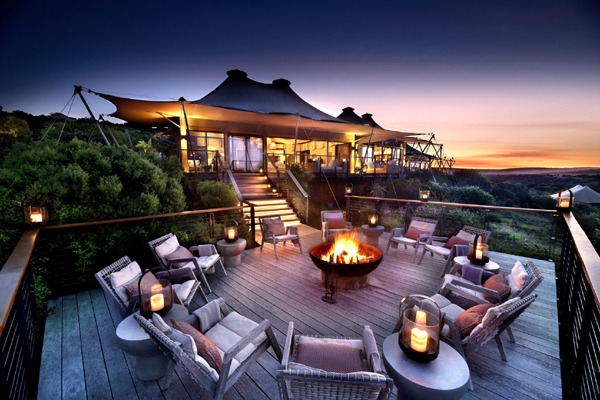
Accommodation is distributed across several lodges within the estate, including Eagles Crag and Bayethe, each positioned for privacy and uninterrupted views. Suites are expansive and quietly refined, with private decks that dissolve into the surrounding bush. Interiors favor natural textures, muted palettes, and subtle lighting—luxury expressed through proportion, calm, and discretion rather than display. Evenings unfold slowly, accompanied by lantern light and the distant sounds of the reserve.
Meals follow the classic safari cadence: breakfast after the morning drive, a relaxed lunch, and dinner in the evening. Menus highlight South African ingredients prepared with confidence and restraint, served communally in settings that feel intimate rather than performative. Service is polished and intuitive, anticipating needs without drawing attention to itself.
The Eastern Cape location offers a further layer of appeal for discerning travelers. Malaria-free and notably less trafficked than South Africa’s northeastern safari circuit, the region affords a sense of seclusion that enhances the experience. Shamwari integrates seamlessly into itineraries that include Cape Town or the Garden Route, offering continuity without logistical excess.
What ultimately defines Shamwari is its people. Many guides, conservationists, and senior staff have been with the reserve for years, lending depth and continuity to every interaction. Conversations often move beyond sightings to land restoration, funding realities, and the long-term stewardship required to sustain a private reserve at this scale. There is no script, only experience.
Shamwari is best suited to travelers who define luxury as space, access, and intention. It offers a safari shaped by patience rather than promise, by stewardship rather than spectacle. The experience feels rare, measured, and deeply assured, and luxury is not indulgence, but a privilege.


