

France
Journey Through France
From the Sunlight of Provence to the Gentle Charms of Alsace
Article and Photography by Nathalie Clark and Pierre Houle
Some destinations seem to be made of light, fragrance and the art of living well. Provence is one of them. Thanks to Air Transat’s new nonstop service between Québec City and Marseille, this legendary region of southern France has become more accessible than ever. Our itinerary unfolded in two distinct chapters: first, the luminous, mineral landscapes of Provence, followed by the softer, more enveloping atmosphere of Alsace, with its vineyards and flower-filled villages.
The Vieux-Port, Marseille’s Beating Heart
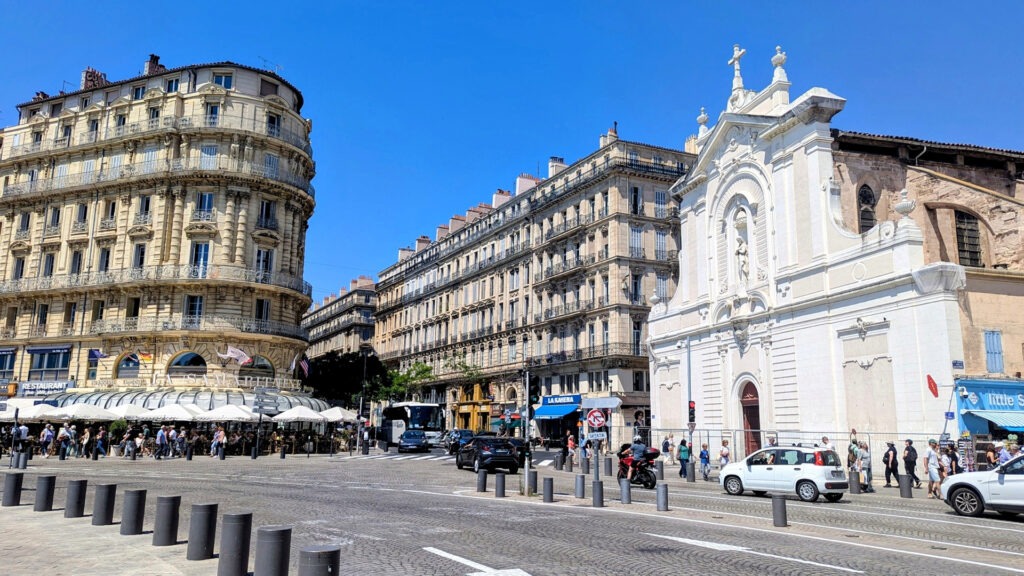
At the Vieux-Port, Marseille—widely considered the oldest city in France—moves to the rhythm of its waterfront. Founded by the Greeks some 2,600 years ago, ancient Massalia developed around this natural harbour, which remains central to life in the city.
Between the boats, the fishermen and the lively terraces, the district hums from morning until night. Norman Foster’s Ombrière, a vast mirrored canopy, marks the starting point of a walk that blends the sea, heritage and contemporary architecture. Nearby, the colorful lanes of Le Panier, the Mucem and Fort Saint-Jean invite further exploration beneath the watchful gaze of the Basilica of Notre-Dame de la Garde, perched high above the city.
We also visited Cosquer Méditerranée, a remarkable reconstruction of a prehistoric cave more than 33,000 years old, now submerged off the coast of the Calanques. In the darkness, aboard an automated vehicle and equipped with an audio guide, we discovered animal drawings, handprints and traces of prehistoric life. It is an exceptionally well-executed and immersive experience.
At Sea Aboard the Éleanor Mary
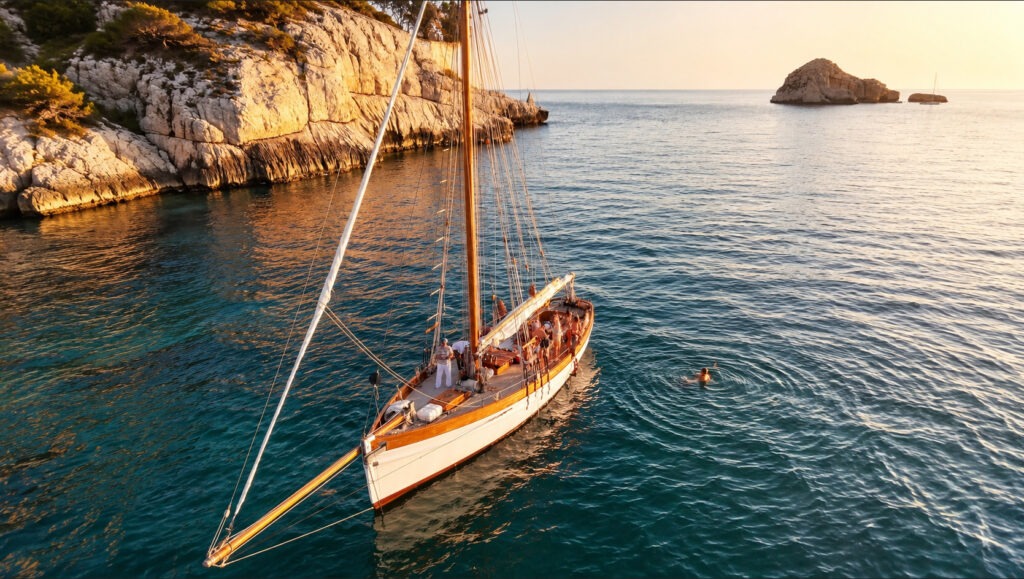
The day continued at sea with an intimate sunset excursion aboard the Éleanor Mary, a sailing vessel operated by Don du Vent. After a welcome glass of prosecco, Marseille slowly receded from view as the Frioul Archipelago came into sight.
A refreshing swim was followed by a delicious meal served on board while the sky staged its own evening spectacle. The nighttime return to the Vieux-Port, guided by the illuminated silhouette of La Bonne Mère—the Basilica of Notre-Dame de la Garde, which overlooks Marseille—brought this magical outing to a fitting close.
Memorable Culinary Addresses
We thoroughly enjoyed lunch at Chez Coquille, a seafood bistro just steps from the Vieux-Port, where fish, shellfish and oysters are served in a relaxed atmosphere.
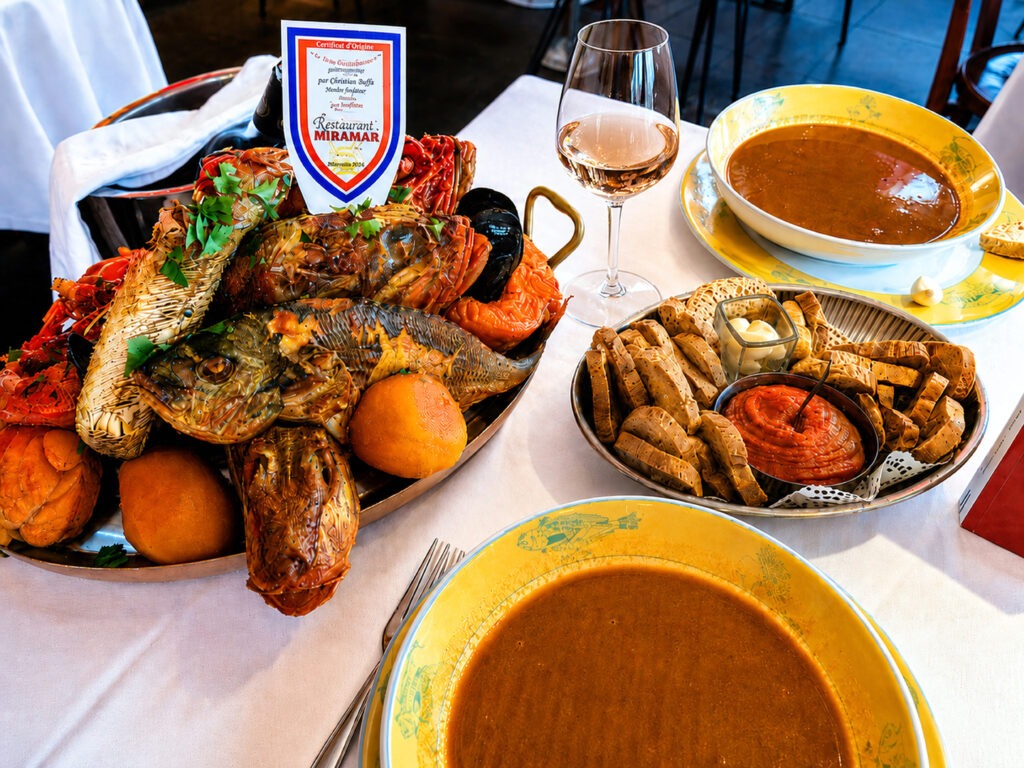
No visit to Marseille would be complete without tasting bouillabaisse. We discovered it at Le Miramar, a Vieux-Port institution renowned for this emblematic dish. Served almost ceremonially, it begins with the fragrant broth, accompanied by croutons and rouille, followed by the fish and potatoes. At Le Miramar, this cornerstone of Marseillais cuisine is prepared and presented according to tradition.
A Day in Charming Aix-en-Provence
Our day in Aix-en-Provence took on the colours and aromas of its open-air markets. Among stalls laden with fruit, vegetables, fish and an array of local products, the city revealed itself at its most vibrant. The following day, we set out for Gordes, one of the most beautiful villages in France.
Gordes, a Hilltop Jewel of the Luberon
Perched on a rocky promontory, Gordes is one of the Luberon’s most iconic villages. Its stone houses seem to merge seamlessly into a landscape of hills, olive groves, vineyards and cypress trees.
We wandered along its narrow calade streets, past boutiques and centuries-old homes. The surrounding countryside creates a refined rural setting that feels unmistakably Provençal. It is a truly magnificent place.
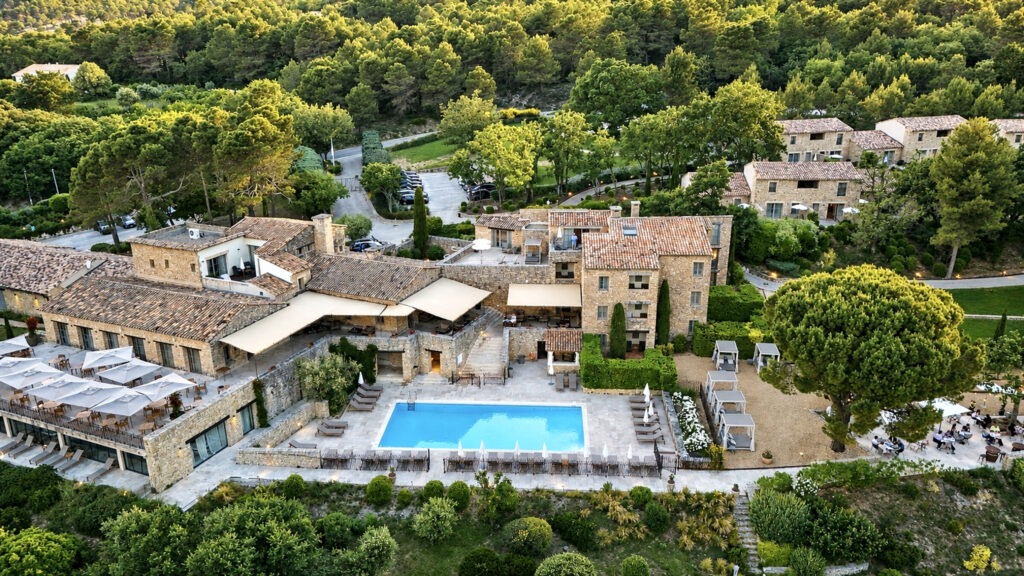
After the intense pace of our first few days, we were delighted to settle in at Le Mas des Herbes Blanches in Joucas, just minutes from Gordes. This Relais & Châteaux property overlooks the lush landscapes of the Luberon.
A vast swimming pool, a flower-filled terrace, delicious cuisine and a soothing guest room made every moment in this five-star retreat a pleasure to savour. We could easily have stayed for several more days.
Along the Alsace Wine Route
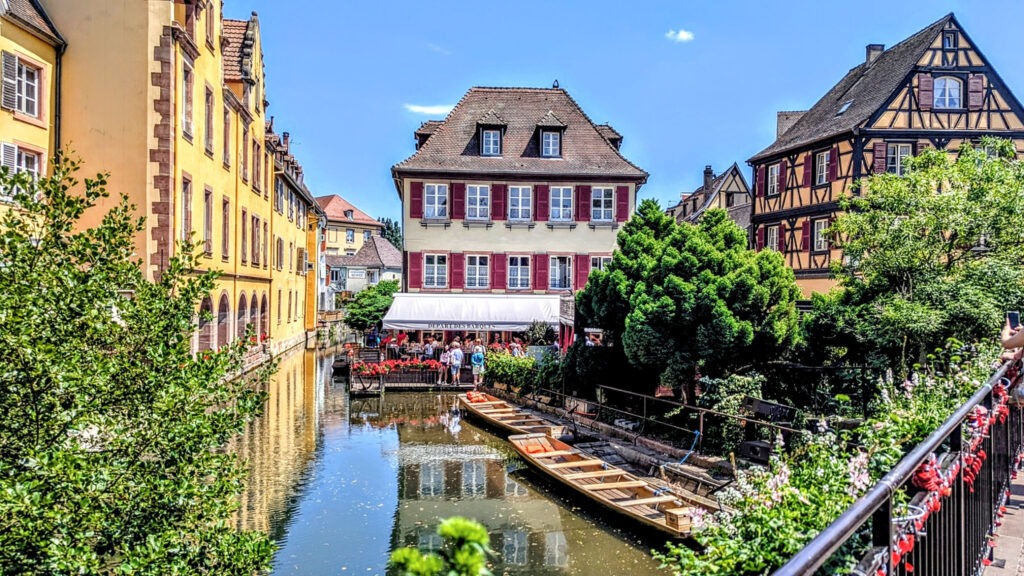
After the mineral light of Provence, we headed to Alsace, the historic region of northeastern France that is now part of Grand Est. We explored a section of its 170-kilometre Wine Route, winding through vineyards, the Vosges foothills and villages lined with half-timbered houses. With its bucolic landscapes and cycling trails, the route is almost irresistible to explore by bicycle.
Three estates offered us a glimpse of the diversity of Alsace’s wine country. In Wintzenheim, Josmeyer stands out for its organic and biodynamic approach and its precise, expressive wines. In Gertwiller, Domaine Zeyssolff, shaped by eleven generations of winemaking, brings the region’s wine history to life through an engaging oenotourism experience. In Andlau, Domaine Wach produces elegant wines with a distinctly gastronomic character.
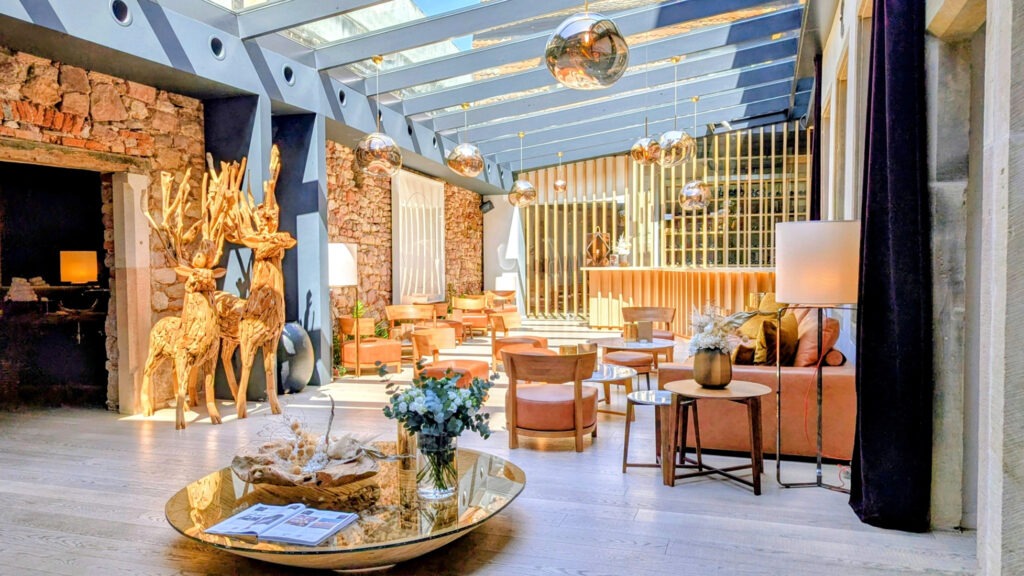
We then continued to Barr, a charming wine town of cobbled lanes and half-timbered houses. There, we discovered 5 Terres Hôtel & Spa, one of the loveliest surprises of the journey: an elegant property set within a historic building, where time-worn materials and natural tones create a sophisticated retreat. La Table du 5 is equally delightful.
A Culinary Workshop with Chef Patricia Catenne
The following day, after exploring Obernai, a former imperial town that has preserved its ramparts and medieval charm, we immersed ourselves in the flavours of Alsace.
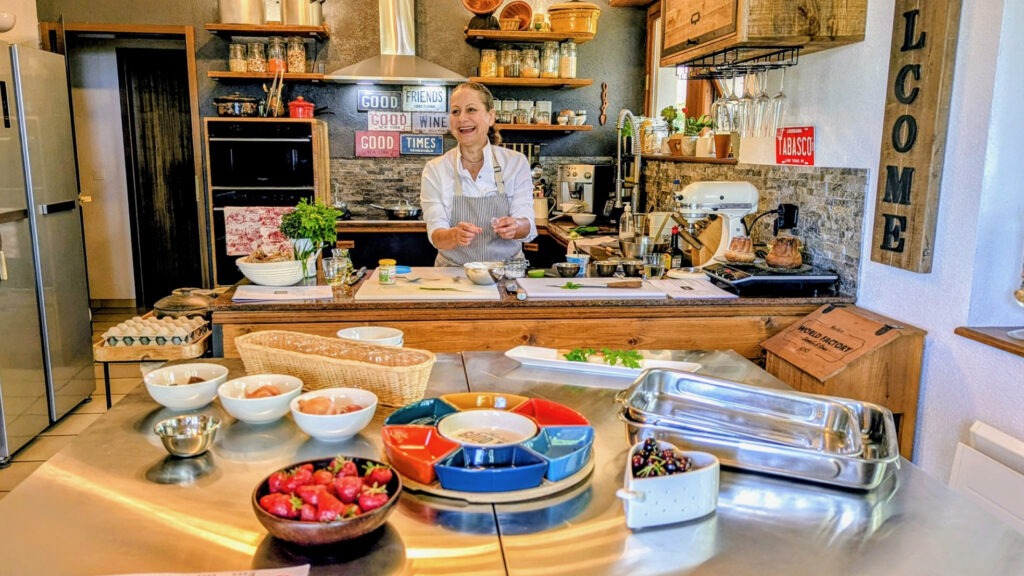
Chef Patricia Catenne welcomed us to Villa aux Chênaies, set on the heights above Obernai. Together, we prepared L’Assiette du Terroir, an interpretation of Alsace in five bites: white asparagus velouté, Alsatian-style snails, a crisp Munster cheese parcel, foie gras and coq au Riesling.
Every gesture and every flavour revealed the soul of the region with subtlety, guided by a chef whose warmth and passion proved every bit as memorable as her cuisine.
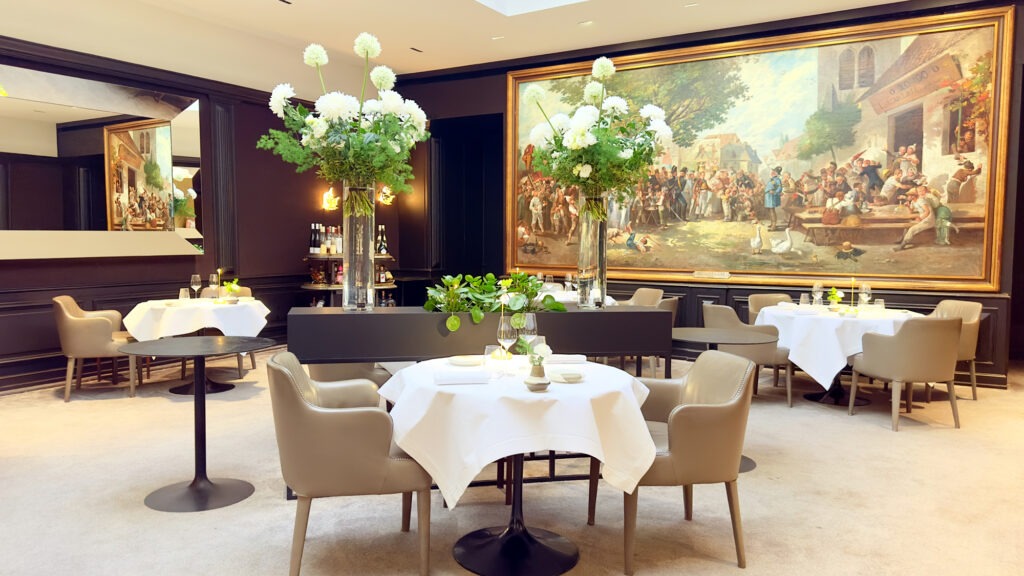
In Strasbourg, the culinary experience reached its peak at Au Crocodile, a Michelin-starred institution in the heart of the city since 1840. Delicate cuisine, subtle pairings, impeccable presentation and attentive tableside service came together in a superb dining experience, where French gastronomy was expressed with equal parts emotion and precision.
In the Heart of the Alsatian Capital
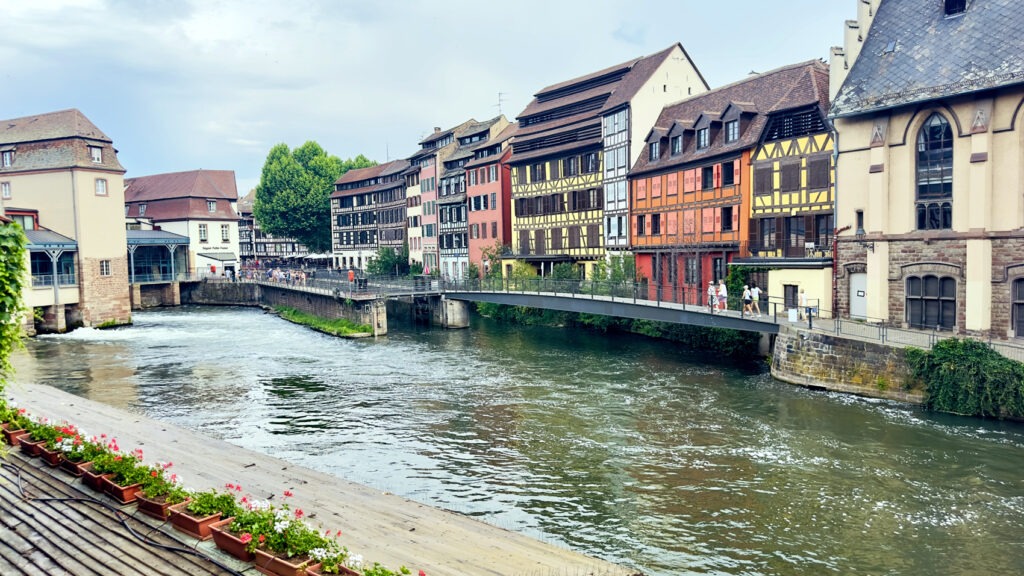
Our journey concluded in Strasbourg, the capital of Alsace, a city of canals, UNESCO-listed heritage and a cultural identity shaped by both French and German influences.
We stayed at Le Bouclier d’Or, at the entrance to the historic Petite France district, in an elegant 16th-century residence. We allowed ourselves to wander through narrow streets, along canals and past historic façades, in a city whose beauty often reveals itself unexpectedly around the next corner.
One evening, after dining on a terrace, Notre-Dame Cathedral suddenly appeared before us, majestic and illuminated against the night sky. A Gothic masterpiece built from pink Vosges sandstone, it rises above the old city with its intricately sculpted façade and 142-metre spire.
Under the full moon, its lace-like stonework seemed almost unreal as the bells rang and a street singer performed a few operatic airs. It was a moment suspended in time—one that quite literally sent shivers down our spines.
From the radiant light of Provence to the gentle, enveloping beauty of Alsace, this journey introduced us to two very different yet equally captivating faces of France. We returned home with memories filled with fragrances, flavours and unforgettable images—and, above all, an irresistible desire to return.


