


South Africa
South Africa’s Eastern Cape
Heritage and Wilderness in One Journey
by Olivia Liveng
Stretching from the Great Karoo to the Indian Ocean, South Africa’s Eastern Cape is a province of quiet contrasts. Open plains give way to rugged mountains, small towns give way to thick bushveld, and centuries-old architecture sits just hours from restored wilderness. A journey from Graaff-Reinet to Shamwari Private Game Reserve reveals both sides of the region — heritage and wildness, woven together.
Graaff-Reinet and the Karoo Heartland
Graaff-Reinet sits in the heart of the Great Karoo, a semi-desert plateau known for wide horizons and a slowed, almost cinematic pace of life. Founded in the late 1700s, it is South Africa’s fourth-oldest town, a place of crisp white gables, historic homesteads, and a towering church spire that anchors a grid of cafés, galleries, and small museums. The town’s edges fade quickly into open landscape, where roads seem to stretch into forever.
In the center, Drostdy Hotel brings historic grace to the Karoo. Originally built in 1806, the property is now a cluster of restored heritage buildings with 48 rooms spread across quiet courtyards. It’s a surprisingly comfortable base for families: rooms are generous, there is space for children to move, and the staff is intuitive with multigenerational travelers. Parents appreciate the calm after long drives, while children settle easily into the hotel’s relaxed rhythm.
Evenings often begin at De Camdeboo Restaurant, where Karoo lamb, local cheeses, and regional wines define the menu. Down the street, the hotel-operated Imibala Gallery supports community upliftment and showcases work by local artists. Staff members are quick with suggestions, whether it’s the best biltong shop or a scenic loop through the Valley of Desolation.
Just outside town, Camdeboo National Park offers a dramatic change of scale. Sheer dolerite cliffs rise above plains that stretch toward the horizon. Dawn brings cool air and the scent of fynbos, while dusk turns the landscape deep red. Kudu, black wildebeest, springbok, and bat-eared foxes are common sightings — a gentle introduction to the wildlife found farther east.
The Drive East
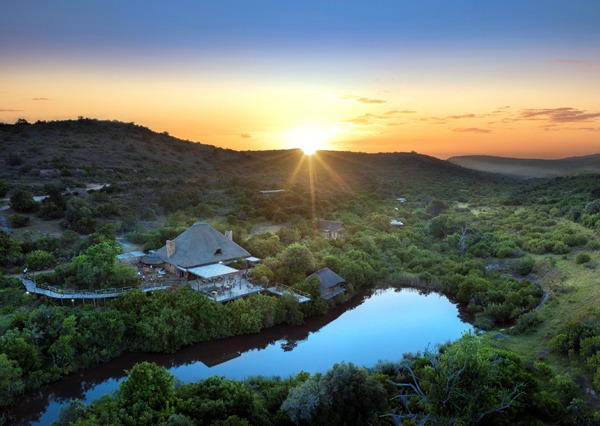
As you continue toward the coast, the landscape shifts from dry Karoo scrub to greener, denser vegetation. About an hour from Gqeberha, Shamwari Private Game Reserve stretches across 25,000 hectares of restored wilderness — once overgrazed farmland, now one of South Africa’s most respected conservation success stories.
Reaching Shamwari is now significantly easier. The new Shamwari Air Shuttle connects Cape Town and Johannesburg directly to the reserve’s private airstrip in 1 hour 45 minutes from Cape Town and just over 2 hours from OR Tambo. Operated on a 16-seat Beechcraft 1900D, the flight cuts up to four hours off traditional travel times. Guests step off the aircraft and directly into the bush, often spotting wildlife on the short drive to their lodge.
Shamwari Private Game Reserve
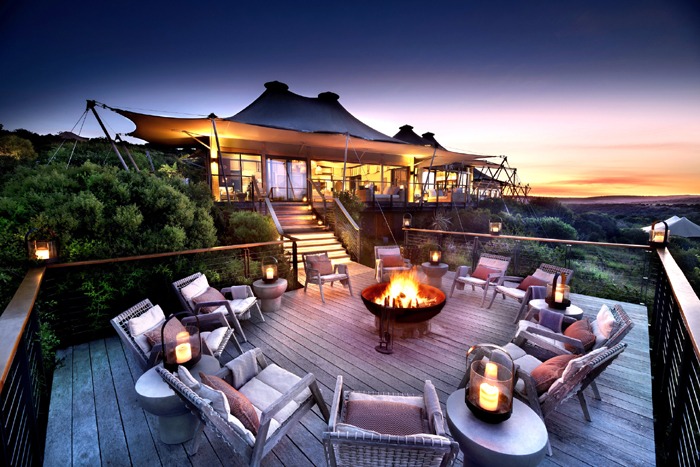
Shamwari’s lodges have recently undergone a sweeping refurbishment. Long Lee Manor, restored to its Edwardian elegance, now holds a Michelin Key. Eagles Crag, Bayethe, Riverdene Family Lodge, Sarili Private Villa, and the new Sindile Tented Lodge have all been revitalized. Recognition has followed: the reserve was named Global Winner for Best Luxury Private Game Reserve in Southern Africa and Luxury All-Inclusive Lodge at the World Luxury Travel Awards 2025.
Shamwari remains an excellent option for families. The reserve is malaria-free, the guiding team is experienced with children, and activities balance education with immersion. Sarili Lodge, with the option for exclusive use, functions almost like a private safari home — complete with flexible dining, family-friendly living areas, a pool, and staff who familiarise themselves with your schedule.
Conservation in Motion
The Shamwari Foundation, registered in 2024, formalizes decades of conservation and community initiatives under three pillars: Wildlife, Community, and Environment. Recent milestones include 29 Cape vultures nearing release into the wild, two leopards successfully relocated through conflict mitigation work, and the recovery of a black rhino orphan rescued after a poaching incident. Guests can see much of this work firsthand at the Wildlife Rehabilitation Centre, the Born Free Big Cat Sanctuaries, and the vulture breeding facilities.


