

Mexico
Taxco, Guerrero State, Mexico: The Secret is Out!
Article and photography by Steve Gillick
Un secreto a voces, meaning ‘an open secret’, is the Mexican expression for a place that locals treasure but mass tourism has yet to discover. Taxco de Alarcón (Taxco, for short) in the state of Guerrero, and one of Mexico’s endearing Pueblos Mágicos, fits this description perfectly. It’s a small hillside city with narrow, steep cobblestone streets, remarkable churches, whitewashed buildings with red-tile roofs, an easygoing strolling vibe, and a few notable foodie ’must-eats’.
Tacos were to blame!
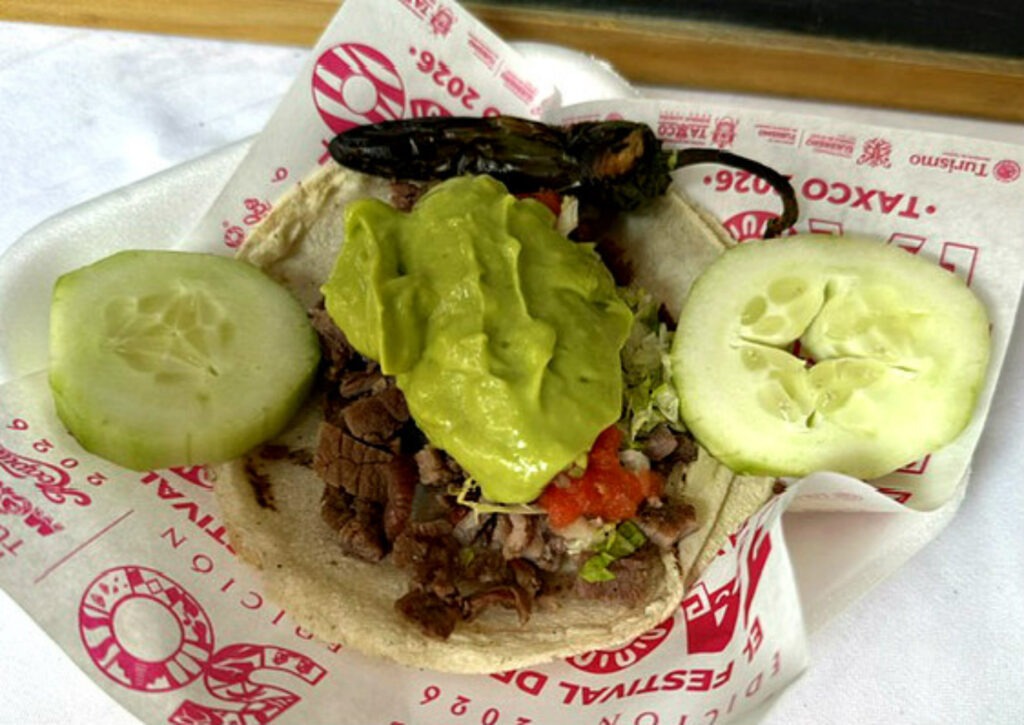
Our journey from Acapulco to Mexico City—about a five-hour drive—included a memorable stop in Taxco for the annual Taco Festival, promoted as “a journey through the mosaic of Mexico’s flavors.” Every one of Mexico’s 32 states was represented, each offering its own distinctive taco specialty. Here, the taco – a corn or wheat-based tortilla folded around a filling and eaten by hand – was elevated to the highest levels of taste bud bliss. I happily devoured three hearty, distinctively delicious tacos from Sinaloa, Durango, and Oaxaca.
Dessert was a short walk from Plaza de la Borda to Chu Cho – Churros Y Chocolate. Under the slogan Un Churro al día, es la clave de la alegría (A Churro a day is the key to happiness), we learned that the fried dough treats, usually dusted with cinnamon and sugar or filled with dulce de leche or chocolate, originated in Asia, before making their way to Spain, Mexico, and South America. Modern versions are customizable with sprinkles, nuts, Smarties, and more.
After tacos and churros, Taxco is the perfect place to walk off the calories!
The original village of Taxco, located ten miles south of the present location, was the administrative center for Nahua indigenous groups. The name Taxco in Nahuatl means “place of the ball game”, referring to the Mesoamerican sport. When the Spanish discovered silver in the area, they established the town that exists today. In 1734, José de la Borda arrived and amassed a fortune from silver mining. He gifted the Church of Santa Prisca to the city, which dominates Plaza de la Borda, the city’s zócalo, or town square.
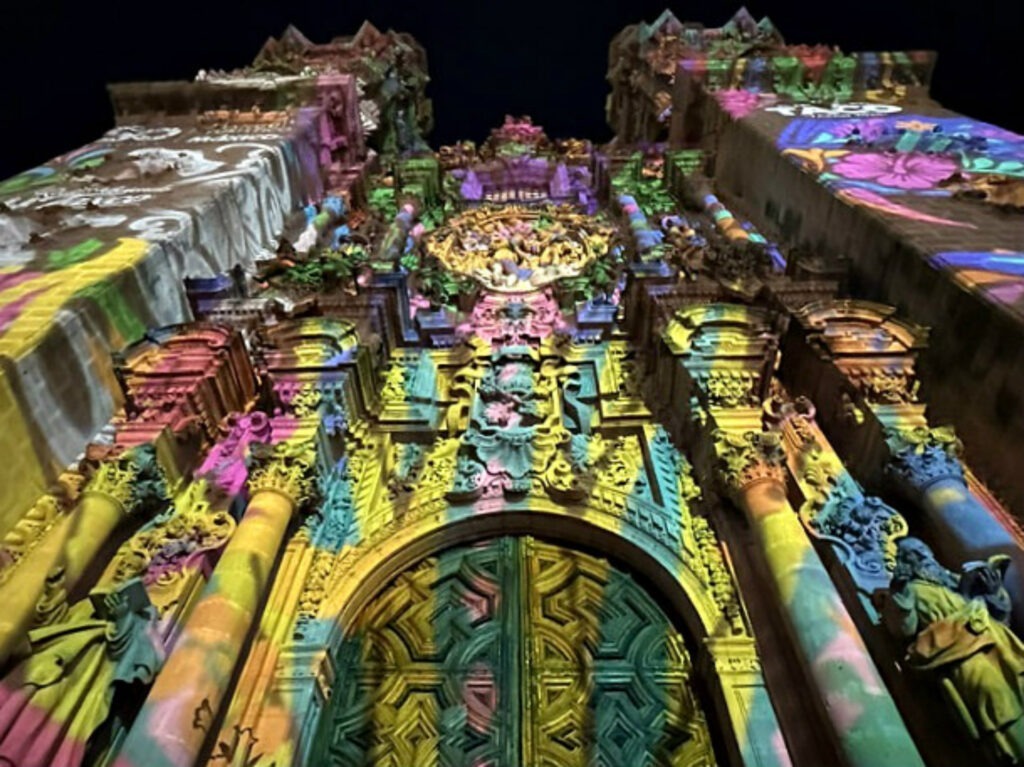
The twin-towered church, built from 1751 to 1758, features Spanish Baroque (Churrigueresque) architecture with richly detailed ornamentation inside and out. After sunset, the church is illuminated in a rainbow of colours, turning the zócalo into a magical fantasyland.
The entire city, laid out on the slope of Atachi Hill in the Sierra Madre del Sur mountains, is best viewed from Cristo Monumental at the 5 meter (25 feet) tall Cristo Rey statue. Visitors can hop in one of the vochos, the iconic white Volkswagen Beetle taxis, for the 10-minute ride from the zócalo.
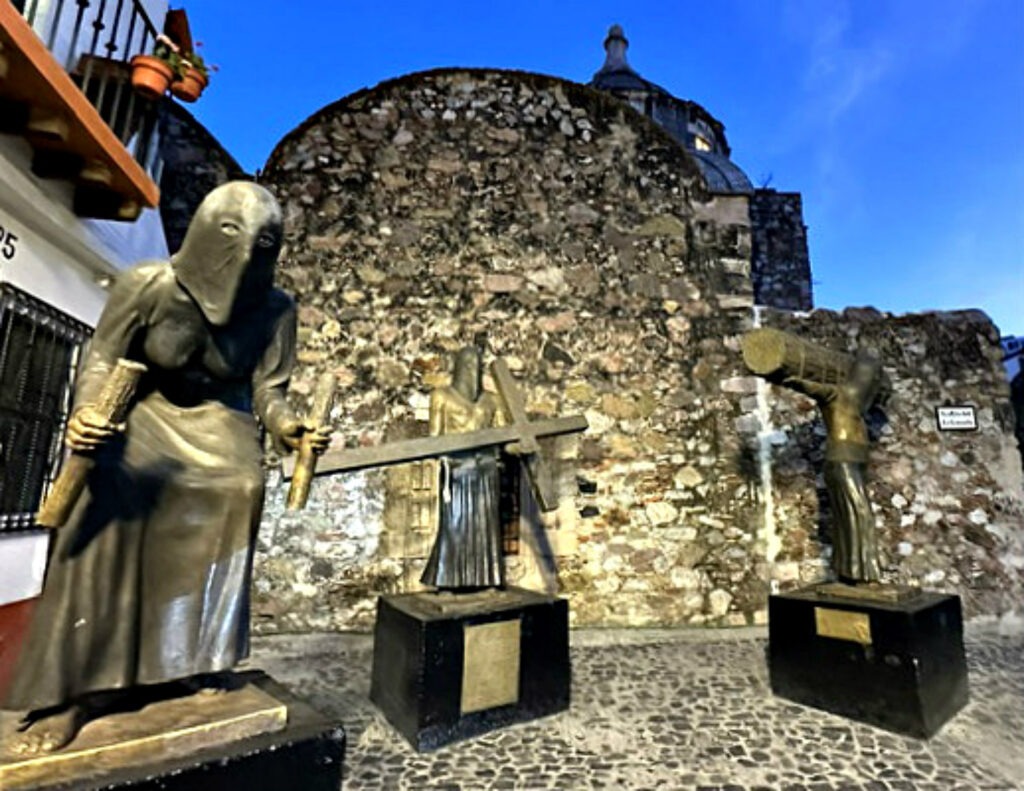
Back in the city center, the steep maze of narrow streets reveals a collection of silversmith shops, a legacy of William Spratling, an American silver designer and artist who moved to Taxco in 1929. Near the zócalo is the pristine white façade of Our Lady of Guadalupe Parish along with the adjoining city viewpoint at the Plazuela de Guadalupe. Close by, behind the former monastery of San Bernardino de Siena, stand the haunting statues of the three Penitentes Flagelante. They commemorate the Holy Week penitents who, dressed entirely in black, carry heavy crosses, bundles, or chains as acts of devotion and penance.
Our stay in Taxco lasted only 18 hours—just enough to savour the atmosphere. Others come for the Cableway, pre-Hispanic mines, and the nearby caves, waterfalls, and national park.
And now the ‘open secret’ has been revealed. Next time, we’ll stay for a few days to wander, explore, eat, and enjoy!


